


Your Guide to Reef Safe Marine Fish
- fabianbehague
- 2 days ago
- 17 min read
So, you’re dreaming of a vibrant reef tank, buzzing with colorful fish weaving through spectacular corals. The last thing you want is to come home and find your prized Acan lord has become lunch for your new angelfish. This is where the term reef safe marine fish comes in, but it's not as simple as a "yes" or "no" sticker.
What Does Reef Safe Really Mean?
At its core, a reef safe marine fish is a species that won't make a meal out of your corals and invertebrates. It’s a fish that coexists peacefully, leaving your polyps, shrimp, and snails alone. But here’s the thing every seasoned reefer learns: "reef safe" is more of a spectrum than a hard-and-fast rule.
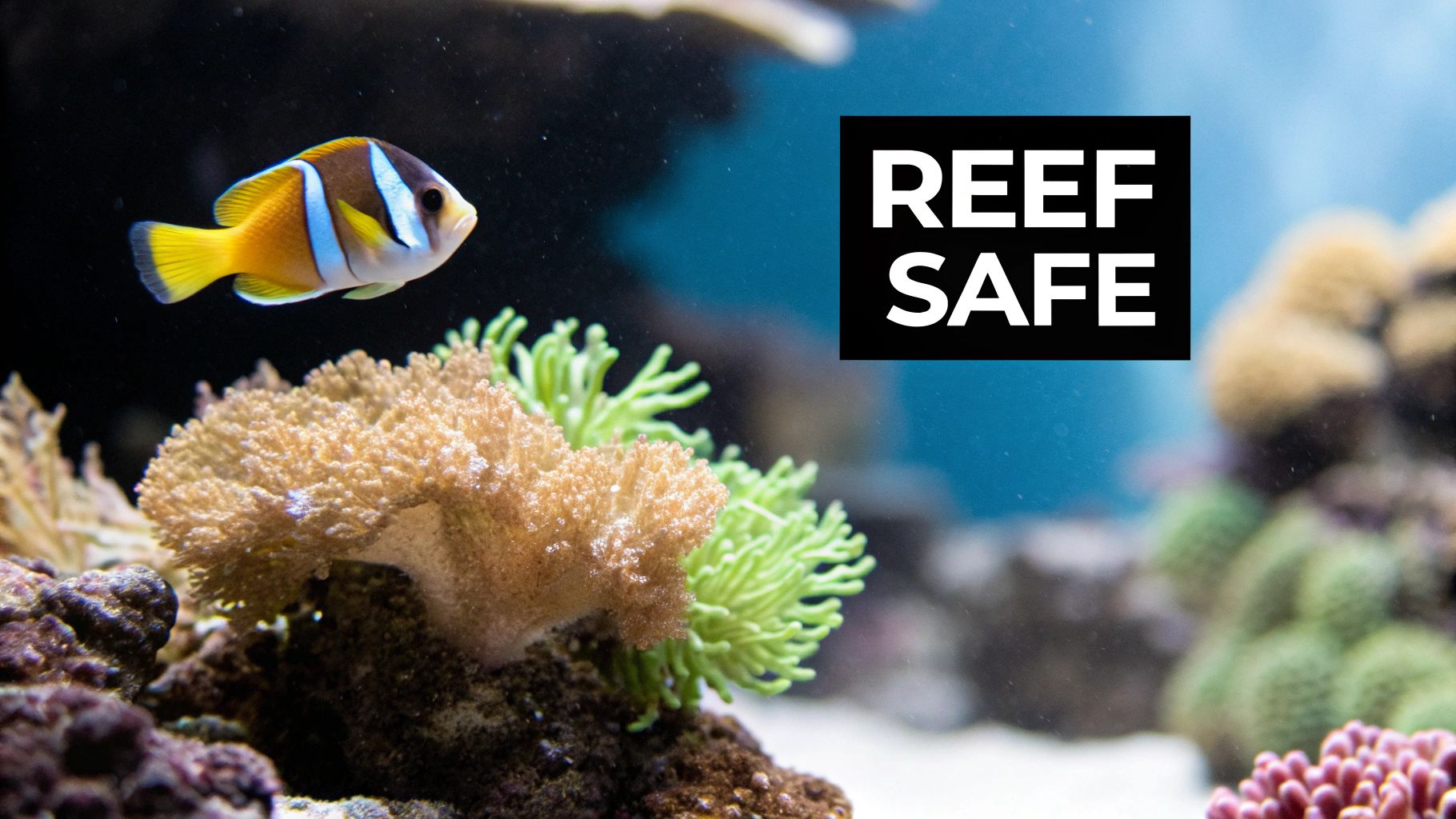
Think of it as a personality profile for fish. Some are model citizens, while others are… let’s just say, opportunistic. A fish's individual temperament, its diet, and the conditions of your specific tank can all influence whether it behaves itself. The label is a solid starting point, but it's not a lifetime guarantee.
To really get a handle on this, we need to break down what makes a fish compatible (or not) with a reef environment. It boils down to three key behaviors.
The Three Pillars of Reef Compatibility
First up, the big one: coral nipping. This is the most direct threat to your reef. Some fish, particularly certain angelfish and butterflyfish, have a natural diet that includes coral polyps. In the vastness of the ocean, this is no big deal. In your living room tank, a little grazing can quickly stress a coral, causing it to retract, stop growing, and eventually die.
Next on the list is invertebrate snacking. Your clean-up crew—those hardworking snails, shrimp, and crabs—are the unsung heroes of your tank, managing algae and detritus. To some fish, however, they look like a walking buffet. Wrasses and dottybacks are notorious for this, and a fish that can’t leave these helpful critters alone isn't truly playing for the team.
Finally, there’s landscape disruption. This is a more subtle problem. Certain gobies and wrasses are fantastic sand-sifters, constantly turning over the substrate. This can be great for aerating the sand bed, but an overzealous digger can bury low-lying corals like brain corals or acans, or worse, destabilize the rockwork you spent hours perfecting.
A fish's behavior is influenced by more than just its species. Factors like tank size, feeding frequency, and the presence of tank mates can all determine whether a "with caution" fish remains a model citizen or becomes a problem.
A Spectrum of Safety
To avoid heartbreak and make smarter choices, it’s much more helpful to think about fish in categories rather than just "safe" or "unsafe." This gives us a more realistic picture of the risks involved.
Generally Safe: These are your go-to fish. They have a long-standing reputation for ignoring corals and inverts entirely. Think Clownfish, Firefish, and most Gobies. They are the most dependable choices for any reef tank.
Reef Safe With Caution: Welcome to the gray area. This is where you'll find species like Dwarf Angelfish and certain Wrasses. In one tank, they might be perfectly behaved angels. In another, they might develop a taste for expensive SPS polyps, often triggered by hunger or boredom.
Not Reef Safe: These fish are known predators of corals or invertebrates, plain and simple. Large Angelfish, most Butterflyfish, and Triggerfish are stunning, but they belong in fish-only systems where they can't wreak havoc on a delicate reef.
To help you get started, here is a quick-reference table that sorts some popular marine species into these categories.
Reef Safe Fish At a Glance
This table gives you a starting point for identifying where common aquarium fish fall on the reef safety spectrum. Always remember to do more in-depth research on any specific species you're considering.
Generally Safe | Reef Safe With Caution | Not Reef Safe |
|---|---|---|
Clownfish | Dwarf Angelfish (e.g., Coral Beauty) | Large Angelfish (e.g., Emperor) |
Firefish | Certain Wrasses (e.g., Six Line) | Most Butterflyfish |
Royal Gramma | Tangs/Surgeonfish | Triggerfish |
Most Gobies | Filefish | Pufferfish |
Blennies (most) | Hawkfish | Groupers |
Cardinalfish | Rabbitfish | Harlequin Tuskfish |
Using this as a guide can save you a lot of trouble down the road. While there are never any absolute guarantees in this hobby, understanding these general classifications is the first step toward building a peaceful and thriving reef community.
Choosing the Right Fish for Your Aquarium
Walking into a good fish store is a feast for the eyes. You're hit with rows of shimmering tanks, each one a little world teeming with vibrant life. Picking out the new inhabitants for your reef tank is easily the most exciting part of the journey, but it's also a moment where a little bit of planning goes a very long way. The goal isn't just to grab the prettiest fish; it's to build a true community where every member has a role and, most importantly, gets along.

To simplify things, let's think about the popular reef safe marine fish based on the job they do in the tank. It’s like casting characters for a play—each one has a part to perform to make the whole show a success.
The Clean-Up Crew: Algae Eaters and Sand Sifters
Every healthy reef needs a diligent janitorial staff. These are the unsung heroes working behind the scenes, keeping nuisance algae mowed down and the sand bed sparkling clean. Honestly, they're the foundation of a low-maintenance, thriving system.
Blennies and Gobies are the undisputed champs here. They pack huge personalities into functional little bodies, making them essentials in most tanks.
Lawnmower Blenny (Salarias fasciatus): This fish is a workhorse, plain and simple. It relentlessly grazes on the film algae that coats your rocks and glass, and its goofy, bug-eyed look makes it a fan favorite.
Diamond Goby (Valenciennea puellaris): Got a sand bed? You need this fish. Diamond Gobies are master sand-sifters, constantly scooping up mouthfuls, filtering out any tasty morsels, and spitting out clean, aerated sand.
Tailspot Blenny (Ecsenius stigmatura): A perfect choice for smaller tanks, the Tailspot is a tiny but mighty algae eater with an oversized personality. You'll often find it perched on a rock, just watching the world go by.
These fish aren't just useful; they add a whole new layer of activity and character to the lower levels of your aquarium.
Centerpiece Swimmers: The Stars of the Show
Now for the headliners. These are the fish that catch your eye the second you look at the tank—the colorful, active swimmers that own the middle and upper parts of the water column. They bring that dynamic energy and movement that makes a reef tank so mesmerizing. While they don't have a specific "clean-up" job, their role is to be the visual heart of your reef.
If you're just dipping your toes into the saltwater world, we've got more great options in our comprehensive guide to starter fish for saltwater tanks.
Classic examples like Ocellaris Clownfish and certain Cardinalfish are popular for a reason.
Ocellaris Clownfish (Amphiprion ocellaris): Famous for good reason, these guys are incredibly hardy, especially captive-bred ones. They're peaceful, don't get too big, and their wiggling dance in an anemone is one of the most iconic sights in the hobby.
Banggai Cardinalfish (Pterapogon kauderni): With their bold, graphic patterns and unique fins, Banggai Cardinals are just stunning. They're calm, slow-moving fish that tend to hover in place, adding a touch of serene elegance to any tank.
Choosing your centerpiece fish is a personal decision, but always make sure their temperament fits with the peaceful community you're trying to build.
The "With Caution" Crew: Calculated Risks
Okay, let's talk about the gray area. The "With Caution" list is filled with some of the most beautiful fish in the hobby, but they come with a catch: they might decide your corals look like a tasty snack. These species, especially Dwarf Angelfish, have a reputation for occasionally nipping at coral polyps.
So, why does one Coral Beauty angel completely ignore corals while another turns into a polyp-shredding monster? It usually comes down to a few key factors:
Tank Size: In a bigger tank, say 75+ gallons, there’s more room to roam and more natural food to graze on. This keeps the fish busy and less tempted to sample your corals. In a cramped 30-gallon, that same fish might get bored and destructive.
Diet: A well-fed fish is a well-behaved fish. If a Dwarf Angel gets plenty of high-quality foods, including algae-based and meaty options, it's far less likely to get curious about your prized zoanthids.
Individual Temperament: At the end of the day, fish have their own personalities, just like people. Some are just naturally more mischievous than others.
The "Reef Safe With Caution" label isn't a "Do Not Enter" sign. Think of it as an invitation to be a more observant and proactive hobbyist. Success with these fish hinges on understanding their needs and watching their behavior like a hawk.
The Coral Beauty Angelfish (Centropyge bispinosa) is the perfect example. Put one in a large, mature reef with tons of live rock to graze on, and it will likely be a model citizen. But drop that exact same fish into a small, bare tank, and you might find it developing a taste for expensive coral frags. The environment you provide is everything. By understanding these little details, you can make an informed choice and pick the perfect fish that fit both your tank and your comfort level for risk.
Building a Peaceful Reef Community
Picking out a collection of gorgeous reef safe marine fish is one thing. Actually building a true community where they all get along? That’s the real secret to a thriving, low-stress aquarium. Think of yourself as an underwater city planner. Your job is to manage territory, personalities, and resources to prevent total chaos.
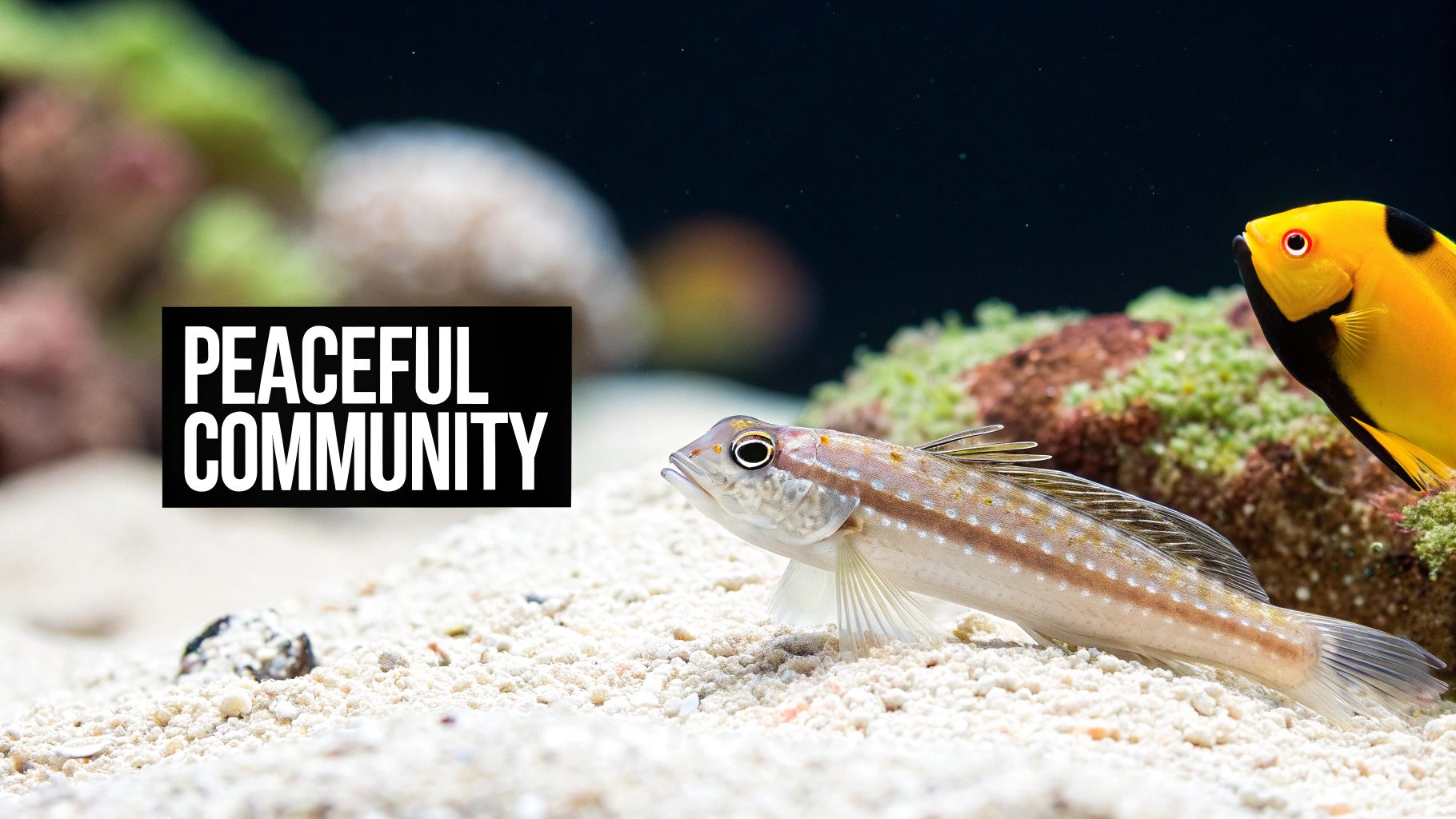
This process starts way before any fish hits the water. It begins with understanding how these animals see their world and interact with each other within it.
The Real Estate of the Reef
Your aquarium's layout is basically a collection of different neighborhoods. Some fish are hunting for a cave with a view, others need open water to cruise, and some just want a quiet patch of sand to call home. Respecting these territorial needs is the single most important thing you can do to prevent conflict.
Bottom Dwellers: Gobies, blennies, and jawfish live their entire lives on the substrate. They stake out small territories around their favorite burrow or cave and almost never stray far.
Rock Dwellers: Fish like Royal Grammas and many wrasses claim their turf within the rockwork. They’re constantly darting between crevices and will fiercely defend their chosen hiding spots.
Open Water Swimmers: Your tangs, Chromis, and Anthias need room to stretch their fins. Their "territory" is the whole water column, and they get seriously stressed in cramped quarters.
When you understand these zones, you can stock your tank vertically. You can have a Watchman Goby on the sandbed, a Royal Gramma tucked into the rocks, and a school of Chromis swimming up top. They all coexist peacefully because they aren't fighting over the same piece of real estate. The symbiotic pair-up of a goby and its shrimp partner is a perfect example of a tiny, peaceful community—you can dive deeper in our ultimate care guide for the Watchman Goby and Pistol Shrimp.
Order of Introduction Matters
One of the oldest tricks in the book for preventing bullying is also one of the most effective: introduce new fish in the right order. Always, always add your most peaceful and passive fish first. This gives them a chance to settle in, find their homes, and get comfortable without being harassed.
Save the more territorial or semi-aggressive species for last. When a bolder fish enters an already established community, it's far less likely to try and claim the entire tank. It sees that the best spots are already taken and will usually just carve out a smaller space for itself.
By adding the most docile fish first, you essentially give them "squatter's rights." They establish their presence, making it harder for a new, more assertive fish to dominate the entire aquarium.
This simple technique can honestly be the difference between a harmonious tank and a constant battleground.
Stocking Density and Water Quality
Finally, let's talk about population control. An overstocked tank is a ticking time bomb. When too many fish are competing for limited space and resources, stress levels go through the roof. That stress leads directly to aggression and weakened immune systems.
More fish also means more waste, plain and simple. This puts a massive strain on your filtration and can quickly send your water quality into a nosedive, with nitrate and phosphate spikes that fuel ugly nuisance algae. Forget the old "one inch of fish per gallon" rule—it's completely outdated. You need to consider the adult size and the biological load of every single species.
Stocking responsibly has a direct connection to the health of wild reefs. These incredible ecosystems support roughly 25% of all marine life, including so many of the fish we love to keep. The global trade in live reef fish is huge, estimated at 20,000 to 30,000 metric tonnes every year, which puts immense pressure on these fragile environments. By choosing sustainably sourced fish and keeping a healthy, properly stocked tank, you reduce stress and animal loss, which helps make our hobby more sustainable. You can learn more about the impact of the live reef fish trade and see why these conservation-minded practices are so critical.
Feeding Strategies for Specialized Fish
While most reef-safe fish are happy to munch on flakes and pellets, some of the most stunning species in the hobby have much pickier appetites. Think of the mesmerizing Mandarin Dragonet or the delicate Pipefish. These aren't labeled "expert-level" because they're aggressive—they're labeled that way because they can literally starve in a tank that isn't prepared for them.
These fish are micro-predators, perfectly evolved to hunt tiny crustaceans across the rockwork all day long. They simply don't recognize processed foods. For them, survival in an aquarium hinges entirely on a large, self-sustaining population of live copepods and amphipods.

It helps to think of your live rock and sand bed as a microscopic pasture. In this pasture, tiny "livestock" (the pods) graze and reproduce, providing a constant, natural buffet for your specialized hunters.
Cultivating a Live Food Buffet
The secret to keeping these amazing fish isn't about being a fish expert—it's about becoming a "pod farmer" first. Before you even dream of bringing a Mandarin home, your tank needs to be a bustling metropolis of microfauna.
This means your tank needs to be mature, which in reefing terms means it has been running for at least six months to a year. This gives the pod population the time it needs to establish itself and become a stable, renewable food source.
Want to give your pod farm a head start? Here's how to do it:
Set Up a Refugium: This is a game-changer. A refugium is a protected zone, usually in your sump, with its own light, a deep sand bed, and macroalgae like chaetomorpha. It's a five-star hotel for pods where they can reproduce without getting eaten. The overflow then carries a steady stream of new pods into your main display tank.
Seed with Live Pods: Add high-quality, live copepod cultures directly into your tank and refugium. The best time to do this is at night. Turn off your pumps for about an hour to let the pods settle into the rockwork instead of getting skimmed out.
Feed the Pods: Don't forget, your pods need to eat too! Dosing your tank with phytoplankton provides a direct food source for many copepod species, which helps them multiply much faster.
A thriving copepod population is more than just fish food; it's a neon sign flashing "HEALTHY TANK." The presence of these tiny critters tells you your reef ecosystem is mature and stable enough to support more delicate inhabitants.
Is Your Tank Ready for a Mandarin?
So, how do you know if your pod pasture is lush enough? The old-school "flashlight test" is still the best way.
Wait an hour or two after your main lights go out, then grab a flashlight and shine it on the aquarium glass. If you see dozens of tiny white specks scurrying away from the beam, you're in business. That's a great sign your pod population is robust enough to support a specialized feeder.
Even with a healthy population, it's smart practice to supplement occasionally. Adding a fresh batch of live copepods every now and then ensures your fish get a diverse diet and prevents the natural population from getting wiped out. For a deep dive, you can learn all about the essential food requirements for Mandarin Dragonets in our dedicated guide.
Successfully keeping these fish is one of the most rewarding milestones in the hobby. It all starts with a commitment to cultivating their live food source.
How to Source and Quarantine New Fish
Adding a new fish to your reef tank is one of the most exciting moments in this hobby. It's also one of the most dangerous. A single sick fish can unleash a wave of disease or parasites that could decimate the beautiful ecosystem you've worked so hard to build. That's why figuring out where to get your fish and having a rock-solid quarantine process isn't just a "best practice"—it's the only real insurance policy you have for your entire reef.
It all starts with choosing the right fish from the right place. The difference between a captive-bred fish and one caught in the wild is massive, impacting not only your tank's health but the well-being of our oceans. Captive-bred fish are literally born and raised for aquarium life. They’re already used to being in a tank, they eat prepared foods without hesitation, and they are generally far hardier and less stressed out.
Wild-caught fish, on the other hand, have been on a long, brutal journey from a coral reef halfway across the world to a tank in your local store. That entire ordeal hammers their immune system, making them incredibly vulnerable to diseases that can easily spread to your other fish.
Choosing Captive-Bred for a Healthier Reef
Whenever you have the choice, go with captive-bred. It's the single best decision you can make. You’re supporting a more sustainable hobby and getting a healthier, better-adjusted animal for your tank. This is more critical than ever when you look at the sheer scale of the aquarium trade. The United States is the biggest market for tropical marine fish, and even with all the progress in aquaculture, research suggests at least 90% of the fish sold are still wild-collected. This includes many of the most popular reef safe marine fish.
What's really interesting is that captive-bred fish are often cheaper, so the sustainable choice is also the smart financial one. You can explore more about the reef fish trade to see just how much these decisions matter.
When you're at the fish store, take your time and really watch any fish you’re considering. A healthy fish is active and aware. Its eyes should be clear, and its breathing should be calm and steady—not fast or labored. Check its fins for any tears or clamping. And the most important thing? Ask to see it eat. A fish that attacks food with enthusiasm is almost always a healthy fish.
The Non-Negotiable Quarantine Process
Okay, so you’ve picked out your new fish. The real work is just beginning. Quarantine is not optional. It’s a mandatory step for anyone who is serious about keeping a healthy reef. The idea is simple: isolate the new fish in a separate tank for at least 4-6 weeks. This gives you time to observe it and treat any potential illnesses before it gets anywhere near your display tank.
Think of it like this: you wouldn't just let a random stranger move into your house, right? Your quarantine tank (QT) is where you get to know them first.
Your QT setup doesn't have to be fancy at all. A simple 10-20 gallon bare-bottom tank, a heater, a basic filter like a hang-on-back or a sponge filter, and some PVC pipe elbows for hiding spots are all you need. The bare bottom makes it super easy to see what's going on and to keep things clean, and the PVC gives the fish security without getting in the way of treatment.
Quarantine is your proactive defense system. It is the only reliable way to prevent devastating diseases like Ich (Marine White Spot Disease) and Velvet (Amyloodinium) from turning your thriving reef into a hospital tank.
Acclimation and Observation
First things first, properly acclimate your new arrival to the quarantine tank's water to keep stress to a minimum. Once it's settled in the QT, the clock starts. For the first week, just watch. You’re looking for anything out of the ordinary—spots, scratching on objects, rapid breathing, or just hiding all the time. During this time, feed it a variety of high-quality foods to help it build up its strength.
If the fish looks perfectly healthy after a week or two, you can decide whether to proceed with preventative treatments or just continue to observe it for the full quarantine period. This patient, methodical process is what ensures that when your new reef safe marine fish finally makes it to the main display, it's healthy, strong, and poses zero threat to its new tank mates.
Answering Your Top Reef Safe Fish Questions
Even with the best-laid plans, questions are going to pop up. It's just part of the journey. This section tackles the most common hurdles and "what if" scenarios that reefers face when trying to build a peaceful community tank.
Can I Add a "Caution" Fish to My Established Reef?
Thinking about adding a "Reef Safe With Caution" fish, like a gorgeous Coral Beauty Angelfish, to your mature reef? It's a calculated risk, not a total shot in the dark. The key is to stack the odds heavily in your favor.
First off, a bigger, well-established tank is your best friend here—think 75 gallons or more. More space means more territory and natural places to graze, which cuts down on the boredom that often leads to coral nipping.
The types of corals you keep matter, too. Fleshy, slow-growing LPS corals can look like a five-star buffet to a curious angelfish. You'll have a much better chance of success if your tank is dominated by faster-growing SPS or less-tasty soft corals. And most importantly? Always, always have a backup plan. Be ready to rehome the fish if it decides your prize acans are its new favorite snack. An acclimation box can be a great tool to watch its behavior for a few days before giving it free rein.
How Many Reef Safe Fish Can I Have?
Let's just agree to retire the old "one inch of fish per gallon" rule. It's outdated and doesn't tell the whole story. A much better way to think about it is bioload—basically, the total amount of waste your fish produce. A single 3-inch Tang is a waste-producing machine that needs tons of swimming room; it has a far bigger impact on your system than three little 1-inch gobies.
The real answer to "how many" depends entirely on your tank's engine: your filtration system. Your protein skimmer, live rock, and water change routine are what process all that waste. A beast of a skimmer and a diligent maintenance schedule can handle a higher bioload.
But here’s the best advice anyone can give you: always understock your tank. A lighter bioload means less stress on your filtration, rock-solid water parameters, and healthier fish that aren't constantly fighting for space. It creates a safety buffer that makes the whole system more forgiving.
When in doubt, add new fish slowly, one or two at a time. This gives your biological filter a chance to catch up and lets you see how the tank's social dynamic settles before you introduce another personality to the mix.
What Are the Hardiest Fish for a Beginner?
Jumping into reefing can feel like a lot all at once, so picking tough, resilient fish is the secret to building early confidence. For beginners, the best choices are peaceful, hardy, and not picky about their food.
Here are a few A-list candidates for any new reefer:
Ocellaris Clownfish: Specifically captive-bred ones. They are incredibly tough, adaptable, and stay small. Plus, they bring that iconic color and personality every reef tank needs.
Royal Gramma: That stunning split of purple and yellow makes the Royal Gramma a true showstopper. It's also known for being disease-resistant and happily spends its day zipping in and out of your rockwork.
Firefish Goby: With its unique shape and chill vibe, the Firefish is a fantastic choice. Just know they are notorious jumpers, so a tight-fitting lid is non-negotiable.
Tailspot Blenny: This little fish packs a huge personality and has an even bigger appetite for nuisance algae. It’s a workhorse and a character all in one, perfect for smaller reef setups.
What if My "Safe" Fish Starts Nipping Corals?
It’s one of the most frustrating moments in reefing: a fish you trusted suddenly develops a taste for your corals. Before you tear your hair out, take a breath and run through a quick mental checklist. This kind of behavior change is almost always a symptom of something else.
First, check the menu. Is the fish getting enough of the right food? An herbivore like a Tang might start taste-testing your zoanthids if it's not getting enough greens. Try feeding more often or adding a clip of dried seaweed (nori) for it to graze on.
Second, think about stress. Did you just add a new, pushy tank mate? Territorial squabbles can make a perfectly well-behaved fish act out in weird ways.
Finally, sometimes you just get a weirdo. Fish have individual personalities, and on rare occasions, a model citizen from a "safe" species just goes rogue. If changing its diet and reducing stress doesn't work, the only way to protect your reef might be to remove the troublemaker.
The best defense against problem behaviors is keeping your fish fat and happy with the foods they'd find in nature. At PodDrop Live Aquarium Nutrition, we provide pure, lab-grown copepods and phytoplankton to fuel your tank's natural food web. Give your reef the live nutrition it's missing. Learn more at https://www.getpoddrop.com.
Comments