

watchman goby and pistol shrimp: Ultimate Care Guide
There's nothing quite like watching a watchman goby and pistol shrimp pair at work. It’s a captivating, living spectacle of teamwork that you can have right in your home aquarium. This partnership is one of the most classic examples of symbiosis in the hobby. The sharp-eyed goby acts as a lookout for the nearly blind, industrious shrimp, who in turn provides a safe, shared burrow for both. It's easily one of the most rewarding relationships to observe.
The Magic of a Goby and Shrimp Symbiotic Bond
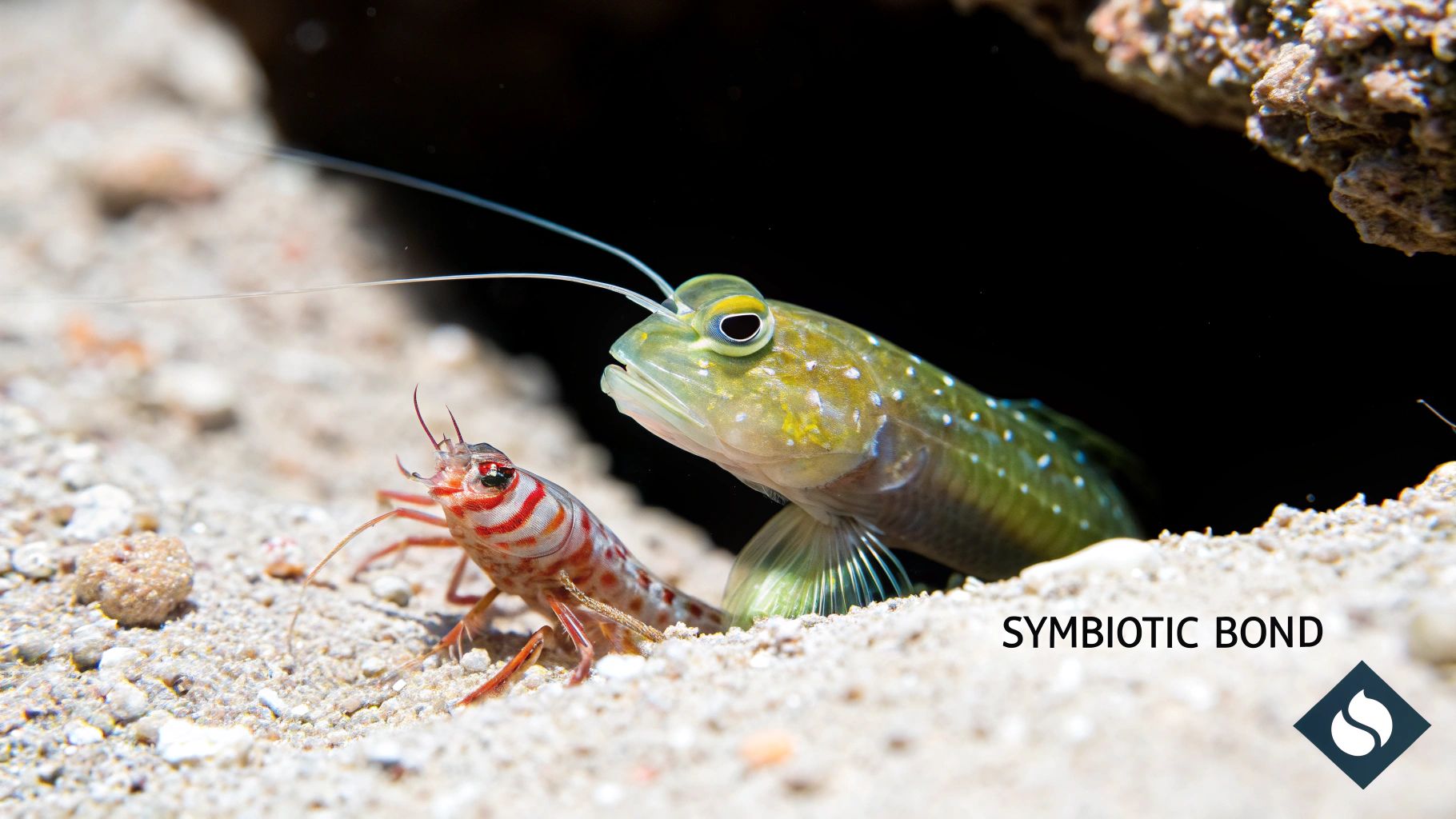
This incredible partnership is a cornerstone of many reef ecosystems and a perfect showcase of nature's ingenuity. The relationship between a watchman goby and a pistol shrimp is a textbook case of mutualism, where two completely different species cooperate and both get something vital out of the deal.
The division of labor is simple yet brilliant. The pistol shrimp is a master architect and a tireless construction worker. It spends its days digging, reinforcing, and maintaining an elaborate burrow system in the sandbed. The problem? Its eyesight is extremely poor, leaving it incredibly vulnerable to predators any time it pops out to discard rubble or grab a bite to eat.
That’s where the watchman goby comes in. With its excellent vision and its habit of perching right at the burrow's entrance, the goby acts as a living security system. It keeps a constant, vigilant watch for any potential threats, from a curious wrasse to your hand moving in the tank.
Communication and Teamwork
The way they communicate is subtle and absolutely fascinating to watch. The pistol shrimp will almost always keep in physical contact with the goby, usually by resting one of its long antennae on the goby's body. When the goby senses danger, it gives a distinct tail flick or a subtle shudder.
This tiny tactile signal is all the shrimp needs. It instantly retreats into the safety of the burrow, and the goby follows a split second later. Both vanish from sight. In exchange for this protection, the goby gets a secure, ready-made home, safe from its own predators. This isn't just a cool novelty; it’s a critical survival strategy.
Key Takeaway: The goby provides the eyes, and the shrimp provides the home. This cooperative dynamic allows both creatures to thrive in environments where they might otherwise struggle to survive alone.
This symbiotic relationship is a remarkable example of mutualism found throughout the tropical waters of the Indo-West Pacific. Out in the wild, approximately 130 species of gobies are known to partner with around 20 species of pistol shrimp, primarily on coral reefs and in seagrass beds. The shrimp engineers burrows that can be up to 80 feet deep, and its very survival depends on the goby’s vigilance, which communicates danger through touch. This alliance boosts the survival and reproductive success for both of them, highlighting just how powerful evolutionary cooperation is in reef ecosystems.
This dynamic interaction is a foundational element in its natural habitat, showing how different species contribute to the overall health of the ecosystem. Understanding this bond is the first step in truly appreciating what makes the complete reef food chain so interconnected and resilient.
Ready to bring home one of the most fascinating duos in the saltwater hobby? Choosing the right goby and shrimp is your first real step, and it's a big one. This isn't just about picking pretty fish; it’s about matchmaking. Success hinges on finding two species that are naturally compatible in size, temperament, and even their burrowing habits.
Not all gobies will shack up with all pistol shrimp. Getting it right from the start saves you the headache of a failed pairing, where one partner hides endlessly or they simply ignore each other. Think of it like setting up roommates—you want a harmonious household, not a silent, awkward standoff. We'll walk through the most reliable pairings to make sure you get it right.
So, Which Goby Should You Get?
The term "watchman goby" gets thrown around a lot, but it usually points to a few key species in the Cryptocentrus genus. Each one has its own personality and look. These are the ones you’ll most likely see.
-
Yellow Watchman Goby (Cryptocentrus cinctus): This is the icon, the classic. Its brilliant yellow color makes it a standout in any tank. They’re hardy, generally peaceful, and only grow to about 3-4 inches, making them a fantastic choice for just about anyone, especially beginners.
-
Pink-Spotted Watchman Goby (Cryptocentrus leptocephalus): A bit larger and just as stunning, this goby sports a mesmerizing pattern of pinkish-orange spots. They can reach up to 6 inches, so they need a bit more room to stretch their fins, but their personality is just as engaging.
-
Diamond Watchman Goby (Valenciennea puellaris): Here’s a common mix-up. While its name includes "watchman," this fish is a sand-sifter and does not pair with pistol shrimp. It's an easy mistake to make, so always double-check the scientific name before you buy.
Thanks to advances in aquaculture, many of these species are now captive-bred, which is great for the sustainability of the hobby. In the wild, they hang out in sandy lagoons and coastal reefs, where having a nearly blind, rock-moving shrimp for a roommate is a brilliant survival strategy. This perfect example of mutualism is something you can read more about in the Aquarium of the Pacific's insights on watchman gobies.
Finding the Right Shrimp Partner
Choosing the goby is only half the equation. You need an industrious shrimp to do the heavy lifting. The good news is that the best choice is also the most common.
-
Tiger Pistol Shrimp (Alpheus bellulus): This is the go-to partner for most watchman gobies, and for good reason. Its bold black, white, and orange bands are stunning, and it’s a tireless excavator. These guys are tough, stay a manageable 2-3 inches, and are almost always ready to pair up.
-
Randall's Pistol Shrimp (Alpheus randalli): Another fantastic option, easily identified by its candy-cane-striped body. It’s a little smaller and can be a bit more reserved than the Tiger Pistol, which makes it a great match for smaller tanks or more timid gobies.
Pro Tip: Your rockwork needs to be bomb-proof. Place all rocks directly on the glass bottom of your tank, before adding sand. A pistol shrimp is a master excavator and will dig the sand right out from under any unstable rocks, causing a dangerous and destructive landslide.
Popular Goby and Shrimp Pairings
To make your decision easier, here’s a quick-glance table comparing some of the most reliable pairings you can create for your reef tank. Matching temperament and size is key to a long and happy partnership.
| Goby Species | Pistol Shrimp Species | Max Size (Goby/Shrimp) | Temperament | Recommended Tank Size |
|---|---|---|---|---|
| Yellow Watchman Goby (C. cinctus) | Tiger Pistol Shrimp (A. bellulus) | 4" / 3" | Peaceful, hardy | 20+ Gallons |
| Pink-Spotted Watchman Goby (C. leptocephalus) | Tiger Pistol Shrimp (A. bellulus) | 6" / 3" | Semi-aggressive, bold | 30+ Gallons |
| Yasha Goby (Stonogobiops yasha) | Randall's Pistol Shrimp (A. randalli) | 2" / 2" | Shy, peaceful | 10+ Gallons |
| Hi Fin Red Banded Goby (Stonogobiops nematodes) | Randall's Pistol Shrimp (A. randalli) | 2" / 2" | Peaceful, can be reclusive | 10+ Gallons |
| Wheeler's Watchman Goby (Amblyeleotris wheeleri) | Tiger or Randall's Pistol Shrimp | 4" / 3" | Peaceful, active | 20+ Gallons |
Ultimately, choosing a pair that is well-documented for successful symbiosis is your safest bet. While other combinations might work, sticking to these tried-and-true pairs greatly increases your chances of witnessing this incredible relationship firsthand.
Should You Buy a Pre-Paired Duo or DIY?
Your local fish store might offer a watchman goby and pistol shrimp that are already paired, or you can buy them separately. Each path has its own set of risks and rewards.
Buying a Pre-Paired Duo
This is the safest route, hands down. A bonded pair has already done the hard work of getting to know each other. You can see them interacting in the store, sharing a burrow, and proving their compatibility. The only real drawback? This convenience usually comes with a higher price tag.
Creating Your Own Pair
Going the DIY route gives you the freedom to pick the healthiest, most vibrant individuals you can find. It’s also typically the more budget-friendly option. The catch is that a successful pairing is never a 100% guarantee. While most Cryptocentrus gobies will happily team up with a Tiger Pistol Shrimp, you’ll need a bit of luck and a lot of patience.
Building Their Ideal Burrowing Habitat
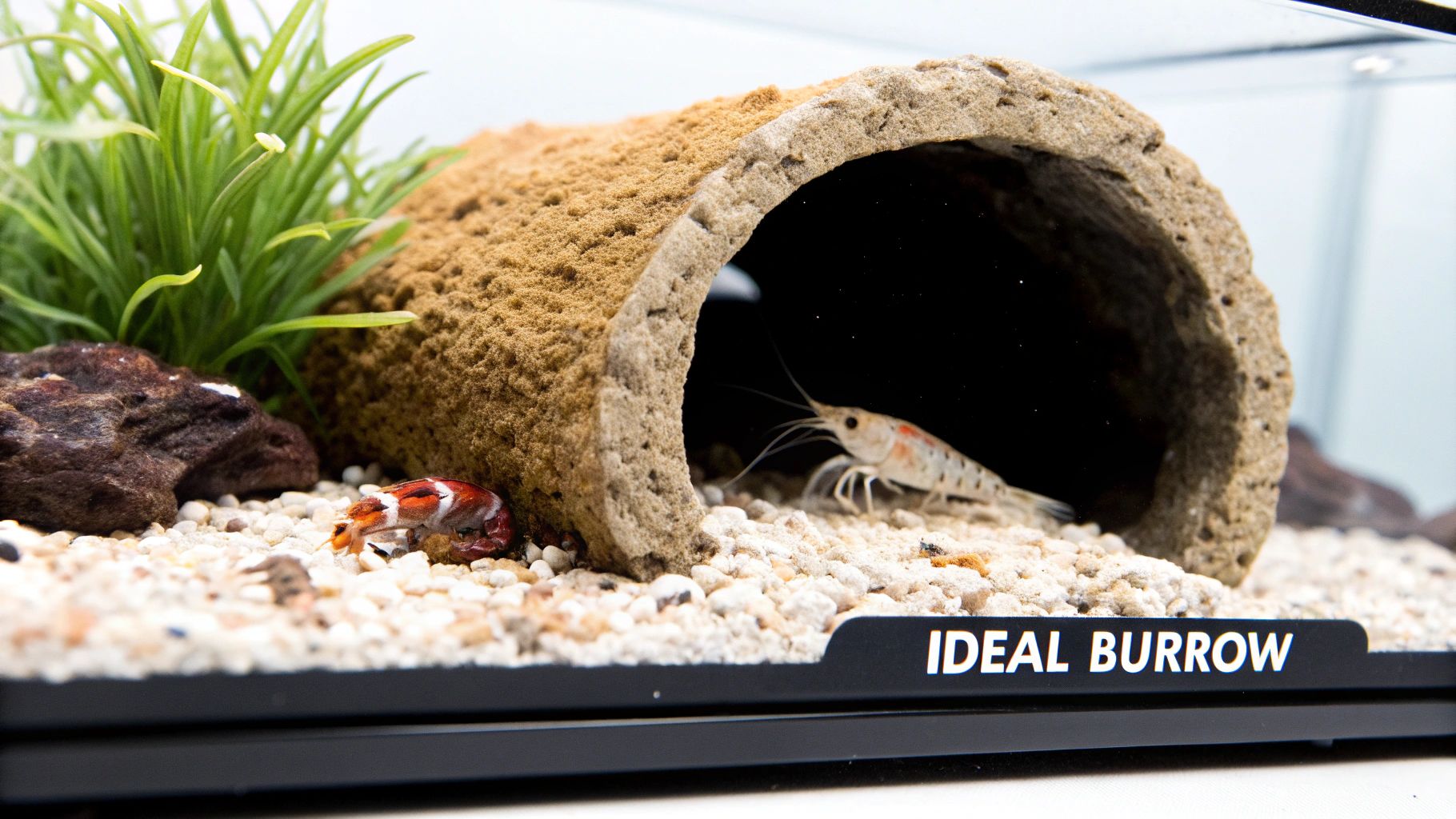
Setting up the perfect home for a watchman goby and pistol shrimp isn't about the flashiest gear. It's about getting inside their heads. You’re essentially creating a custom-built home for a blind, tiny construction worker and its personal bodyguard. The entire success of their amazing partnership hinges on an environment that feels safe and functional enough for them to do their jobs.
The absolute foundation of this habitat—no pun intended—is the substrate. This is the pistol shrimp's entire world, where it will spend its life tirelessly digging tunnels and chambers. If you get this part wrong, the whole relationship might never even get off the ground. A shallow sandbed just won't cut it; the shrimp needs real depth to feel secure and get to work.
For almost any setup, you should be aiming for a substrate depth of at least 3 to 4 inches. This gives your shrimp plenty of raw material to move around and ensures the burrow is deep enough to feel like a real fortress for both of them.
Crafting the Perfect Substrate Mix
Depth is only half the battle; the texture and makeup of the substrate are just as important. A uniform bed of super-fine sand might look clean, but it's a structural nightmare for a burrow. Tunnels will constantly collapse. Your shrimp needs building materials that offer some integrity.
This is exactly where a mixed substrate becomes the hero. The best strategy is to combine a base of fine- to medium-grain sand with a healthy dose of small rubble, crushed coral, and a variety of shell fragments. This mix provides the perfect toolkit. The shrimp will physically pick up and move the larger pieces to reinforce tunnel entrances and shore up the walls, creating a surprisingly stable home.
Think of it as the difference between building a sandcastle with dry sand versus wet sand packed with shells. The rubble and shells are the structural supports that hold everything together, and it just so happens to mimic what they'd find on a natural reef floor.
Aquascaping for Stability and Security
With your substrate planned out, the next critical step is the rockwork. This isn't just about aesthetics—it's a major safety issue. A pistol shrimp is a powerful and relentless excavator. It will dig under anything and everything in its path. If your rocks are just sitting on top of the sand, the shrimp will eventually undermine them, creating a very real risk of a rockslide that could crush your pair or even crack the tank glass.
The Golden Rule of Aquascaping: Always place your live rock and other hardscape directly on the bottom glass of the tank before you add a single grain of sand. This anchors your rockwork, making it completely stable no matter how ambitious your shrimp’s construction projects get.
As you arrange your rocks, try to create some natural-looking caves and overhangs that could serve as starter homes. The shrimp will often choose to begin its main burrow at the base of a solid rock, using it as a pre-made roof. Giving them these inviting starting points encourages them to build where you want them to.
Tank Size and Other Essential Parameters
While a watchman goby and pistol shrimp pair can technically live in smaller tanks like a 20-gallon, the tank's footprint is way more important than its height. A long, wide tank gives the shrimp more ground to explore and build, which helps cut down on territorial stress. A standard 20-gallon long is a far better choice than a 20-gallon high, for instance. If you're new to the whole process, our guide on how to set up a new aquarium has some great foundational tips that apply here, too.
Beyond the tank's shape, a few other things are simply non-negotiable for this duo's well-being.
- A Tight-Fitting Lid: This is not a suggestion. Watchman gobies are legendary jumpers. A sudden shadow, a weird reflection, or just a random spook can send them flying out of the water. A secure lid is an absolute must-have to prevent a preventable tragedy.
- Stable Water Parameters: Just like any other reef inhabitant, they need stability to thrive. Keep your parameters locked in at standard reef levels for temperature (75-78°F) and salinity (1.025-1.026 sg), and keep those nitrates in check.
- Moderate Flow: You need enough flow to keep things clean and oxygenated, but avoid pointing a powerhead directly at the sandbed. A sandstorm is not conducive to construction, and it makes it tough for the goby to perch comfortably at the burrow entrance.
By thinking through these key elements—substrate, rock stability, tank dimensions, and a secure lid—you're providing the perfect canvas for this symbiotic pair to build their home and show off their incredible natural behaviors. This thoughtful setup is the single most important thing you can do to ensure they have a long, happy life together.
Introducing and Pairing Your Goby and Shrimp
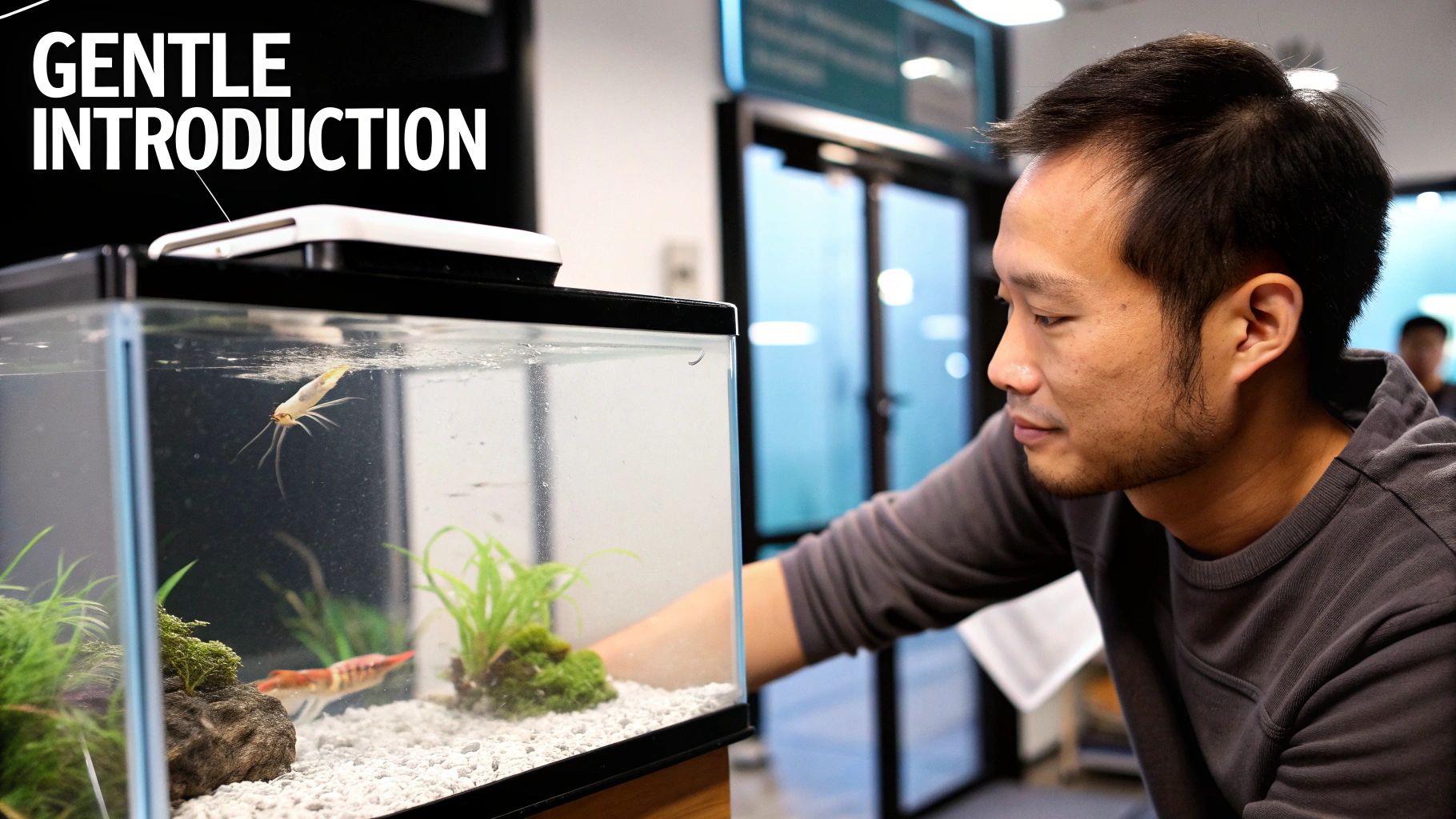
This is the moment you've been waiting for—the first handshake. How you handle this initial meeting sets the stage for either a quick partnership or a frustrating, long-term waiting game.
The absolute key is to make the process as low-stress as possible for both the watchman goby and pistol shrimp. The most common mistake I see hobbyists make is rushing this part. You can't force a friendship.
In the vastness of the ocean, these animals find each other over time. In your tank, you’re playing matchmaker, so your job is to create the perfect, threat-free scenario for them to meet. And like any new addition to your tank, it all starts with proper acclimation. Drip acclimation is the gold standard, period. It slowly equalizes the water parameters and prevents the shock that can make animals hide and act unnaturally.
A Gentle (and Effective) Introduction Strategy
Once both animals are fully acclimated and ready to go, it's time to make the introduction. You've got a few options, but my go-to technique for a reliable, low-stress pairing is what I call the "container method." It’s a simple, controlled way to make sure they find each other without causing a panic.
Here’s my step-by-step for getting it right:
- Shrimp First: Release the pistol shrimp into the tank. It will almost immediately start scoping out the rockwork for a place to hide or start digging. Give it about 15-20 minutes to get its bearings.
- Use a Clear Container: Grab a large, clear container—a clean glass jar or a plastic breeder box works perfectly—and place it on the sandbed right near where the shrimp has settled.
- Contain the Goby: Now, gently release the goby inside the container. The clear walls let the goby see its new home and, more importantly, let the shrimp sense its presence. This prevents the goby from just bolting to a random corner of the tank.
- Wait and Watch: This is where patience comes in. The shrimp, sensing a potential bodyguard nearby through chemical cues, will often start burrowing directly toward the container. Once you see the shrimp digging right up against the glass, you can gently lift the container. More often than not, the goby will dive straight into the brand-new burrow.
This method doesn't force an interaction. Instead, it leverages their natural instincts in a controlled environment to guide them together.
A Note on Timing: The pairing process can take minutes, hours, or sometimes even a few days. Don't get discouraged if they don't shack up immediately. As long as you don't see any outright aggression, it's best to let nature take its course.
Recognizing the Signs of a Successful Bond
So, how do you know if your matchmaking worked? The signs are usually crystal clear, and honestly, it’s one of the most rewarding things to witness in a reef tank. A successfully paired duo has a few tell-tale behaviors that confirm their symbiotic contract is in full effect.
You'll know they've bonded when you see:
- Shared Quarters: This is the most obvious one. The goby will be standing guard at the entrance of a burrow while the shrimp is busy excavating inside.
- Constant Contact: The shrimp will almost always have one of its long antennae touching the goby's body or tail. Think of it as their dedicated communication line.
- The Danger Signal: This is the magic. Watch for the goby’s subtle tail flick. When it senses danger, it gives a quick shudder, and poof—both of them vanish into the burrow in a flash. That's the partnership in action.
What to Do if They Don't Pair Up
Sometimes, despite your best efforts, they just don't click right away. If it's been a few days and they’re living on opposite sides of the tank, don't panic. There are a couple of gentle interventions you can try.
If they stay separate, you can try a little "reseeding." Carefully net the goby and re-release it closer to where the shrimp has built its burrow. Sometimes all they need is a second chance to meet. I've also found that slightly rearranging a rock or two can encourage the shrimp to start a new burrow, creating a fresh opportunity for them to cross paths.
That said, in rare cases, some individuals are just not compatible. If weeks pass with zero interaction, you might have an incompatible pair, which is always a small risk when buying them separately. But if you've picked the right species and been patient with the introduction, your odds of success are incredibly high.
Long-Term Care and Feeding Strategies
Alright, you’ve successfully introduced your watchman goby and pistol shrimp, and they’ve paired up. The real fun—and the real work—starts now. Long-term success with this duo comes down to routine and observation. This isn't a "set it and forget it" kind of relationship; it's a dynamic partnership that thrives on stability.
Your job is to provide that stability through a healthy environment and, most importantly, a solid feeding plan that keeps both the lookout and the excavator happy.
I make it a point to spend a few minutes every day just watching the pair. Is the goby on duty at the entrance? Do you see new piles of sand or rubble that weren't there yesterday? These are the tell-tale signs of a healthy, functioning team. If the goby suddenly goes into hiding for days or the shrimp stops its constant construction work, it's often the first clue that something isn't right.
Crafting a Balanced Diet for the Goby
The watchman goby is the public face of this operation, which makes feeding it pretty straightforward. It’s a carnivore through and through, meaning it needs a diet packed with meaty foods to keep its colors bright and its energy up. Just tossing in the same old pellets every day won't cut it and can lead to health problems down the road. Variety is everything.
I like to rotate foods throughout the week. This keeps things interesting for the fish and ensures it's getting a wide spectrum of nutrients.
- Frozen Meaty Foods: You can't go wrong with staples like mysis shrimp and brine shrimp. They’re what a goby would naturally hunt, and they are eagerly accepted.
- Quality Pellets: Good sinking carnivore pellets are a fantastic base for their diet. Always check the ingredients—you want to see whole fish or shrimp listed first.
- Live Foods: Every now and then, I'll add live copepods or blackworms. It’s a great way to enrich their environment and kick their natural hunting instincts into gear.
Watch how your goby eats. It will snatch food that drifts by its burrow, usually in a lightning-fast dash. Be careful not to overfeed; any food that settles and rots will only foul your water.
Ensuring the Pistol Shrimp Gets Its Share
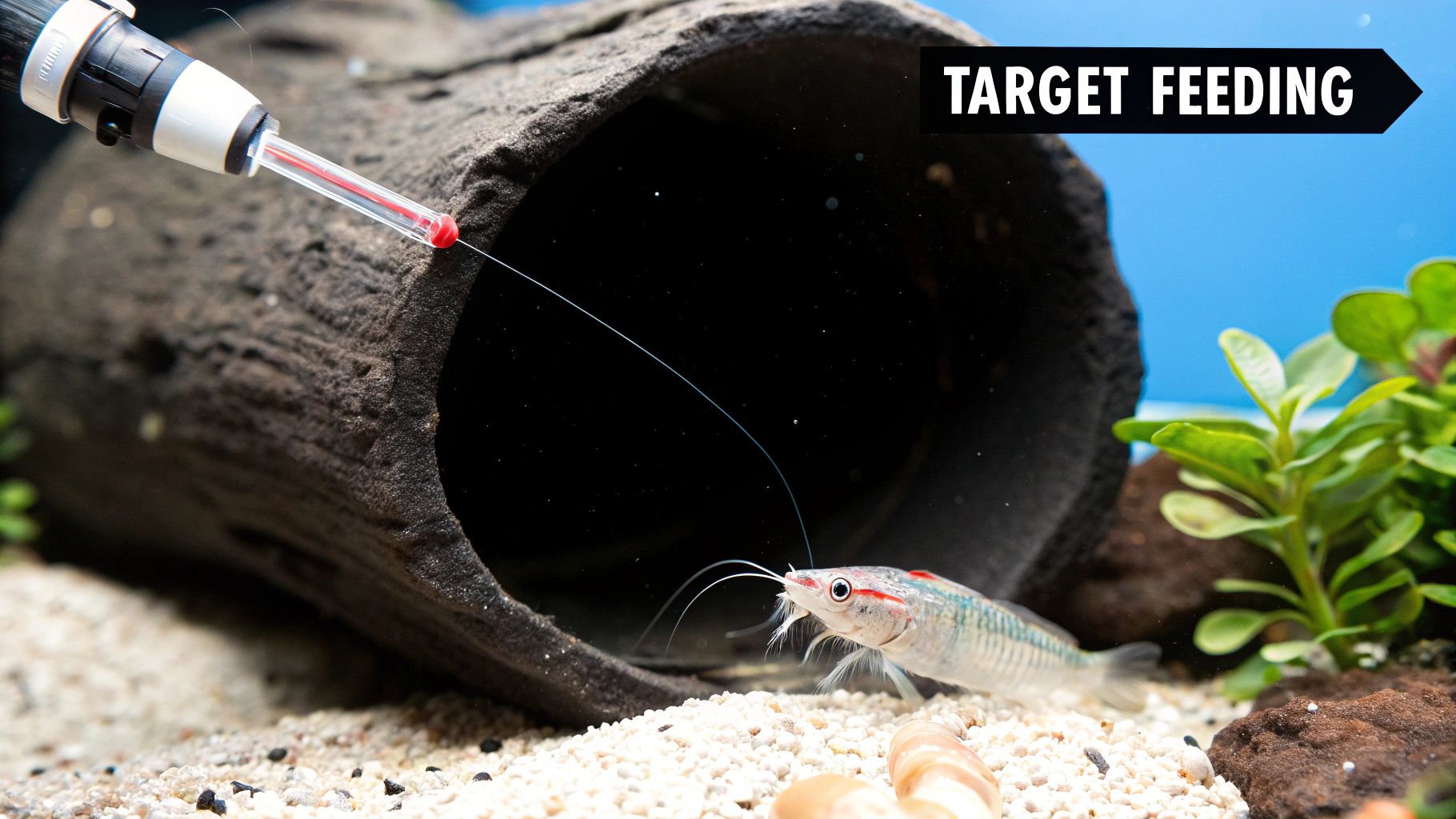
Now for the tricky part: feeding the pistol shrimp. This little guy is a homebody and rarely ventures far from the safety of its burrow. This means it can easily get outcompeted for food by more boisterous tank mates. You can't just assume it’s finding enough leftovers. Direct feeding is really the only way to be sure.
This is where target feeding becomes your best friend. Grab a turkey baster or a pipette, and you can deliver food right to their doorstep. The shrimp will catch on to this routine surprisingly quickly, and soon you'll see its little antennae pop out, ready to grab whatever you offer.
Pro Tip: Gently squirt a small cloud of mysis shrimp or other meaty bits right at the entrance of their burrow. The shrimp will smell it immediately and come to the door to collect its meal, no risky foraging required.
The pistol shrimp is also a natural-born scavenger, constantly sifting the sand for anything edible. Its diet is a mix of what you provide and what it unearths on its own. If you want to dive deeper into what makes these critters tick in the wild, our guide on what shrimp eat in the ocean is a great resource.
Managing the Ever-Changing Landscape
A happy pistol shrimp is a busy pistol shrimp. It will dig, move sand, build, and renovate constantly. That's a great sign! But it can also mean your aquascape is never quite the same from one day to the next.
Don't be surprised to find sand dunes where there were none before, or to see a small coral frag completely buried. It’s all part of the charm. When you’re doing your tank maintenance, just be mindful of their home. Siphon the sand gently around the burrow entrance to avoid collapsing their hard work. If a rock needs moving, do it slowly and carefully.
By sticking to these simple but consistent routines for feeding and observation, you'll provide the stable environment your watchman goby and pistol shrimp need to truly thrive for years.
Goby Shrimp Pair FAQs
Even with the perfect setup, you're bound to have questions. This whole goby-shrimp partnership is a living, breathing thing, and things can get weird. Knowing what to expect and how to handle the common curveballs makes all the difference. Let's get into some of the questions I hear all the time from hobbyists.
Getting these common concerns out of the way will help you relax and just enjoy watching this amazing duo do their thing. When you know what's normal and what's not, you can spot real problems quickly and keep your pair happy for years to come.
Will a Pistol Shrimp Go After My Other Fish and Inverts?
This is probably the number one worry, and it's a fair question. That claw is no joke. The good news? For the most part, pistol shrimp are considered completely reef-safe.
That powerful snap is mostly for digging tunnels and telling intruders to back off, not for hunting. They have zero interest in your corals, snails, crabs, or clownfish. The "snap" is really just for stunning tiny critters that wander too close to the burrow or as a warning shot to scare off bigger threats.
That said, you still need to be smart about it. Super tiny, slow-moving ornamental shrimp (like Sexy Shrimp) or nano-sized gobies that live on the sandbed could be at risk, especially in a smaller tank. But in a well-fed aquarium with reasonably sized tank mates, the risk is incredibly low. Your cleaner shrimp and clownfish will be just fine.
What if My Goby and Shrimp Aren't Pairing Up?
First thing: breathe. Patience is your best friend here. In a new tank, it can take anywhere from a few hours to a couple of weeks for them to find each other and shack up. Before you panic, take a hard look at their environment. Is the sandbed deep enough? Is there plenty of rubble for the shrimp to work with? Does the rockwork feel secure?
If a week or two goes by and they're still living on opposite ends of the tank, a little gentle intervention might be in order. Sometimes, all it takes is moving a small rock to encourage the shrimp to dig a new burrow closer to where the goby likes to chill. That simple change can be enough to spark an introduction.
Real-World Scenario: I once had a goby that insisted on hiding under a rock ledge while the shrimp set up shop across the tank. I carefully netted the goby and released it right near the shrimp's new burrow. It was a low-stress way to force a "meeting," and they were paired up by the next morning. Just know that in rare cases, some individuals just don't click. It's the risk you take when buying them separately.
How Do I Know if My Pistol Shrimp Is Actually Eating?
The pistol shrimp is a master of hiding, so watching it eat is a rare sight. You can't just sprinkle in some flakes and hope for the best. The most reliable way to make sure it's getting fed is to target feed it.
Grab a turkey baster or a feeding pipette and gently squirt some small, meaty foods like mysis or brine shrimp right at the entrance of their burrow. You’ll usually see an antenna shoot out and snatch the food. This is your confirmation that it's eating and also teaches it that food gets delivered right to its door.
Besides direct feeding, the shrimp's behavior is the best sign of its health.
- Constant Digging: A busy shrimp is a happy shrimp. If you see fresh piles of sand and rubble every day, that’s a great sign of a healthy, energetic animal that's finding enough food to fuel its work.
- Antennae Activity: Even when it’s completely hidden, you should see its long antennae poking out, constantly twitching and sensing the water.
Can I Keep More Than One Goby and Shrimp Pair?
For almost every home aquarium, the answer is a hard no. I wouldn't even think about it unless you have a massive system—we're talking 100 gallons or more with a huge footprint.
Both the watchman goby and the pistol shrimp are fiercely territorial toward their own kind. Dropping a second pair into the mix is a recipe for disaster. It will almost certainly lead to non-stop fights over burrows and territory. The dominant pair will bully the other, causing chronic stress and potential injury. Just stick to one happy, bonded pair. It’s the safest and most rewarding way to go.
A varied diet is the cornerstone of a healthy reef, feeding everything from your fish to the microscopic life your watchman goby and pistol shrimp depend on. At PodDrop, we deliver fresh, live copepods and phytoplankton to supercharge your tank's biodiversity from the ground up. Give your reef the foundational nutrition it craves by visiting https://www.getpoddrop.com.