

Your Essential Guide to Food for Mandarin Dragonets
If you've ever been captivated by the psychedelic swirls of a Mandarin Dragonet, you're not alone. They're easily one of the most beautiful fish in the hobby. But that beauty comes with a catch—a very specific, non-negotiable dietary need that trips up many well-meaning aquarists.
The absolute number one food for mandarin dragonets is a steady, never-ending supply of live copepods and amphipods. These aren't fish that get excited for feeding time; they are meticulous, full-time hunters that graze all day, every day. Standard flake and pellet foods just don't cut it. In fact, trying to feed them processed foods is a fast track to starvation.
Why Your Aquarium Is an Ecosystem, Not a Fishbowl
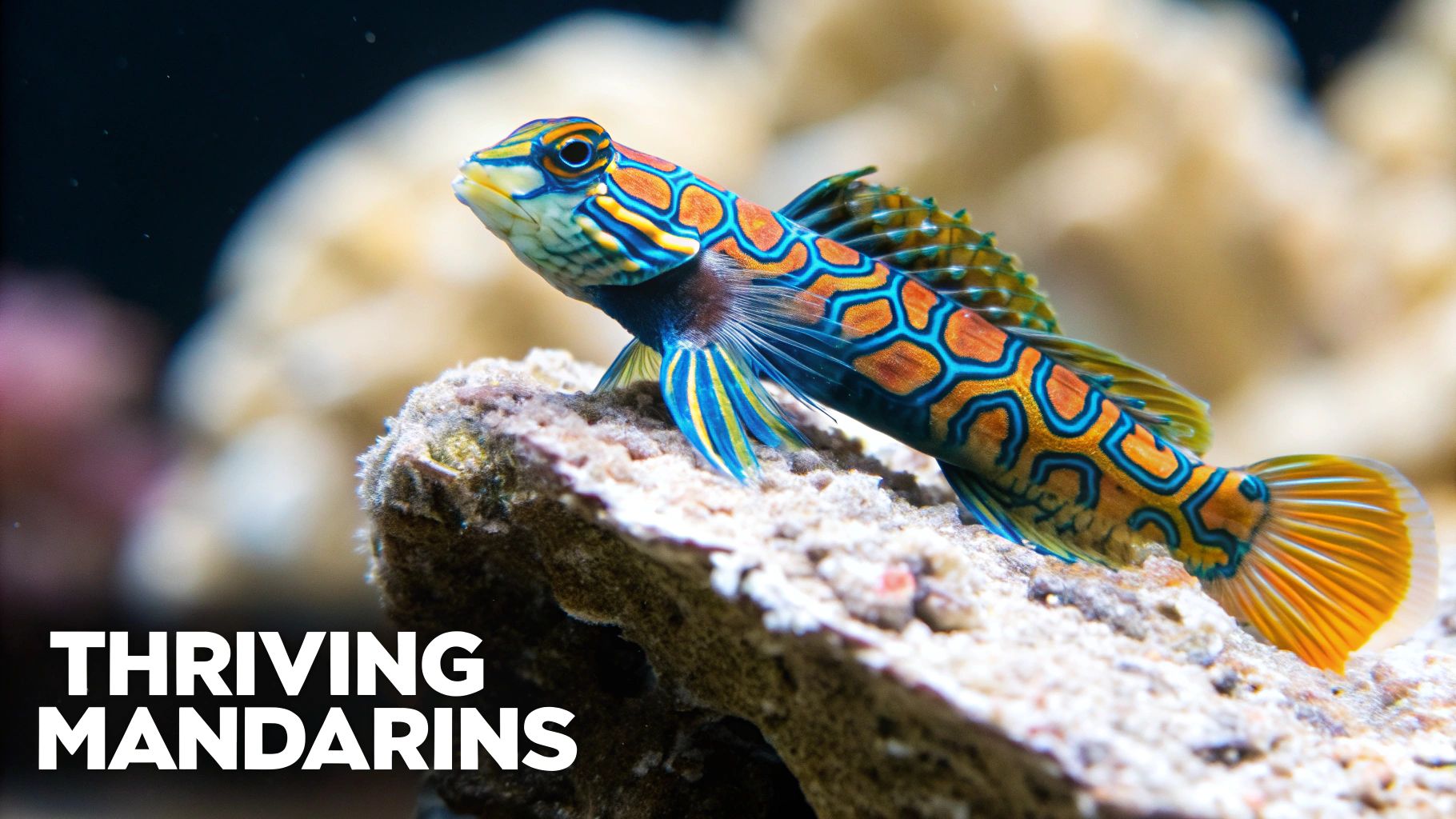
The biggest mistake people make with Mandarins is thinking they can feed them like a clownfish. You drop in some food, the fish eats, and everyone's happy. Unfortunately, that approach will only lead to watching your gorgeous Mandarin slowly waste away.
The key is a total mindset shift. You’re not just keeping a fish; you’re cultivating a complete, living ecosystem.
These little guys spend their entire day methodically pecking at your live rock and sand bed, hunting for their next microscopic meal. They need a constant, self-renewing food source to stay healthy. Pellets and flakes? They don't even register as food to a Mandarin and certainly don't meet their unique nutritional needs.
A successful mandarin tank is a living, all-you-can-eat buffet, not a restaurant with set mealtimes. Your fish has to be able to find and eat live prey throughout the day to keep its energy up.
This guide is here to take the mystery out of their specialized care. We'll show you exactly how to build the right environment and provide the best food for mandarin dragonets. Once you get a handle on their natural behavior, you can create a home where these stunning creatures don’t just get by—they genuinely flourish.
Here's what we'll cover:
* How to establish a live, self-sustaining food source.
* The critical role of a mature tank and a refugium.
* Practical feeding techniques and different food options.
Understanding Your Mandarin's Natural Diet
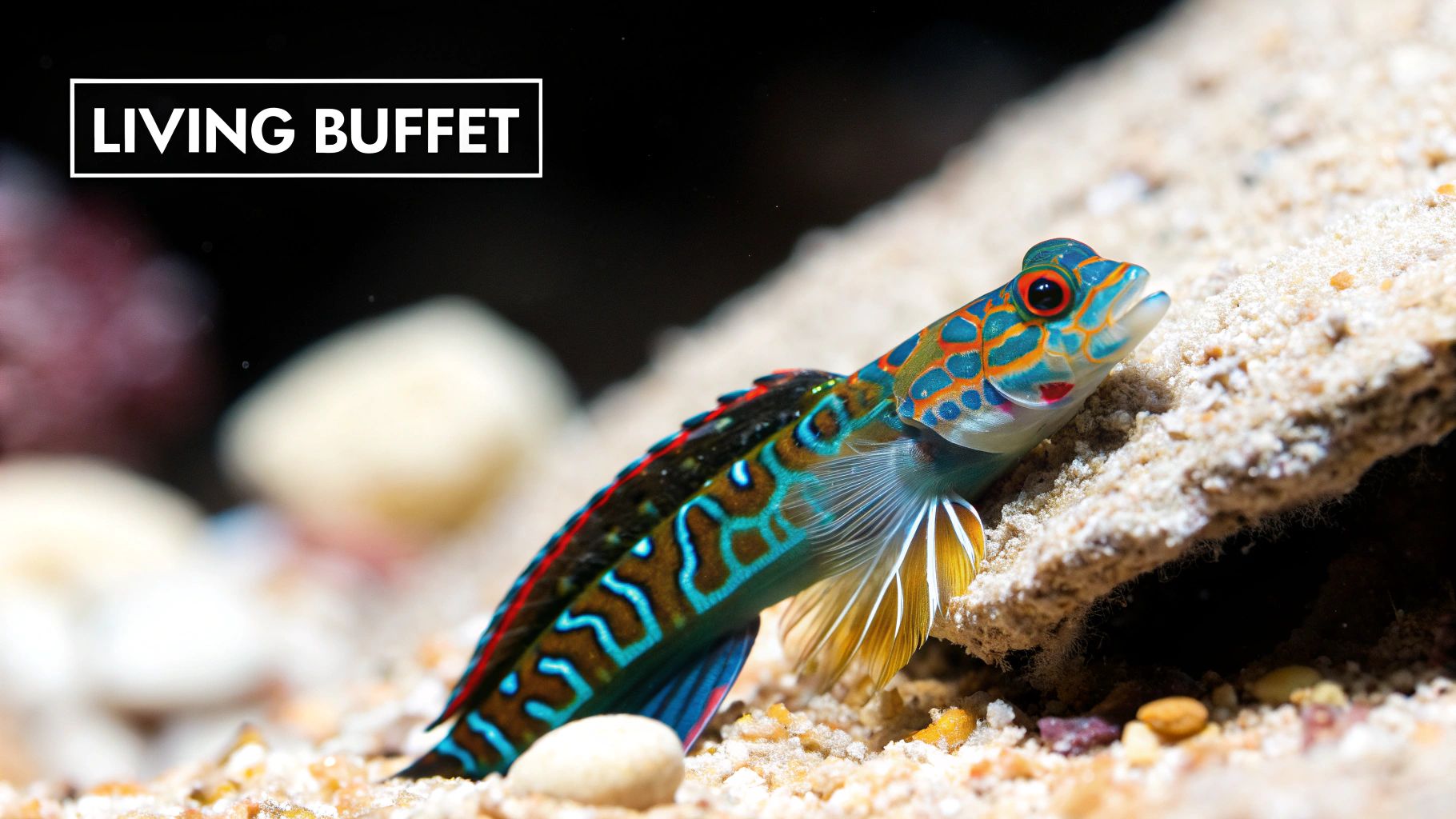
To keep a mandarin dragonet happy and healthy, you need to stop thinking like a fish keeper and start thinking like a tiny, methodical hunter. Forget everything you know about flakes and pellets. For a mandarin, your aquarium's live rock and sand bed aren't just decorations; they're a sprawling, microscopic buffet.
These fish are grazers, not gulpers. They spend their entire day meticulously scanning every nook and cranny, using their incredible eyesight to spot and peck at tiny crustaceans. Their world is one of copepods, amphipods, and other microfauna hiding in plain sight. This slow, deliberate hunting style is exactly why a cloud of frozen food floating by is often completely ignored.
Your job isn't just to feed your mandarin. It’s to cultivate the entire microscopic ecosystem that sustains it. A thriving, self-sufficient population of live pods isn't a luxury—it's the single most critical factor for their survival.
A Hunter in a Microscopic World
This constant pecking is a full-time job. Each tiny copepod is just a minuscule speck of energy, meaning a mandarin has to hunt down hundreds, if not thousands, of them every single day just to keep going.
This is why a mature, well-established aquarium is non-negotiable. A brand-new tank is like a ghost town—no food, no life. But a tank that's been running for months has had time to develop a bustling population of microfauna, providing the endless smorgasbord a mandarin needs to thrive. You can get a closer look at what makes these little critters so vital by exploring the nutritional profile of copepods in our detailed article.
The precise needs of fish like the mandarin are pushing the entire industry forward. The global aquaculture feed market has exploded, with commercial aquafeed production reaching a massive 69.42 million metric tons in 2023. This growth is fueled by the increasing demand for specialized, species-specific foods that cater to the unique diets of animals just like the one in your tank.
Why Live Copepods Are the Gold Standard Food Source
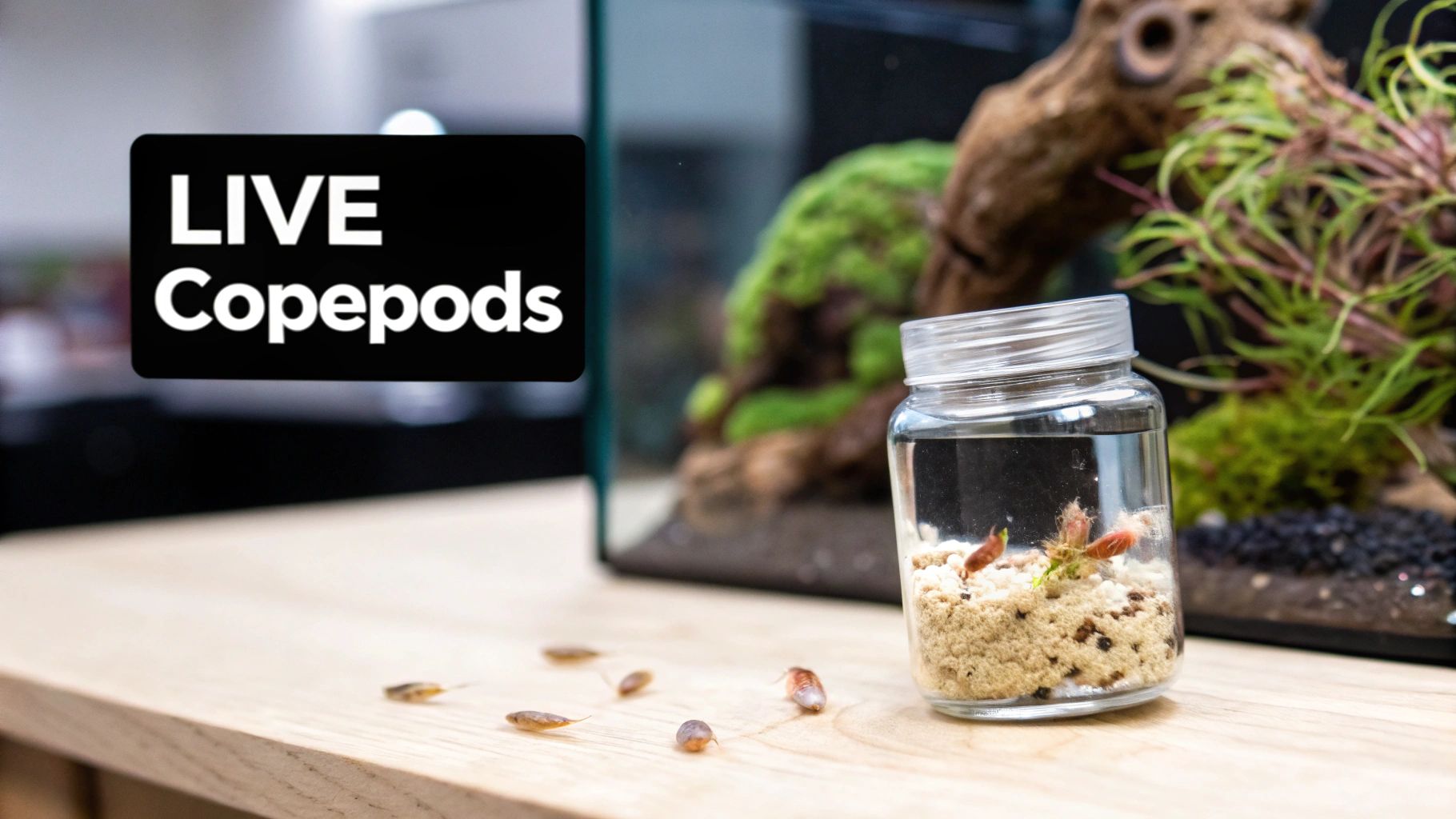
While you can try to supplement their diet with other foods, nothing comes close to live copepods for keeping mandarin dragonets healthy and vibrant. These tiny crustaceans are precisely what mandarins evolved to hunt in the wild, making them a perfect nutritional match. It’s like the difference between us eating a fresh, whole-food meal versus a processed snack; one sustains, but the other truly helps us thrive.
By establishing a healthy, breeding population of copepods, you’re doing more than just feeding a fish—you're cultivating a living ecosystem right in your tank. This creates a self-sustaining food web where your mandarin can graze all day long, just as it would on a natural coral reef. This is the real secret to a fat, happy, and long-lived mandarin.
The Best Copepods for Your Tank
Not all copepods are created equal, and for the best results, you'll want a mix of species. Different types of copepods hang out in different parts of the tank and have unique life cycles. Combining them builds a much more resilient and reliable food source.
Two of the most popular and effective choices for any reef tank are:
- Tisbe Copepods: These are your tiny, bottom-dwelling pods. They love to hide out in the rockwork and sand, making them a perfect target for a hunting mandarin. Their small size is ideal for even the youngest dragonets, and as a bonus, they're fantastic detritivores, helping to keep your tank clean.
- Tigriopus Copepods: These pods are a bit larger and tend to swim more in the open water. They're packed with essential fatty acids and reproduce like crazy. Their jerky swimming motion is like a dinner bell, triggering a strong feeding response in all sorts of fish.
A combination of these two ensures your mandarin has a buffet available at all life stages, from tiny nauplii for juveniles to plump adults for mature fish. This variety is absolutely crucial for their long-term health. To see just how much of an impact they have, you can learn more about the benefits of live copepods for your reef tank and how they support the entire ecosystem.
Seeding your tank and refugium with a diverse blend of copepods is the single most important investment you can make for your mandarin's well-being. It transforms your role from feeder to ecosystem manager.
This process, known as "seeding," is as simple as adding live copepod cultures directly to your aquarium and, most importantly, your refugium. The 'fuge acts as a safe house—a predator-free zone where the copepod population can explode. From there, they constantly overflow into the main display, replenishing the food supply around the clock. This method guarantees your mandarin always has access to the most natural and nutritious food for mandarin dragonets available, 24/7.
Training Your Mandarin to Accept Prepared Foods
While a tank teeming with live copepods is the gold standard for food for mandarin dragonets, teaching them to eat prepared foods is a smart insurance policy for their long-term health. Be prepared for a test of patience. You're essentially retraining a wild animal to see something totally foreign as a meal.
The goal here isn't to replace their natural instinct to hunt and graze—it's to supplement it. Think of it like convincing a picky toddler to try broccoli for the first time; it’s a slow, steady process. Some mandarins might catch on in a few weeks, while others could take months or never fully make the switch. Success hinges on keeping the experience low-stress and playing to their natural hunting behaviors.
Getting Started with Target Feeding
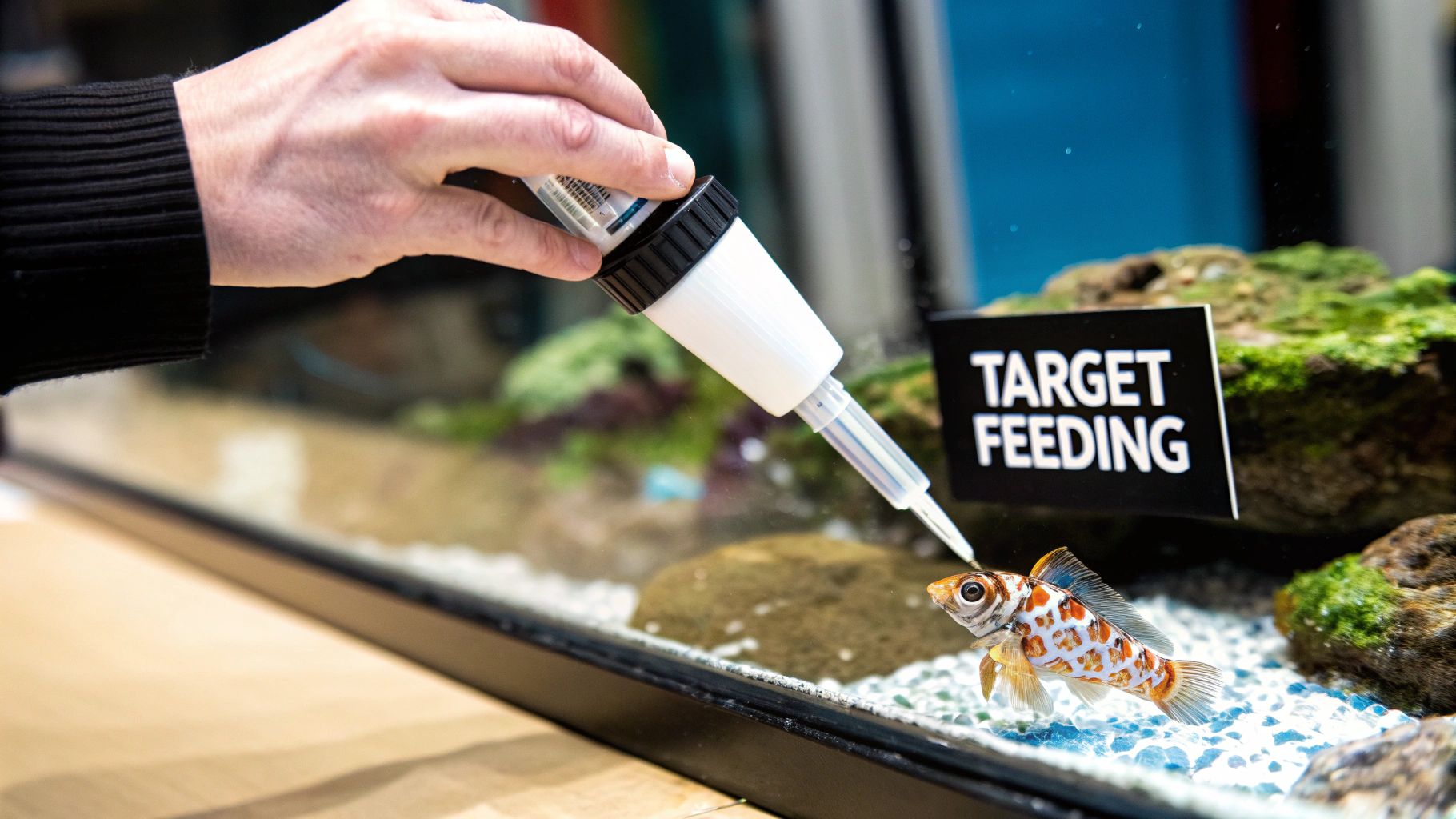
By far, the best way to do this is with target feeding. This method lets you deliver food right to your mandarin's doorstep, preventing faster, more aggressive tank mates from snatching it away. It also helps the fish learn to associate a specific tool and place with feeding time.
Here’s how to get started:
1. Grab the Right Tool: A simple turkey baster or a pipette is perfect for the job. They give you the control to release small, gentle puffs of food right in front of your mandarin without spooking it.
2. Start with Live Food: Begin the training with live baby brine shrimp. Their frantic wiggling is an irresistible trigger for a mandarin's hunting reflex and gets them comfortable eating from the water column instead of just off the rocks.
3. Make the Switch Slowly: Once your mandarin is eagerly gobbling up the live brine, start mixing in a tiny amount of thawed, frozen baby brine shrimp. Over weeks, you'll slowly shift the ratio, increasing the frozen portion until that's all they're eating.
The secret ingredient is patience. Every little milestone is a win, from the first time it curiously inspects the pipette to the first bite of frozen food. If you rush it, you'll only end up taking two steps back.
Once they’ve mastered frozen brine, you can start introducing more nutrient-dense options like finely chopped frozen mysis shrimp or fish roe. The quality and variety of these prepared foods have come a long way, driven by innovations in global aquaculture. For instance, China's aquaculture industry now accounts for nearly 40% of the world's total fish output as of 2022, a testament to decades of progress. You can find more details on these fishery product advancements.
Another clever trick is to set up a dedicated feeding station. Placing a small glass jar or a petri dish on the sandbed can contain the food, keeping it from blowing all over the tank. This teaches your mandarin exactly where to go when it's hungry.
Your Mandarin Dragonet Feeding Success Checklist
Bringing a Mandarin Dragonet into your tank is less about just owning a fish and more about becoming the caretaker of an entire ecosystem. Following a solid plan from the start dramatically boosts your odds of success. Think of this checklist as the essential roadmap to get things right.
This is your pre-flight check before that beautiful, delicate fish ever touches your water. Nailing these steps beforehand is the single most important factor for its long-term health. Trust me, rushing this part of the process is the number one reason keepers struggle.
Your Setup and Seeding Plan
To make sure your mandarin has a buffet that never runs out, you have to prep its environment weeks before it arrives. A brand-new, sterile tank is a guaranteed death sentence.
- Confirm Tank Maturity: Your aquarium needs to be truly established, ideally humming along for at least 6-9 months. This gives the live rock and sand bed enough time to develop the natural microfauna population that mandarins depend on.
- Establish a Refugium: This is your copepod factory. A refugium is a safe haven, a predator-free zone where copepods can breed without being hunted down, constantly overflowing to seed your main display tank.
- Seed with Live Copepods: You'll want to add a high-quality culture of live copepods to both your tank and refugium at least 2-4 weeks before you even think about adding the mandarin. This gives them a crucial head start to build a breeding population.
Here's the key: you should be able to see tiny copepods scurrying over the glass and rockwork, especially if you take a flashlight to the tank after the lights go out. Seeing that with your own eyes is the green light you're looking for.
Ongoing Care and Backup Plans
Once your mandarin is settled in, your job shifts to maintaining that food source and always having a plan B.
- Replenish Copepods Regularly: Every so often, add a new batch of copepods. This boosts genetic diversity and keeps the population dense and thriving.
- Have Backup Foods Ready: Even if you don't plan on using them right away, it's smart to have some frozen baby brine shrimp or fish roe in your freezer just in case.
- Consider Culturing Your Own Pods: For a truly self-sufficient food source, nothing beats learning how to culture copepods at home. It gives you a limitless, on-demand supply.
Got Questions About Feeding Your Mandarin? We’ve Got Answers.
Even when you think you have the perfect setup, questions are bound to pop up. When it comes to a fish as delicate as the mandarin dragonet, getting straight answers can be the difference between a thriving pet and a heartbreaking loss. Let's dive into some of the most common hurdles aquarists face.
Getting these right will help you navigate the tricky parts and stick to the core principles that keep these stunning fish happy and healthy.
How Can I Tell if My Mandarin Is Eating Enough?
Forget everything else for a moment and just look at its stomach. This is the single most reliable health indicator you have. A well-fed, healthy mandarin will have a belly that looks noticeably full and rounded.
If you see that its stomach is flat, pinched, or looks caved-in, that’s a massive red flag. It’s a clear sign of malnutrition, meaning the fish isn't finding enough to eat and is, quite simply, starving. Another tell-tale sign is activity; a healthy mandarin is a busy mandarin, constantly pecking at rocks and sand all day. If yours is listless or hiding, something is wrong.
A skinny mandarin is a starving mandarin. Make a habit of checking its belly every single day. Don't wait until it’s too late to step in.
Is a Refugium Really Necessary?
Look, it's technically possible to keep a mandarin without a refugium, but it’s like trying to run a marathon without training. Why make it so much harder on yourself and the fish? A refugium is, without a doubt, the most effective tool for ensuring a non-stop food supply.
Think of it as your mandarin’s personal, 24/7 food factory. It’s a safe zone, free from predators, where microfauna like copepods can multiply without being hunted to extinction. This little ecosystem continuously seeds your main tank with live pods, creating the stable, ever-present food source your mandarin is built to need. It dramatically stacks the odds of long-term success in your favor.
Why Won’t My Mandarin Touch Frozen Food?
This is probably the most common frustration we hear about, and it's a big one. Mandarins are hardwired by evolution to hunt tiny, live, moving prey. That little scuttling motion of a copepod is what triggers their feeding instinct. A lifeless, floating piece of frozen food just doesn't register as "dinner."
Getting them to switch over is a game of patience and absolute consistency.
* Use a turkey baster to gently puff thawed food near the mandarin, trying to mimic movement.
* Create a feeding station, like a small glass jar placed on the sandbed, to keep the food contained and concentrate the scent.
* Start with live baby brine shrimp as a "gateway" food to get them used to eating things out of the water column.
This isn't an overnight fix. This training process can take many weeks of daily, persistent effort. It’s easy to get discouraged when your mandarin just ignores it day after day, but consistency is your best and only tool here.
For a reliable, self-sustaining food source, nothing beats seeding your tank with high-quality live copepods. PodDrop Live Aquarium Nutrition delivers fresh, lab-cultured pods directly to your door, ensuring your mandarin has the vibrant, living nutrition it needs to flourish. Give your mandarin the best possible start at https://www.getpoddrop.com.