
Live microalgae
A living microalgae culture intended for compatible aquarium feeding, live-feed production, or professional culture work.


Product appearance can vary naturally. Confirm the exact item and size in the product details.
2 views
Know what you are adding
Species notes, how to add it, storage and live-arrival guidance for this culture, all in one place.
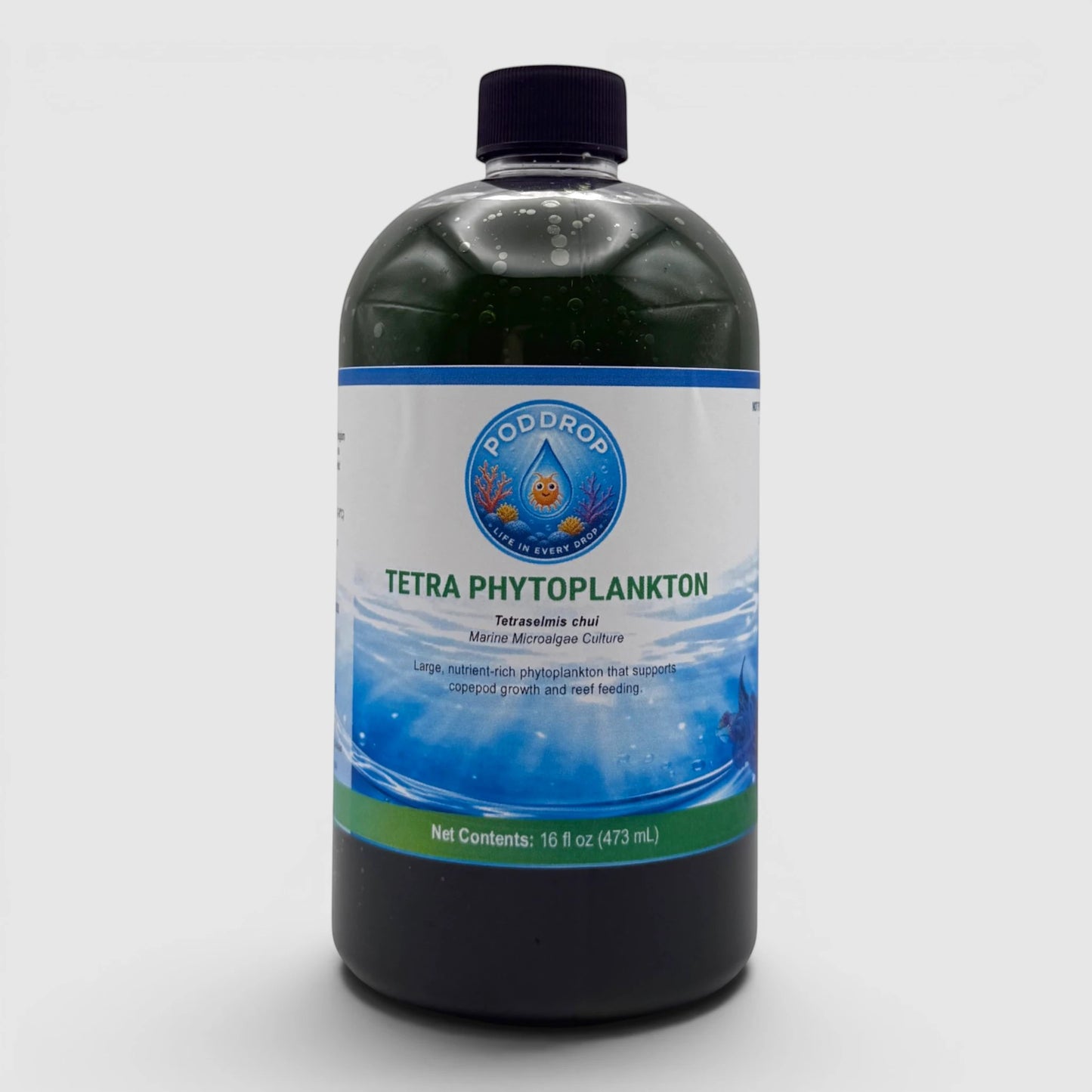
Live Tetraselmis chui culture for supplemental aquarium feeding
Motile green microalga used in marine live-feed culture programs
Can be used with compatible live-feed cultures
Tetraselmis chui is a motile green microalga used in marine live-feed culture programs. Product identity should be tied to PodDrop’s culture record. General species literature does not establish the density, purity, or biochemical composition of a retail bottle.
Microalgal composition varies with the verified strain, growth phase, culture medium, light, temperature, harvest timing, and storage. General research about a species does not establish the composition of a particular retail bottle.
PodDrop does not guarantee fixed percentages of protein, lipid, EPA, DHA, pigments, vitamins, or antioxidants unless supported by a current lot- or product-specific analysis. Use as supplemental live feed or culture material; no coral color, growth, immunity, recovery, or water-quality outcome is guaranteed.
1. Confirm the culture identity and read the label before use.
2. Gently mix the container as directed; do not shake violently.
3. Dose conservatively into a suitable flow area or use the culture to feed a separate live-food culture. Consumer suitability depends on particle size and feeding behavior.
4. Monitor nutrients, oxygen, and water clarity. This product is supplemental feed or culture material, not a treatment for disease, coral stress, nuisance algae, or dinoflagellates.
Store exactly as stated on the current product label. Unless the label specifies otherwise, protect the culture from heat, freezing, and direct sunlight, mix gently at the recommended interval, and use clean dedicated tools.
Use by the stated date. Do not rely on color alone to judge identity, purity, or nutritional value. Discard material showing an unexpected odor, damaged packaging, or other signs inconsistent with the labeled culture.
PodDrop’s Live Arrival Policy covers the condition of eligible live products at the carrier’s first delivery attempt. If a culture appears nonviable, materially leaking, missing, or incorrect because of a PodDrop packing or fulfillment error, contact PodDrop within 2 hours of the carrier’s recorded delivery time.
Keep the culture and all original packaging. Before adding, transferring, feeding, or discarding the product, provide your order number, delivery timestamp, a concise description, and clear photographs or video showing the culture in its original container, the shipping box and insulation, any damage or unusual condition, and the shipping label.
PodDrop reviews each report using the order record, carrier tracking, delivery conditions, packaging, documentation, and reported handling after delivery. If a claim is approved, PodDrop may provide a replacement of the affected item or store credit, depending on the circumstances and current product availability.
Coverage does not guarantee establishment, reproduction, continued survival, feeding response, aquarium performance, or compatibility after receipt. Read the complete Live Arrival Policy for eligibility requirements, exclusions, and submission instructions.
Orders containing live products ship on PodDrop’s published live-product schedule using the carrier service stated at checkout. PodDrop may delay dispatch when weather or carrier conditions create an avoidable live-shipping risk.
Because live products are perishable, they are not returnable after shipment. Qualifying delivery-condition reports are governed by the current Live Arrival Policy and its 2-hour documentation requirement. Request order changes before fulfillment begins.
Cultured and packed at PodDrop’s Arizona aquaculture facility (AQ License #91). This facility statement is not a claim that a culture is axenic, sterile, pathogen-free, parasite-free, or free of every incidental organism unless a current lot-specific test states otherwise.
Wash hands after handling, use dedicated culture tools when possible, prevent cross-contamination among cultures, and never release aquarium organisms or culture water into natural waterways. Follow all applicable local rules.
Put the strain to work
Match the phytoplankton’s relative cell profile and culture characteristics to the copepod, reef, or professional program you are planning.
Shop single-species copepods


