Phyto Fusion Pack – 3-Bottle Phytoplankton Bundle
Couldn't load pickup availability
Product Overview
The Phyto Fusion Pack is PodDrop's comprehensive three-species phytoplankton blend engineered to deliver the complete nutritional spectrum your reef demands. This strategic color combination pairs green Nannochloropsis (EPA powerhouse), golden Isochrysis galbana T-ISO (DHA specialist), and red Rhodomonas salina (color enhancer)—three complementary species with distinct cell sizes, fatty acid profiles, and pigment systems that together create complete reef nutrition impossible from single-species feeding.
Perfect for aquarists seeking maximum nutritional diversity without purchasing individual bottles, Phyto Fusion eliminates the guesswork of species selection through proven scientific pairing. The three-color formula ensures your reef receives the full omega-3 spectrum (EPA for immune function from Nannochloropsis, DHA for tissue growth from Isochrysis, both combined in Rhodomonas), complete pigment diversity for coral coloration (green chlorophylls, golden fucoxanthin, red phycoerythrin), and varied cell sizes (2-10 microns) that accommodate everything from tiny coral polyps to large clams. Each species feeds different organisms while enriching copepods with complementary nutrients—Nannochloropsis fuels copepod reproduction, Isochrysis drives coral growth, and Rhodomonas intensifies reds and oranges. The combination prevents nutritional deficiencies that develop from monotonous diets while providing biological redundancy across different water conditions. All three species arrive as living, actively dividing cultures ready to deliver comprehensive reef nutrition immediately upon addition. This is complete phytoplankton diversity in one convenient package.

Explore detailed care instructions, specifications, and policies below
The Phyto Fusion Pack delivers complete phytoplankton nutrition through three complementary species that work synergistically to support every organism in your reef. Green Nannochloropsis excels at nutrient export while feeding copepods and small-polyp corals. Golden Isochrysis provides the DHA essential for coral tissue growth and larval development. Red Rhodomonas offers superior digestibility with its soft cell walls and complete amino acid profile that benefits everything from filter feeders to copepod reproduction.This three-color approach ensures your reef receives the full spectrum of fatty acids, vitamins, and bioactive compounds impossible from single-species feeding. Different cell sizes (2-8 microns) accommodate varied feeding strategies—tiny coral polyps capture small Nannochloropsis, while clams and feather dusters efficiently process larger Rhodomonas cells. The diverse pigment profiles deliver carotenoids and phycobiliproteins that enhance coloration in corals and fish while providing antioxidant protection.Rotating between three species also prevents nutritional deficiencies that develop from monotonous diets. Each phytoplankton concentrates different vitamins, minerals, and trace elements based on its metabolic pathways. Together, they create biological redundancy—if one species settles out quickly in your system, the other two continue providing nutrition through different water column behaviors and settling rates.
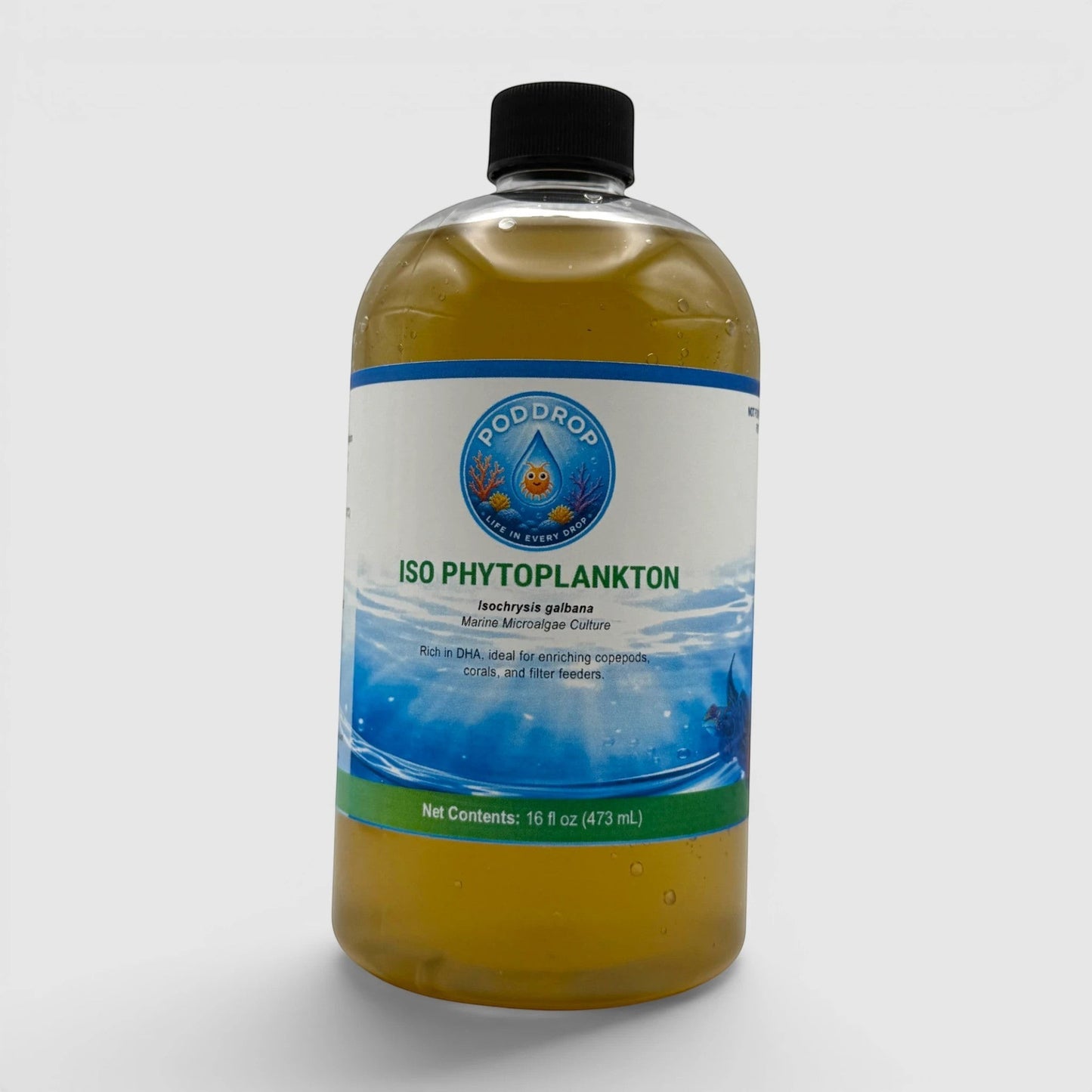
Nannochloropsis sp. (GREEN) - The 2-4 micron workhorse with the highest EPA omega-3 content. These spherical green cells excel at nutrient sequestration, rapidly consuming nitrates and phosphates while doubling every 24-48 hours. Thick cell walls resist rupture, keeping nutrients locked in biomass until consumed. Universal appeal makes Nannochloropsis ideal for copepod enrichment, small-polyp stony corals, clams, and continuous broadcast feeding. High protein content (40-50%) supports growth across all reef organisms.Isochrysis galbana T-ISO (GOLDEN) - The 4-6 micron specialist for coral and clam growth. This golden-brown flagellate contains the highest DHA levels of any phytoplankton, providing the specific omega-3 fatty acid critical for neural development and tissue regeneration. Soft cell walls ensure easy digestion and rapid nutrient absorption. The golden pigmentation comes from fucoxanthin and other carotenoids that enhance yellow and orange coloration in corals while supporting photosynthetic efficiency. Preferred by filter feeders for its palatability and digestibility.Rhodomonas salina (RED) - The 6-8 micron cryptophyte with superior nutritional density. This red-pink flagellate combines high EPA and DHA content with complete protein and exceptional vitamin profiles. The soft, easily digested cells make nutrients immediately bioavailable. Red phycoerythrin pigments provide unique antioxidant benefits and enhance red coloration in corals and fish. Slightly larger size makes Rhodomonas ideal for clams, large-polyp corals, and mature copepods while remaining accessible to most filter feeders. Active swimming behavior keeps cells suspended longer in the water column.
Complete Fatty Acid Spectrum: The three species provide all essential omega-3 fatty acids in optimal ratios. Nannochloropsis delivers EPA for immune function and anti-inflammatory responses. Isochrysis supplies DHA for neural development and tissue growth. Rhodomonas balances both EPA and DHA for comprehensive metabolic support. This combination prevents the fatty acid imbalances that occur from single-species feeding and ensures all reef organisms receive their specific omega-3 requirements.
Complementary Protein Quality: Each species offers complete protein (all essential amino acids) but with different concentrations optimized for varied functions. Nannochloropsis provides high overall protein for growth. Isochrysis concentrates amino acids supporting tissue repair. Rhodomonas delivers balanced profiles for general metabolic needs. The protein diversity ensures corals, clams, and copepods receive optimal amino acid ratios regardless of feeding preferences.
Full Pigment Diversity: Green chlorophylls, golden fucoxanthin, and red phycoerythrin create a complete carotenoid and pigment spectrum. These compounds enhance coloration in corals and fish, provide antioxidant protection against light stress, and support photosynthetic organisms' light-harvesting capabilities. The varied pigments also indicate different vitamin concentrations—each color represents distinct fat-soluble vitamin profiles that together ensure comprehensive micronutrient delivery.
Synergistic Micronutrients: The three species accumulate different vitamins, minerals, and trace elements based on their metabolic pathways. Combined feeding ensures delivery of B-vitamin complexes, vitamins A/C/E, and essential minerals like iodine, selenium, and iron. Cell size differences create varied digestion rates, providing both immediate nutrition (soft-walled Isochrysis and Rhodomonas) and sustained release (thick-walled Nannochloropsis). Beneficial bacterial communities on each species introduce diverse probiotics that support reef immunity and water quality.
Complete Fatty Acid Spectrum: The three species provide all essential omega-3 fatty acids in optimal ratios. Nannochloropsis delivers EPA for immune function and anti-inflammatory responses. Isochrysis supplies DHA for neural development and tissue growth. Rhodomonas balances both EPA and DHA for comprehensive metabolic support. This combination prevents the fatty acid imbalances that occur from single-species feeding and ensures all reef organisms receive their specific omega-3 requirements.
Complementary Protein Quality: Each species offers complete protein (all essential amino acids) but with different concentrations optimized for varied functions. Nannochloropsis provides high overall protein for growth. Isochrysis concentrates amino acids supporting tissue repair. Rhodomonas delivers balanced profiles for general metabolic needs. The protein diversity ensures corals, clams, and copepods receive optimal amino acid ratios regardless of feeding preferences.
Full Pigment Diversity: Green chlorophylls, golden fucoxanthin, and red phycoerythrin create a complete carotenoid and pigment spectrum. These compounds enhance coloration in corals and fish, provide antioxidant protection against light stress, and support photosynthetic organisms' light-harvesting capabilities. The varied pigments also indicate different vitamin concentrations—each color represents distinct fat-soluble vitamin profiles that together ensure comprehensive micronutrient delivery.
Synergistic Micronutrients: The three species accumulate different vitamins, minerals, and trace elements based on their metabolic pathways. Combined feeding ensures delivery of B-vitamin complexes, vitamins A/C/E, and essential minerals like iodine, selenium, and iron. Cell size differences create varied digestion rates, providing both immediate nutrition (soft-walled Isochrysis and Rhodomonas) and sustained release (thick-walled Nannochloropsis). Beneficial bacterial communities on each species introduce diverse probiotics that support reef immunity and water quality.
Dosing: Shake bottle vigorously before use to redistribute settled cells. Add directly to refugium, sump, or display tank during low-flow periods.
Refugium Addition: Dose near copepod populations for direct feeding. Daily dosing supports robust copepod reproduction and growth.
Display Tank: Broadcast dose in evening hours. Water may show green tint that clears within 4-8 hours as organisms consume cells.
Recommended Dosage: Start with 10-15ml per 25 gallons daily. Adjust based on copepod density and filter feeder populations. Higher doses (30-40ml per 25 gallons) for systems with dense copepod cultures.
Breeding Systems: Dose 2-3 times daily for intensive rotifer and copepod production systems.
Dosing: Shake bottle vigorously before use to redistribute settled cells. Add directly to refugium, sump, or display tank during low-flow periods.
Refugium Addition: Dose near copepod populations for direct feeding. Daily dosing supports robust copepod reproduction and growth.
Display Tank: Broadcast dose in evening hours. Water may show green tint that clears within 4-8 hours as organisms consume cells.
Recommended Dosage: Start with 10-15ml per 25 gallons daily. Adjust based on copepod density and filter feeder populations. Higher doses (30-40ml per 25 gallons) for systems with dense copepod cultures.
Breeding Systems: Dose 2-3 times daily for intensive rotifer and copepod production systems.
Upon Arrival: Refrigerate immediately at 35-45°F. Shake vigorously before opening to redistribute cells.
Refrigerated Storage: Keeps for 3-5 weeks when properly refrigerated. Check for fresh, earthy smell and bright green coloration.
Viability Check: Healthy cultures appear bright green. Off smell, brown coloration, or clumping indicates declining viability.
Shake Before Use: Cells settle heavily—always shake vigorously to redistribute before dosing.
Avoid Freezing: Never freeze phytoplankton cultures as this destroys cell structure and nutritional value.
Upon Arrival: Refrigerate immediately at 35-45°F. Shake vigorously before opening to redistribute cells.
Refrigerated Storage: Keeps for 3-5 weeks when properly refrigerated. Check for fresh, earthy smell and bright green coloration.
Viability Check: Healthy cultures appear bright green. Off smell, brown coloration, or clumping indicates declining viability.
Shake Before Use: Cells settle heavily—always shake vigorously to redistribute before dosing.
Avoid Freezing: Never freeze phytoplankton cultures as this destroys cell structure and nutritional value.
All PodDrop phytoplankton cultures are guaranteed to arrive alive and viable. Our Phyto Fusion Pack is shipped fresh and concentrated for immediate use. If your culture arrives compromised (off smell, unusual color, or dead cells), contact us within 2 hours of delivery with photos for replacement or refund. We use insulated shipping to maintain culture viability during transit.
Shipping: Monday-Wednesday via UPS 2nd Day Air for fast, reliable delivery. Arizona aquaculture license #91 ensures legal, biosecure cultures. Includes insulation and cold packs for temperature protection.
Weather Delays: We monitor conditions and may hold orders during extreme temperatures to ensure culture viability.
Returns: Live phytoplankton cannot be returned once shipped due to perishable nature. Contact us before shipping for order modifications.
Tracking: Confirmation email sent when your order ships with UPS tracking number.
Shipping: Monday-Wednesday via UPS 2nd Day Air for fast, reliable delivery. Arizona aquaculture license #91 ensures legal, biosecure cultures. Includes insulation and cold packs for temperature protection.
Weather Delays: We monitor conditions and may hold orders during extreme temperatures to ensure culture viability.
Returns: Live phytoplankton cannot be returned once shipped due to perishable nature. Contact us before shipping for order modifications.
Tracking: Confirmation email sent when your order ships with UPS tracking number.
PodDrop operates as a licensed Arizona aquaculture facility (AQ License #91) following strict biosecurity and handling protocols. Our Tetraselmis chui cultures are:
• Raised in isolated, contamination-controlled systems
• Free from harmful bacteria, parasites, and competing algae species
• Packaged in food-grade, sealed containers for biosecurity
• Shipped in compliance with USDA and state aquaculture regulations
• Monoculture strains maintained for consistent quality and nutrition
• Sustainably produced without environmental impact
Proper Handling: Refrigerate immediately upon arrival. Shake vigorously before each use. Never release culture water into natural waterways. Dispose of packaging responsibly.
PodDrop operates as a licensed Arizona aquaculture facility (AQ License #91) following strict biosecurity and handling protocols. Our Tetraselmis chui cultures are:
• Raised in isolated, contamination-controlled systems
• Free from harmful bacteria, parasites, and competing algae species
• Packaged in food-grade, sealed containers for biosecurity
• Shipped in compliance with USDA and state aquaculture regulations
• Monoculture strains maintained for consistent quality and nutrition
• Sustainably produced without environmental impact
Proper Handling: Refrigerate immediately upon arrival. Shake vigorously before each use. Never release culture water into natural waterways. Dispose of packaging responsibly.
-
Ships Monday through Wednesday
-
USA Aquacultured
-
Free Shipping Order $55+
-
Secure Checkout