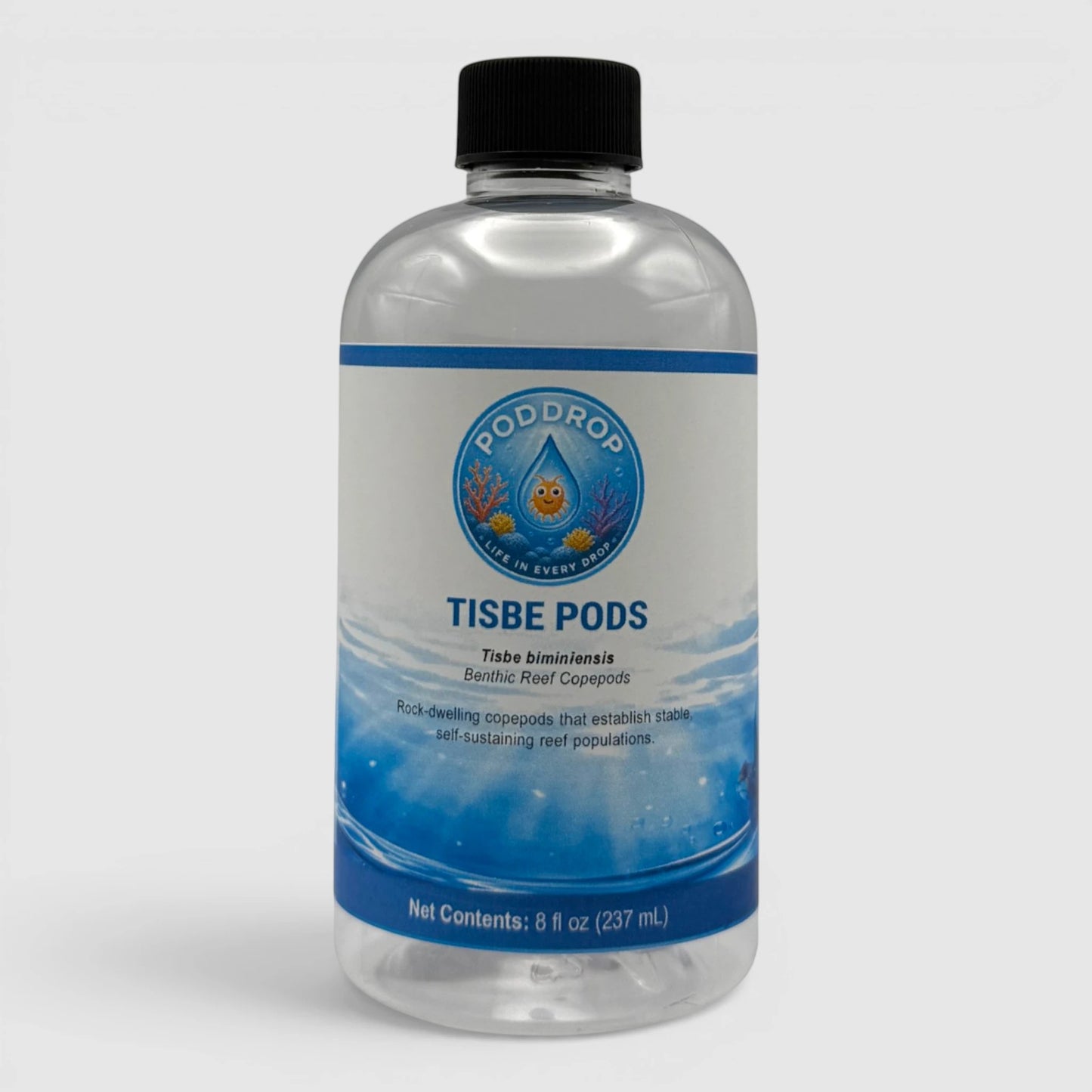
Triple Threat – Three Species Live Copepod Bundle
Couldn't load pickup availability
Product Overview
Triple Threat is PodDrop's strategic three-species copepod bundle designed for aquarists who demand complete biodiversity with professional-level deployment control. This powerful combination delivers Tisbe biminiensis, Tigriopus californicus, and Apocyclops panamensis in separate bottles—allowing you to introduce each pure single-species culture to its optimal tank zone rather than mixing them randomly. The three-bottle format gives you the flexibility to seed refugiums, display tank surfaces, and water column zones strategically for maximum establishment success and long-term population stability.
Perfect for experienced reefers building comprehensive copepod ecosystems or those with specific deployment strategies, Triple Threat eliminates the one-size-fits-all approach of pre-mixed blends. Target Tigriopus (1.0-1.5mm surface powerhouse) to display tank glass, overflow boxes, and upper rockwork where their visible populations indicate ecosystem health. Deploy Tisbe (0.5-0.8mm benthic specialist) directly into refugiums, sandbeds, and macroalgae areas where they establish cryptic breeding populations protected from predation. Introduce Apocyclops (0.6-0.9mm water column cruiser) to coral-rich zones and mid-water areas where their free-swimming behavior makes them ideal coral prey. The three species provide complete size diversity (0.5-1.5mm range), complementary ecological niches (benthic, surface, planktonic), and temperature resilience (60-84°F combined range) without competition. Each bottle arrives as an actively feeding culture with live phytoplankton, already reproducing and ready to establish in your strategically selected zones. This is professional copepod biodiversity with the control serious reefers demand.

Explore detailed care instructions, specifications, and policies below
Triple Threat delivers comprehensive reef nutrition through strategic copepod diversity. By combining three distinct species with different ecological niches, this bundle ensures continuous food availability for fish, corals, and invertebrates across all tank zones. Tisbe biminiensis colonizes the sandbed and rockwork crevices, Tigriopus californicus thrives in high-flow areas and the water column, while Apocyclops panamensis establishes populations in moderate-flow zones and among coral branches.This multi-species approach creates a self-sustaining food web that mimics natural reef ecosystems. Different reproductive rates and life cycles mean your tank maintains steady copepod populations year-round, providing constant grazing opportunities for mandarins, wrasses, anthias, and other planktivorous fish. The varied size ranges—from Tisbe's tiny nauplii to Tigriopus's robust adults—ensure appropriate food sizes for everything from coral polyps to juvenile fish.Each species arrives in actively feeding cultures with live phytoplankton, not sterile water like competitor products. This means your copepods are already reproductive and begin establishing populations immediately upon introduction. The separate bottles give you complete control over species distribution, allowing you to target specific areas based on your tank's needs or introduce them gradually to avoid overwhelming sensitive livestock.
Tisbe biminiensis - The sandbed specialist and reproductive powerhouse of the trio. These benthic copepods burrow into sand substrates and live rock crevices, establishing dense colonies that produce continuous generations of tiny nauplii. Their rapid reproduction (7-10 day generation time) makes them ideal for feeding mandarins, seahorses, and other microphagous fish that hunt constantly. Tisbe's cryptic lifestyle protects breeding populations from predation, ensuring long-term sustainability even in heavily stocked tanks.
Tigriopus californicus - The hardy, high-energy species that dominates turbulent zones. These reddish-orange copepods tolerate extreme conditions including high flow, bright light, and temperature fluctuations, making them perfect for refugiums and sump cultivation. Tigriopus adults are among the largest copepod species (up to 1.5mm), providing substantial nutrition for larger fish like wrasses and dottybacks. Their distinctive hopping behavior keeps them visible in the water column where predators can easily hunt them.
Apocyclops panamensis - The versatile mid-water cruiser that bridges the gap between benthic Tisbe and pelagic Tigriopus. These adaptable copepods colonize coral branches, macroalgae, and moderate-flow areas throughout the reef. Apocyclops exhibits intermediate size and reproduction rates, filling ecological niches the other two species don't occupy. Their cruising behavior makes them available to both ambush predators and active hunters, while their tolerance for varied conditions ensures stable populations across different tank environments.
Tisbe biminiensis - The sandbed specialist and reproductive powerhouse of the trio. These benthic copepods burrow into sand substrates and live rock crevices, establishing dense colonies that produce continuous generations of tiny nauplii. Their rapid reproduction (7-10 day generation time) makes them ideal for feeding mandarins, seahorses, and other microphagous fish that hunt constantly. Tisbe's cryptic lifestyle protects breeding populations from predation, ensuring long-term sustainability even in heavily stocked tanks.
Tigriopus californicus - The hardy, high-energy species that dominates turbulent zones. These reddish-orange copepods tolerate extreme conditions including high flow, bright light, and temperature fluctuations, making them perfect for refugiums and sump cultivation. Tigriopus adults are among the largest copepod species (up to 1.5mm), providing substantial nutrition for larger fish like wrasses and dottybacks. Their distinctive hopping behavior keeps them visible in the water column where predators can easily hunt them.
Apocyclops panamensis - The versatile mid-water cruiser that bridges the gap between benthic Tisbe and pelagic Tigriopus. These adaptable copepods colonize coral branches, macroalgae, and moderate-flow areas throughout the reef. Apocyclops exhibits intermediate size and reproduction rates, filling ecological niches the other two species don't occupy. Their cruising behavior makes them available to both ambush predators and active hunters, while their tolerance for varied conditions ensures stable populations across different tank environments.
Triple Threat provides complete nutritional coverage through complementary copepod biochemistry. Each species offers distinct fatty acid profiles, amino acid compositions, and micronutrient concentrations shaped by their natural diets and metabolic processes.
Fatty Acid Diversity: Tisbe biminiensis delivers high EPA (eicosapentaenoic acid) content essential for fish immune function and color development. Tigriopus californicus provides elevated DHA (docosahexaenoic acid) critical for neural development in juvenile fish and coral larvae. Apocyclops panamensis contributes balanced omega-3:omega-6 ratios that support overall metabolic health. Together, these three species ensure your reef inhabitants receive the complete spectrum of long-chain polyunsaturated fatty acids (LC-PUFA) necessary for growth, reproduction, and disease resistance.
Protein Quality: All three species contain 40-60% protein by dry weight with complete essential amino acid profiles. However, their protein structures differ based on life history: Tisbe's rapid reproduction demands high methionine for egg production, Tigriopus's muscular body contains elevated leucine for sustained swimming, and Apocyclops balances amino acids for versatile metabolic needs. This diversity prevents nutritional deficiencies that can occur when feeding single prey species.
Micronutrient Spectrum: The copepods' varied diets translate to different vitamin and mineral concentrations. Species feeding on different phytoplankton accumulate distinct carotenoid profiles (astaxanthin, lutein, zeaxanthin) that enhance fish coloration and provide antioxidant protection. Trace elements like iodine, selenium, and copper concentrate differently across species, ensuring comprehensive micronutrient delivery when all three are present in your tank.
Bioactive Compounds: Each species contains unique enzymes, peptides, and chitin structures that benefit reef organisms beyond basic nutrition. These bioactive compounds support digestive health, stimulate immune responses, and may even promote coral tissue regeneration through still-emerging biochemical pathways documented in recent aquaculture research.
Triple Threat provides complete nutritional coverage through complementary copepod biochemistry. Each species offers distinct fatty acid profiles, amino acid compositions, and micronutrient concentrations shaped by their natural diets and metabolic processes.
Fatty Acid Diversity: Tisbe biminiensis delivers high EPA (eicosapentaenoic acid) content essential for fish immune function and color development. Tigriopus californicus provides elevated DHA (docosahexaenoic acid) critical for neural development in juvenile fish and coral larvae. Apocyclops panamensis contributes balanced omega-3:omega-6 ratios that support overall metabolic health. Together, these three species ensure your reef inhabitants receive the complete spectrum of long-chain polyunsaturated fatty acids (LC-PUFA) necessary for growth, reproduction, and disease resistance.
Protein Quality: All three species contain 40-60% protein by dry weight with complete essential amino acid profiles. However, their protein structures differ based on life history: Tisbe's rapid reproduction demands high methionine for egg production, Tigriopus's muscular body contains elevated leucine for sustained swimming, and Apocyclops balances amino acids for versatile metabolic needs. This diversity prevents nutritional deficiencies that can occur when feeding single prey species.
Micronutrient Spectrum: The copepods' varied diets translate to different vitamin and mineral concentrations. Species feeding on different phytoplankton accumulate distinct carotenoid profiles (astaxanthin, lutein, zeaxanthin) that enhance fish coloration and provide antioxidant protection. Trace elements like iodine, selenium, and copper concentrate differently across species, ensuring comprehensive micronutrient delivery when all three are present in your tank.
Bioactive Compounds: Each species contains unique enzymes, peptides, and chitin structures that benefit reef organisms beyond basic nutrition. These bioactive compounds support digestive health, stimulate immune responses, and may even promote coral tissue regeneration through still-emerging biochemical pathways documented in recent aquaculture research.
Acclimation: Float the sealed container in your tank for 15-20 minutes to temperature acclimate. Slowly add small amounts of tank water over 10 minutes.
Introduction: Pour copepods into your refugium after lights out for best establishment. Target areas with macroalgae, live rock rubble, or substrate where they can colonize.
Timing: Add to established tanks (3+ months old) with mature biofilm and stable parameters. Can be added to newer tanks if phytoplankton is supplemented.
Population Boost: Start with 1-2 bottles per 50 gallons for initial seeding. Their rapid reproduction means populations establish faster than other species.
Acclimation: Float the sealed container in your tank for 15-20 minutes to temperature acclimate. Slowly add small amounts of tank water over 10 minutes.
Introduction: Pour copepods into your refugium after lights out for best establishment. Target areas with macroalgae, live rock rubble, or substrate where they can colonize.
Timing: Add to established tanks (3+ months old) with mature biofilm and stable parameters. Can be added to newer tanks if phytoplankton is supplemented.
Population Boost: Start with 1-2 bottles per 50 gallons for initial seeding. Their rapid reproduction means populations establish faster than other species.
Upon Arrival: Unpack immediately and inspect for active copepods. Small size means movement may be less obvious than larger species.
Short-Term Storage (up to 48 hours): Keep at room temperature (68-75°F) away from direct sunlight. Gentle aeration recommended for holds over 24 hours.
Adding to Tank: Best added same day as arrival for maximum viable population. Can be held up to 3 days with cool temperatures and gentle aeration.
Feeding: Our copepods ship with live phytoplankton food supply—no feeding needed before adding to your tank.
Upon Arrival: Unpack immediately and inspect for active copepods. Small size means movement may be less obvious than larger species.
Short-Term Storage (up to 48 hours): Keep at room temperature (68-75°F) away from direct sunlight. Gentle aeration recommended for holds over 24 hours.
Adding to Tank: Best added same day as arrival for maximum viable population. Can be held up to 3 days with cool temperatures and gentle aeration.
Feeding: Our copepods ship with live phytoplankton food supply—no feeding needed before adding to your tank.
All PodDrop copepods are guaranteed to arrive alive and actively moving. Our cultures ship with live phytoplankton to maintain health during transit. If copepods arrive deceased or your order has issues, contact us within 2 hours of delivery with photos for replacement or refund. We ship using proven methods to ensure viable populations reach your reef aquarium.
Shipping: Monday-Wednesday via UPS 2nd Day Air for fast, reliable delivery. Arizona aquaculture license #91 ensures legal, biosecure cultures. Includes insulation and temperature protection.
Weather Delays: We monitor conditions and may hold orders for extreme temperatures to ensure live arrival.
Returns: Live copepods cannot be returned once shipped due to their perishable nature. Contact us before shipping for order modifications.
Tracking: Confirmation email sent when your order ships with UPS tracking number.
Shipping: Monday-Wednesday via UPS 2nd Day Air for fast, reliable delivery. Arizona aquaculture license #91 ensures legal, biosecure cultures. Includes insulation and temperature protection.
Weather Delays: We monitor conditions and may hold orders for extreme temperatures to ensure live arrival.
Returns: Live copepods cannot be returned once shipped due to their perishable nature. Contact us before shipping for order modifications.
Tracking: Confirmation email sent when your order ships with UPS tracking number.
PodDrop operates as a licensed Arizona aquaculture facility (AQ License #91) following strict biosecurity and handling protocols. Our Tisbe biminiensis cultures are:
Raised in isolated, quarantine-controlled systems
Free from parasites, diseases, and pest organisms
Packaged in food-grade, sealed containers for biosecurity
Shipped in compliance with USDA and state aquaculture regulations
100% aquacultured for sustainability and biosecurity
Proper Handling: Wash hands before and after handling. Never release copepods into natural waterways. Dispose of packaging responsibly.
PodDrop operates as a licensed Arizona aquaculture facility (AQ License #91) following strict biosecurity and handling protocols. Our Tisbe biminiensis cultures are:
Raised in isolated, quarantine-controlled systems
Free from parasites, diseases, and pest organisms
Packaged in food-grade, sealed containers for biosecurity
Shipped in compliance with USDA and state aquaculture regulations
100% aquacultured for sustainability and biosecurity
Proper Handling: Wash hands before and after handling. Never release copepods into natural waterways. Dispose of packaging responsibly.
-
Ships Monday through Wednesday
-
USA Aquacultured
-
Free Shipping Order $55+
-
Secure Checkout