Dino Recovery Bundle Live Phytoplankton & Copepods
Couldn't load pickup availability
Product Overview
The Dino Recovery Bundle is PodDrop's all-in-one solution for eliminating dinoflagellate outbreaks and restoring long-term biological stability in reef aquariums. This specialized three-product bundle combines Dino Shield (our anti-dino phytoplankton blend) with two powerful live copepod species—Tisbe biminiensis and Tigriopus californicus—creating a multi-angle attack that outcompetes dinos, establishes predator populations, and rebuilds your reef's natural defenses.

Explore detailed care instructions, specifications, and policies below
The Dino Recovery Bundle attacks dinoflagellate outbreaks through three simultaneous mechanisms that create conditions impossible for dinos to survive. Dino Shield phytoplankton outcompetes dinoflagellates for nutrients while releasing allelopathic compounds that directly suppress dino growth. Tisbe copepods physically graze dinoflagellates from sand, rock surfaces, and refugium areas where dinos concentrate. Tigriopus establishes visible populations that indicate ecosystem recovery while feeding corals the high-quality nutrition they need to rebuild after dino stress.This three-component approach prevents the rebound outbreaks common with single-method treatments. Nutrient reduction alone starves dinos but also crashes beneficial microorganisms—Dino Shield fills that void with competing species that establish before dinos can return. Physical removal through water changes provides temporary relief—copepod grazing provides continuous biological control that persists long after treatment ends. The synergy creates permanent ecosystem shifts that make your tank inhospitable to future dino blooms.Recovery happens in stages you can observe. Week 1-2: Dino Shield phytoplankton turns water slightly green as diatoms and golden species establish, visibly outcompeting brown dino films. Week 2-4: Tisbe populations explode in sandbed and rockwork, you'll notice dino patches shrinking as copepods graze them down. Week 4-6: Tigriopus becomes visible on glass and surfaces, indicating healthy ecosystem restoration. By week 6-8, most systems achieve complete dino elimination with robust copepod populations providing ongoing resistance to reinfection.
Dino Shield Phytoplankton Blend - Five-species weapon engineered specifically for dinoflagellate elimination. The three diatom species (Chaetoceros, Phaeodactylum, Thalassiosira) exploit diatoms' fundamental advantage over dinoflagellates: silica-based cell walls that allow faster reproduction and more efficient nutrient uptake. Chaetoceros's rapid chain-forming growth quickly dominates available nutrients. Phaeodactylum releases allelopathic compounds that chemically suppress dino metabolism. Thalassiosira's larger size creates physical shading that reduces light available to photosynthetic dinos.
The two Isochrysis species (lutea/T-ISO and galbana) serve dual roles: they outcompete dinos for dissolved nutrients while simultaneously feeding the copepod populations that provide physical dino control. Golden pigmentation indicates high DHA content that supports coral recovery from dino-related stress. The five-species combination ensures something thrives regardless of your tank's specific conditions—nutrient levels, lighting, flow patterns, or temperature.
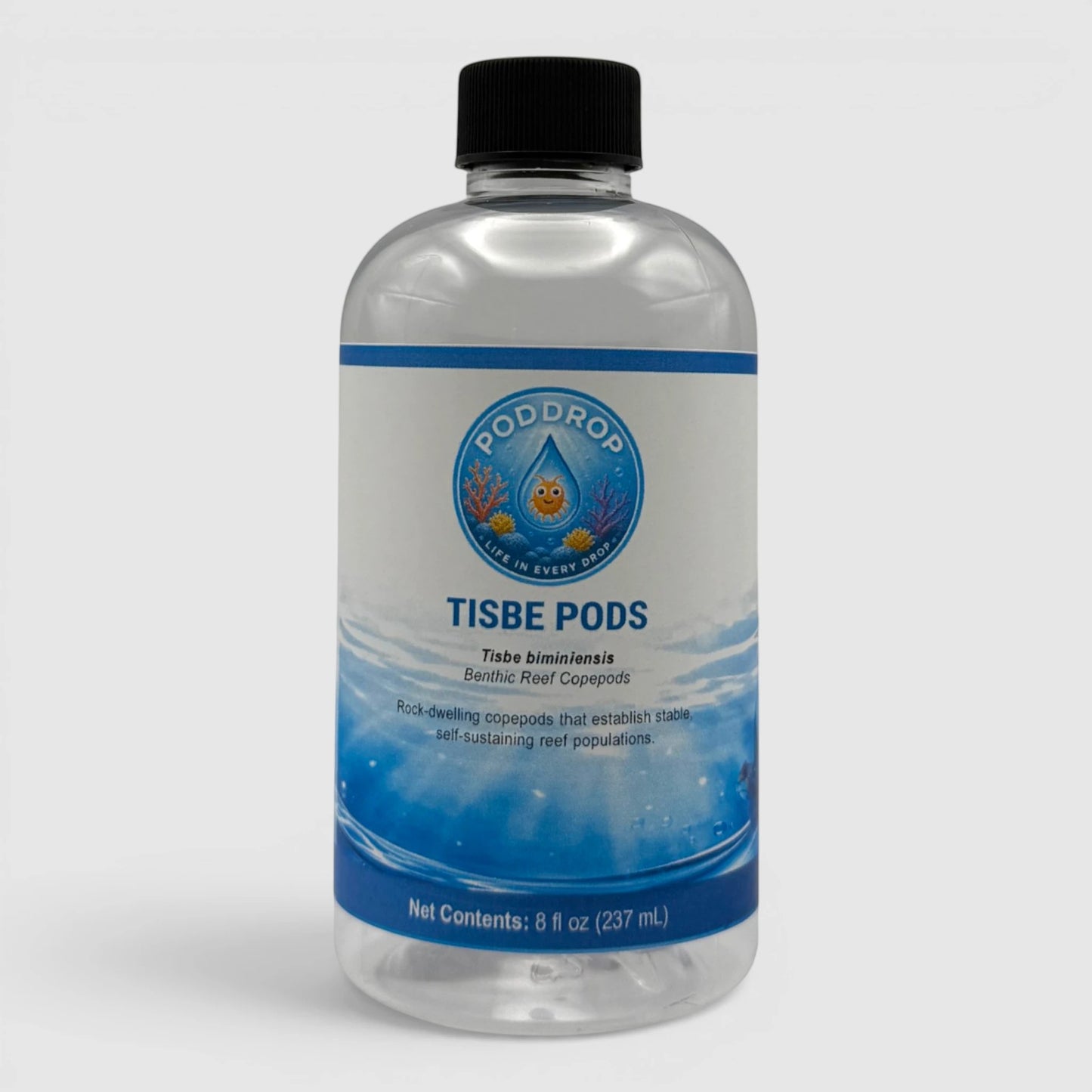
Tisbe biminiensis - The 0.5-0.8mm benthic dino grazer perfectly sized for consuming dinoflagellate cells and films. Small mandibles can physically remove dinos from sand grains and rock pores where larger organisms cannot reach. Fast 8-12 day reproduction creates exponential population growth that overwhelms dino colonies through sheer grazing pressure. Benthic lifestyle targets the substrate zones where many dino species concentrate and form mats.
Tisbe thrives in refugiums where they can breed undisturbed, creating continuous waves of nauplii and adults that migrate to the display tank. Their detritus-processing behavior also removes the organic matter that feeds heterotrophic dino species. The cryptic lifestyle in rockwork protects breeding populations even as display tank specimens get consumed by fish, ensuring sustained biological control.
Tigriopus californicus - The 1.0-1.5mm surface specialist and ecosystem health indicator. Large, visible size allows you to monitor recovery progress—increasing Tigriopus populations on glass and rocks signal successful ecosystem restoration. Fastest copepod reproduction (7-10 day generation time) establishes populations rapidly even in dino-stressed systems. Extreme hardiness tolerates the challenging water conditions common during dino outbreaks.
As the highest omega-3 copepod species, Tigriopus provides premium nutrition for corals recovering from dino-related stress and starvation. The distinctive red-orange coloration from carotenoid accumulation indicates healthy feeding on the Dino Shield phytoplankton. Surface-dwelling behavior makes them easy to culture in refugiums for continuous reinforcement if needed.
Apocyclops panamensis - The 0.6-0.9mm water column specialist that targets free-swimming dinoflagellate life stages. While Tisbe grazes benthic dino mats and Tigriopus patrols surfaces, Apocyclops fills the mid-water niche where planktonic dino cells concentrate. Free-swimming behavior intercepts dinos before they settle and form films. Medium size and active swimming allow efficient filtering of dino-laden water.
Tropical specialist thrives in standard reef temperatures (74-82°F) with sustained activity levels that provide continuous dino grazing pressure. Their planktonic lifestyle makes them particularly effective against species like Amphidinium and Coolia that spend significant time in the water column. The three-copepod combination ensures complete tank coverage—sandbed, surfaces, and water column all receive biological dino control.
Dino Shield Phytoplankton Blend - Five-species weapon engineered specifically for dinoflagellate elimination. The three diatom species (Chaetoceros, Phaeodactylum, Thalassiosira) exploit diatoms' fundamental advantage over dinoflagellates: silica-based cell walls that allow faster reproduction and more efficient nutrient uptake. Chaetoceros's rapid chain-forming growth quickly dominates available nutrients. Phaeodactylum releases allelopathic compounds that chemically suppress dino metabolism. Thalassiosira's larger size creates physical shading that reduces light available to photosynthetic dinos.
The two Isochrysis species (lutea/T-ISO and galbana) serve dual roles: they outcompete dinos for dissolved nutrients while simultaneously feeding the copepod populations that provide physical dino control. Golden pigmentation indicates high DHA content that supports coral recovery from dino-related stress. The five-species combination ensures something thrives regardless of your tank's specific conditions—nutrient levels, lighting, flow patterns, or temperature.
Tisbe biminiensis - The 0.5-0.8mm benthic dino grazer perfectly sized for consuming dinoflagellate cells and films. Small mandibles can physically remove dinos from sand grains and rock pores where larger organisms cannot reach. Fast 8-12 day reproduction creates exponential population growth that overwhelms dino colonies through sheer grazing pressure. Benthic lifestyle targets the substrate zones where many dino species concentrate and form mats.
Tisbe thrives in refugiums where they can breed undisturbed, creating continuous waves of nauplii and adults that migrate to the display tank. Their detritus-processing behavior also removes the organic matter that feeds heterotrophic dino species. The cryptic lifestyle in rockwork protects breeding populations even as display tank specimens get consumed by fish, ensuring sustained biological control.
Tigriopus californicus - The 1.0-1.5mm surface specialist and ecosystem health indicator. Large, visible size allows you to monitor recovery progress—increasing Tigriopus populations on glass and rocks signal successful ecosystem restoration. Fastest copepod reproduction (7-10 day generation time) establishes populations rapidly even in dino-stressed systems. Extreme hardiness tolerates the challenging water conditions common during dino outbreaks.
As the highest omega-3 copepod species, Tigriopus provides premium nutrition for corals recovering from dino-related stress and starvation. The distinctive red-orange coloration from carotenoid accumulation indicates healthy feeding on the Dino Shield phytoplankton. Surface-dwelling behavior makes them easy to culture in refugiums for continuous reinforcement if needed.
Apocyclops panamensis - The 0.6-0.9mm water column specialist that targets free-swimming dinoflagellate life stages. While Tisbe grazes benthic dino mats and Tigriopus patrols surfaces, Apocyclops fills the mid-water niche where planktonic dino cells concentrate. Free-swimming behavior intercepts dinos before they settle and form films. Medium size and active swimming allow efficient filtering of dino-laden water.
Tropical specialist thrives in standard reef temperatures (74-82°F) with sustained activity levels that provide continuous dino grazing pressure. Their planktonic lifestyle makes them particularly effective against species like Amphidinium and Coolia that spend significant time in the water column. The three-copepod combination ensures complete tank coverage—sandbed, surfaces, and water column all receive biological dino control.
Diatom Silica Advantage: The three diatom species in Dino Shield require silica for their cell walls, giving them metabolic efficiency dinoflagellates cannot match. Diatoms reproduce faster while consuming fewer dissolved nutrients per cell, allowing them to outcompete dinos even in nutrient-rich conditions that typically favor dinoflagellate blooms. As copepods consume the diatoms, they gain silica essential for exoskeleton formation, supporting the explosive copepod reproduction necessary for biological dino control.
Allelopathic Suppression Compounds: Phaeodactylum tricornutum produces chemical compounds that directly inhibit dinoflagellate metabolism and reproduction. As this diatom establishes, it releases these allelopathic substances that create chemically hostile conditions for dinos while remaining harmless to corals, copepods, and beneficial bacteria. This biochemical warfare provides control beyond simple nutrient competition.
Recovery Nutrition Package: The Isochrysis species deliver the high DHA content corals need to rebuild tissue and recover from dino-related stress. Corals under dino attack often suffer from starvation as dino films block feeding and light. The golden phytoplankton provides immediate nutrition while copepods feeding on this premium food become DHA-enriched prey items. This two-pathway delivery (direct phytoplankton feeding + enriched copepod consumption) accelerates coral recovery.
Three-Tier Copepod Nutrition: Tisbe's rapid reproduction on Dino Shield creates abundant small prey for microphagous fish and small-polyp corals. Tigriopus's large size and maximum omega-3 content provides substantial nutrition for larger fish and corals. Apocyclops's intermediate profile fills gaps between the two extremes. The three species ensure all reef inhabitants receive appropriate-sized, nutritionally complete prey during the recovery period when they need it most.
Micronutrient Restoration: Dino outbreaks often coincide with trace element imbalances. The five phytoplankton species accumulate different vitamins, minerals, and micronutrients that copepods concentrate further through bioaccumulation. This creates comprehensive micronutrient delivery that helps restore the chemical balance disrupted during dino blooms. Silica from diatoms, B-vitamins from Isochrysis, and varied trace elements from all five species work together to rebuild the nutritional foundation your reef needs for long-term stability and dino resistance.
Diatom Silica Advantage: The three diatom species in Dino Shield require silica for their cell walls, giving them metabolic efficiency dinoflagellates cannot match. Diatoms reproduce faster while consuming fewer dissolved nutrients per cell, allowing them to outcompete dinos even in nutrient-rich conditions that typically favor dinoflagellate blooms. As copepods consume the diatoms, they gain silica essential for exoskeleton formation, supporting the explosive copepod reproduction necessary for biological dino control.
Allelopathic Suppression Compounds: Phaeodactylum tricornutum produces chemical compounds that directly inhibit dinoflagellate metabolism and reproduction. As this diatom establishes, it releases these allelopathic substances that create chemically hostile conditions for dinos while remaining harmless to corals, copepods, and beneficial bacteria. This biochemical warfare provides control beyond simple nutrient competition.
Recovery Nutrition Package: The Isochrysis species deliver the high DHA content corals need to rebuild tissue and recover from dino-related stress. Corals under dino attack often suffer from starvation as dino films block feeding and light. The golden phytoplankton provides immediate nutrition while copepods feeding on this premium food become DHA-enriched prey items. This two-pathway delivery (direct phytoplankton feeding + enriched copepod consumption) accelerates coral recovery.
Three-Tier Copepod Nutrition: Tisbe's rapid reproduction on Dino Shield creates abundant small prey for microphagous fish and small-polyp corals. Tigriopus's large size and maximum omega-3 content provides substantial nutrition for larger fish and corals. Apocyclops's intermediate profile fills gaps between the two extremes. The three species ensure all reef inhabitants receive appropriate-sized, nutritionally complete prey during the recovery period when they need it most.
Micronutrient Restoration: Dino outbreaks often coincide with trace element imbalances. The five phytoplankton species accumulate different vitamins, minerals, and micronutrients that copepods concentrate further through bioaccumulation. This creates comprehensive micronutrient delivery that helps restore the chemical balance disrupted during dino blooms. Silica from diatoms, B-vitamins from Isochrysis, and varied trace elements from all five species work together to rebuild the nutritional foundation your reef needs for long-term stability and dino resistance.
Acclimation: Float the sealed container in your tank for 15-20 minutes to temperature acclimate. Slowly add small amounts of tank water over 10 minutes.
Introduction: Pour copepods into your refugium or sump after lights out for best survival. If adding directly to display, target low-flow areas near rockwork.
Timing: Add to established tanks (3+ months old) with stable parameters. Best results when added before introducing copepod-eating fish.
Population Boost: For mandarin dragonets, start with 2-3 bottles per 50 gallons. Maintenance doses of 1 bottle monthly help sustain populations.
Acclimation: Float the sealed container in your tank for 15-20 minutes to temperature acclimate. Slowly add small amounts of tank water over 10 minutes.
Introduction: Pour copepods into your refugium or sump after lights out for best survival. If adding directly to display, target low-flow areas near rockwork.
Timing: Add to established tanks (3+ months old) with stable parameters. Best results when added before introducing copepod-eating fish.
Population Boost: For mandarin dragonets, start with 2-3 bottles per 50 gallons. Maintenance doses of 1 bottle monthly help sustain populations.
Upon Arrival: Unpack immediately and inspect for active copepods. Light movement is normal during temperature acclimation.
Short-Term Storage (up to 48 hours): Keep at room temperature (65-75°F) away from direct sunlight. Gentle aeration helps but isn't required.
Adding to Tank: Best added same day as arrival for maximum population establishment. Can be held up to 3 days if kept cool with gentle aeration.
Feeding: Our copepods ship with live phytoplankton food supply—no feeding needed before adding to your tank.
Upon Arrival: Unpack immediately and inspect for active copepods. Light movement is normal during temperature acclimation.
Short-Term Storage (up to 48 hours): Keep at room temperature (65-75°F) away from direct sunlight. Gentle aeration helps but isn't required.
Adding to Tank: Best added same day as arrival for maximum population establishment. Can be held up to 3 days if kept cool with gentle aeration.
Feeding: Our copepods ship with live phytoplankton food supply—no feeding needed before adding to your tank.
All PodDrop copepods are guaranteed to arrive alive and actively moving. Our cultures ship with live phytoplankton to maintain health during transit. If copepods arrive deceased or your order has issues, contact us within 2 hours of delivery with photos for replacement or refund. We ship using proven methods to ensure viable populations reach your reef aquarium.
Shipping: Monday-Wednesday via UPS 2nd Day Air for fast, reliable delivery. Arizona aquaculture license #91 ensures legal, biosecure cultures. Includes insulation and temperature protection.
Weather Delays: We monitor conditions and may hold orders for extreme temperatures to ensure live arrival.
Returns: Live copepods cannot be returned once shipped due to their perishable nature. Contact us before shipping for order modifications.
Tracking: Confirmation email sent when your order ships with UPS tracking number.
Shipping: Monday-Wednesday via UPS 2nd Day Air for fast, reliable delivery. Arizona aquaculture license #91 ensures legal, biosecure cultures. Includes insulation and temperature protection.
Weather Delays: We monitor conditions and may hold orders for extreme temperatures to ensure live arrival.
Returns: Live copepods cannot be returned once shipped due to their perishable nature. Contact us before shipping for order modifications.
Tracking: Confirmation email sent when your order ships with UPS tracking number.
PodDrop operates as a licensed Arizona aquaculture facility (AQ License #91) following strict biosecurity and handling protocols. Our Tigriopus californicus cultures are:
• Raised in isolated, quarantine-controlled systems
• Free from parasites, diseases, and pest organisms
• Packaged in food-grade, sealed containers for biosecurity
• Shipped in compliance with USDA and state aquaculture regulations
• Never wild-collected—100% aquacultured for sustainability
Proper Handling: Wash hands before and after handling. Never release copepods into natural waterways. Dispose of packaging responsibly.
PodDrop operates as a licensed Arizona aquaculture facility (AQ License #91) following strict biosecurity and handling protocols. Our Tigriopus californicus cultures are:
• Raised in isolated, quarantine-controlled systems
• Free from parasites, diseases, and pest organisms
• Packaged in food-grade, sealed containers for biosecurity
• Shipped in compliance with USDA and state aquaculture regulations
• Never wild-collected—100% aquacultured for sustainability
Proper Handling: Wash hands before and after handling. Never release copepods into natural waterways. Dispose of packaging responsibly.
-
Ships Monday through Wednesday
-
USA Aquacultured
-
Free Shipping Order $55+
-
Secure Checkout