

Phyto Flex Trio – Custom 3-Bottle Phytoplankton Bundle
Phyto Flex Trio – Custom 3-Bottle Phytoplankton Bundle
Couldn't load pickup availability
Product Overview
The Phyto Flex Trio is PodDrop's fully customizable three-species phytoplankton bundle designed for aquarists who demand complete control over their reef's nutritional strategy. This build-your-own system lets you select any three live phytoplankton species from our cultured collection—Nannochloropsis (green EPA powerhouse), Isochrysis galbana (golden DHA specialist), Rhodomonas salina/lens/cruentum (red color enhancers), Tetraselmis chui (large energetic green), or Chaetoceros calcitrans (silica-rich diatom)—creating a personalized blend tailored precisely to your specific livestock, goals, and feeding preferences.
Perfect for experienced reefers with targeted objectives or unique tank compositions, Phyto Flex Trio eliminates the compromise of pre-selected combinations. Building a mandarin-focused system? Combine Nannochloropsis and Tetraselmis for explosive copepod reproduction plus Rhodomonas for color enhancement. Maximizing clam growth? Select Isochrysis for DHA, Chaetoceros for silica, and your preferred Rhodomonas variant for coloration. SPS-dominated tanks can prioritize small-celled species (Nannochloropsis, Isochrysis, Rhodomonas lens), while LPS systems can emphasize larger, more digestible options (Tetraselmis, Rhodomonas salina, Chaetoceros). The three-bottle format provides optimal balance between nutritional diversity and practical management—you gain broad-spectrum coverage that prevents deficiencies from single-species feeding while avoiding the complexity and waste of larger assortments. All three species arrive as living, actively dividing cultures ready to deliver your customized nutritional strategy immediately upon addition. This is complete phytoplankton flexibility for aquarists who know exactly what their reef needs.
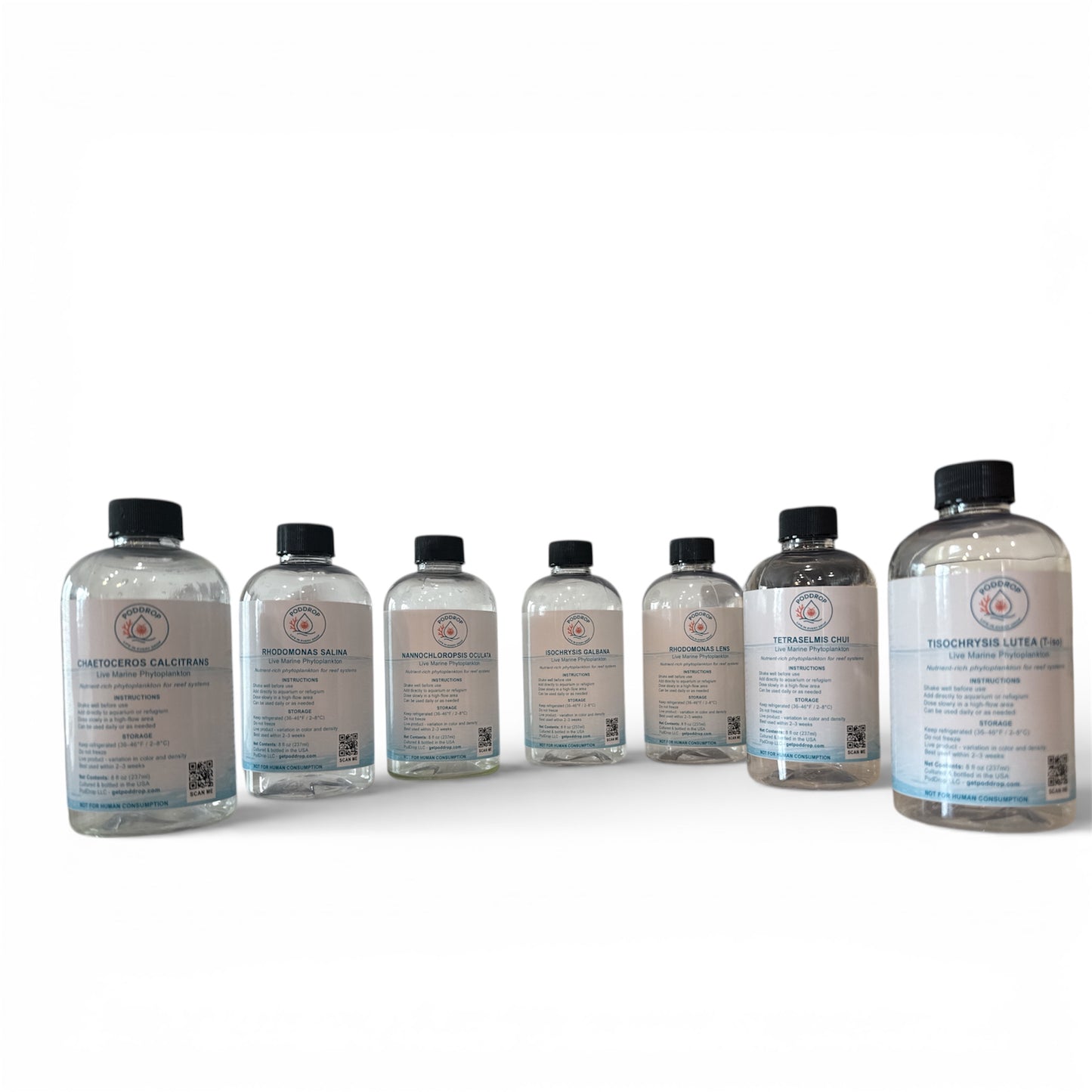
Explore detailed care instructions, specifications, and policies below
The Phyto Flex Trio puts you in complete control of your reef's nutritional strategy. Rather than accepting pre-selected combinations, you choose the three species that match your specific tank inhabitants, goals, and feeding preferences. Building a mandarin-focused system? Combine Nannochloropsis and Tetraselmis for explosive copepod reproduction plus Rhodomonas for color enhancement. Maximizing clam growth? Select Isochrysis for DHA, Chaeto Diatoms for silica, and your choice of color-enhancing Rhodomonas.This customizable approach eliminates waste from species you don't need while doubling down on phytoplankton that benefits your particular setup. SPS-dominated tanks can prioritize small-celled species, LPS systems can focus on larger, more digestible options, and mixed reefs can balance across size ranges. The flexibility also allows you to rotate species seasonally—perhaps emphasizing reproduction support during coral spawning periods or shifting to color-enhancement blends before competitions.Three bottles provide the perfect balance between diversity and practicality. You gain the nutritional breadth that prevents deficiencies from single-species feeding while avoiding the complexity and waste of larger assortments. The trio format also allows strategic pairing—choose a workhorse species for daily feeding, a specialty species for targeted goals, and a third for filling nutritional gaps or experimental additions.
The Phyto Flex Trio puts you in complete control of your reef's nutritional strategy. Rather than accepting pre-selected combinations, you choose the three species that match your specific tank inhabitants, goals, and feeding preferences. Building a mandarin-focused system? Combine Nannochloropsis and Tetraselmis for explosive copepod reproduction plus Rhodomonas for color enhancement. Maximizing clam growth? Select Isochrysis for DHA, Chaeto Diatoms for silica, and your choice of color-enhancing Rhodomonas.This customizable approach eliminates waste from species you don't need while doubling down on phytoplankton that benefits your particular setup. SPS-dominated tanks can prioritize small-celled species, LPS systems can focus on larger, more digestible options, and mixed reefs can balance across size ranges. The flexibility also allows you to rotate species seasonally—perhaps emphasizing reproduction support during coral spawning periods or shifting to color-enhancement blends before competitions.Three bottles provide the perfect balance between diversity and practicality. You gain the nutritional breadth that prevents deficiencies from single-species feeding while avoiding the complexity and waste of larger assortments. The trio format also allows strategic pairing—choose a workhorse species for daily feeding, a specialty species for targeted goals, and a third for filling nutritional gaps or experimental additions.
Nannochloropsis - The 2-4 micron green workhorse for nutrient export and copepod enrichment. Highest EPA omega-3 content and rapid reproduction (doubling every 24-48 hours) make this the foundation species for most reef feeding programs. Thick cell walls maintain nutrient sequestration while universal appeal feeds everything from copepod nauplii to small-polyp corals. Choose Nannochloropsis when copepod production and water quality are priorities.Isochrysis galbana (T-ISO) - The 4-6 micron golden specialist for growth and development. Highest DHA levels of any phytoplankton provide the specific omega-3 critical for coral tissue regeneration, clam growth, and larval development. Soft cell walls ensure easy digestion and rapid nutrient absorption. Golden pigmentation enhances yellow-orange coloration while supporting photosynthetic efficiency. Select Isochrysis when maximizing coral and clam growth or raising larvae.Rhodomonas (salina/lens/cruentum) - The 6-8 micron red cryptophyte family for color enhancement and premium nutrition. All three species deliver exceptional DHA+EPA profiles with red phycoerythrin pigments that intensify coral reds and oranges. Soft cells provide superior digestibility. Choose salina for proven performance, lens for slightly smaller size, or cruentum for deepest red pigmentation. Select any Rhodomonas when coral coloration is the primary goal.Tetraselmis - The 8-10 micron energetic green flagellate for diverse applications. Larger size suits bigger corals and mature copepods while active swimming maintains water column suspension. High chlorophyll content supports photosynthetic organisms. Robust cell walls provide sustained-release nutrition. Choose Tetraselmis when feeding larger-polyp corals, established copepod populations, or seeking variety beyond Nannochloropsis.Chaeto Diatoms (Chaetoceros) - The 5-15 micron silica-rich specialist for reproduction and larval rearing. Chain-forming diatoms provide essential silica for copepod exoskeleton formation and bivalve shell development. Exceptional nutritional density supports coral spawning and larval survival. Clumping behavior makes them easy for filter feeders to capture. Select Chaeto Diatoms when breeding copepods, raising coral larvae, or supporting clam/oyster growth.
Nannochloropsis - The 2-4 micron green workhorse for nutrient export and copepod enrichment. Highest EPA omega-3 content and rapid reproduction (doubling every 24-48 hours) make this the foundation species for most reef feeding programs. Thick cell walls maintain nutrient sequestration while universal appeal feeds everything from copepod nauplii to small-polyp corals. Choose Nannochloropsis when copepod production and water quality are priorities.Isochrysis galbana (T-ISO) - The 4-6 micron golden specialist for growth and development. Highest DHA levels of any phytoplankton provide the specific omega-3 critical for coral tissue regeneration, clam growth, and larval development. Soft cell walls ensure easy digestion and rapid nutrient absorption. Golden pigmentation enhances yellow-orange coloration while supporting photosynthetic efficiency. Select Isochrysis when maximizing coral and clam growth or raising larvae.Rhodomonas (salina/lens/cruentum) - The 6-8 micron red cryptophyte family for color enhancement and premium nutrition. All three species deliver exceptional DHA+EPA profiles with red phycoerythrin pigments that intensify coral reds and oranges. Soft cells provide superior digestibility. Choose salina for proven performance, lens for slightly smaller size, or cruentum for deepest red pigmentation. Select any Rhodomonas when coral coloration is the primary goal.Tetraselmis - The 8-10 micron energetic green flagellate for diverse applications. Larger size suits bigger corals and mature copepods while active swimming maintains water column suspension. High chlorophyll content supports photosynthetic organisms. Robust cell walls provide sustained-release nutrition. Choose Tetraselmis when feeding larger-polyp corals, established copepod populations, or seeking variety beyond Nannochloropsis.Chaeto Diatoms (Chaetoceros) - The 5-15 micron silica-rich specialist for reproduction and larval rearing. Chain-forming diatoms provide essential silica for copepod exoskeleton formation and bivalve shell development. Exceptional nutritional density supports coral spawning and larval survival. Clumping behavior makes them easy for filter feeders to capture. Select Chaeto Diatoms when breeding copepods, raising coral larvae, or supporting clam/oyster growth.
Customized Fatty Acid Ratios: Your three-species selection determines the EPA:DHA balance your reef receives. Pairing Nannochloropsis (high EPA) with Isochrysis (high DHA) creates balanced omega-3 delivery for both immune function and tissue growth. Adding Rhodomonas provides both fatty acids plus color-enhancing compounds. Alternatively, combining Nannochloropsis with Tetraselmis and Chaeto Diatoms emphasizes EPA for copepod reproduction over coral growth. This control allows you to match nutritional profiles to your livestock's specific requirements.
Targeted Protein Delivery: Each species offers complete protein but with different concentrations and amino acid emphases. Nannochloropsis provides maximum overall protein (40-50%) for general growth. Isochrysis concentrates amino acids supporting tissue repair. Rhodomonas delivers balanced profiles for metabolic needs. Tetraselmis offers robust protein in larger packages. Chaeto Diatoms provide protein with added silica for structural support. Your selection determines whether your system prioritizes rapid growth, sustained nutrition, or specialized functions.
Strategic Pigment Selection: Choose your color enhancement strategy through species selection. Maximum reds and oranges come from any Rhodomonas variant. Yellow and golden tones emerge from Isochrysis. General green chlorophyll support comes from Nannochloropsis or Tetraselmis. Mixing pigment sources creates broader spectrum coloration while single-color focus maximizes specific hues. This flexibility lets you emphasize the colors your particular corals display best.
Size-Based Feeding Efficiency: Your species choices determine particle size distribution. Selecting Nannochloropsis (2-4μm), Isochrysis (4-6μm), and Rhodomonas (6-8μm) creates a small-to-medium range perfect for SPS-dominated tanks. Choosing Tetraselmis (8-10μm), Chaeto Diatoms (5-15μm), and Rhodomonas covers medium-to-large ranges for LPS and clam systems. Mixing across size ranges accommodates mixed reefs. This control ensures your livestock can actually capture and consume the phytoplankton you're feeding rather than watching it settle unused.
Specialized Micronutrient Loading: Each species accumulates different vitamins, minerals, and trace elements. Chaeto Diatoms uniquely provide silica essential for skeletal structures. Isochrysis concentrates B-vitamins and vitamin E. Rhodomonas delivers enhanced carotenoid diversity. Nannochloropsis offers broad-spectrum micronutrients. Your trio selection determines which specialized nutrients your reef receives in abundance versus which remain at baseline levels. This allows targeted supplementation for specific deficiencies or goals without the waste of comprehensive blends where most components go unused.
Customized Fatty Acid Ratios: Your three-species selection determines the EPA:DHA balance your reef receives. Pairing Nannochloropsis (high EPA) with Isochrysis (high DHA) creates balanced omega-3 delivery for both immune function and tissue growth. Adding Rhodomonas provides both fatty acids plus color-enhancing compounds. Alternatively, combining Nannochloropsis with Tetraselmis and Chaeto Diatoms emphasizes EPA for copepod reproduction over coral growth. This control allows you to match nutritional profiles to your livestock's specific requirements.
Targeted Protein Delivery: Each species offers complete protein but with different concentrations and amino acid emphases. Nannochloropsis provides maximum overall protein (40-50%) for general growth. Isochrysis concentrates amino acids supporting tissue repair. Rhodomonas delivers balanced profiles for metabolic needs. Tetraselmis offers robust protein in larger packages. Chaeto Diatoms provide protein with added silica for structural support. Your selection determines whether your system prioritizes rapid growth, sustained nutrition, or specialized functions.
Strategic Pigment Selection: Choose your color enhancement strategy through species selection. Maximum reds and oranges come from any Rhodomonas variant. Yellow and golden tones emerge from Isochrysis. General green chlorophyll support comes from Nannochloropsis or Tetraselmis. Mixing pigment sources creates broader spectrum coloration while single-color focus maximizes specific hues. This flexibility lets you emphasize the colors your particular corals display best.
Size-Based Feeding Efficiency: Your species choices determine particle size distribution. Selecting Nannochloropsis (2-4μm), Isochrysis (4-6μm), and Rhodomonas (6-8μm) creates a small-to-medium range perfect for SPS-dominated tanks. Choosing Tetraselmis (8-10μm), Chaeto Diatoms (5-15μm), and Rhodomonas covers medium-to-large ranges for LPS and clam systems. Mixing across size ranges accommodates mixed reefs. This control ensures your livestock can actually capture and consume the phytoplankton you're feeding rather than watching it settle unused.
Specialized Micronutrient Loading: Each species accumulates different vitamins, minerals, and trace elements. Chaeto Diatoms uniquely provide silica essential for skeletal structures. Isochrysis concentrates B-vitamins and vitamin E. Rhodomonas delivers enhanced carotenoid diversity. Nannochloropsis offers broad-spectrum micronutrients. Your trio selection determines which specialized nutrients your reef receives in abundance versus which remain at baseline levels. This allows targeted supplementation for specific deficiencies or goals without the waste of comprehensive blends where most components go unused.
Dosing: Shake bottle vigorously before use to redistribute settled cells. Add directly to refugium, sump, or display tank during low-flow periods.
Refugium Addition: Dose near copepod populations for direct feeding. Daily dosing supports robust copepod reproduction and growth.
Display Tank: Broadcast dose in evening hours. Water may show green tint that clears within 4-8 hours as organisms consume cells.
Recommended Dosage: Start with 10-15ml per 25 gallons daily. Adjust based on copepod density and filter feeder populations. Higher doses (30-40ml per 25 gallons) for systems with dense copepod cultures.
Breeding Systems: Dose 2-3 times daily for intensive rotifer and copepod production systems.
Dosing: Shake bottle vigorously before use to redistribute settled cells. Add directly to refugium, sump, or display tank during low-flow periods.
Refugium Addition: Dose near copepod populations for direct feeding. Daily dosing supports robust copepod reproduction and growth.
Display Tank: Broadcast dose in evening hours. Water may show green tint that clears within 4-8 hours as organisms consume cells.
Recommended Dosage: Start with 10-15ml per 25 gallons daily. Adjust based on copepod density and filter feeder populations. Higher doses (30-40ml per 25 gallons) for systems with dense copepod cultures.
Breeding Systems: Dose 2-3 times daily for intensive rotifer and copepod production systems.
Upon Arrival: Refrigerate immediately at 35-45°F. Shake vigorously before opening to redistribute cells.
Refrigerated Storage: Keeps for 3-5 weeks when properly refrigerated. Check for fresh, earthy smell and bright green coloration.
Viability Check: Healthy cultures appear bright green. Off smell, brown coloration, or clumping indicates declining viability.
Shake Before Use: Cells settle heavily—always shake vigorously to redistribute before dosing.
Avoid Freezing: Never freeze phytoplankton cultures as this destroys cell structure and nutritional value.
Upon Arrival: Refrigerate immediately at 35-45°F. Shake vigorously before opening to redistribute cells.
Refrigerated Storage: Keeps for 3-5 weeks when properly refrigerated. Check for fresh, earthy smell and bright green coloration.
Viability Check: Healthy cultures appear bright green. Off smell, brown coloration, or clumping indicates declining viability.
Shake Before Use: Cells settle heavily—always shake vigorously to redistribute before dosing.
Avoid Freezing: Never freeze phytoplankton cultures as this destroys cell structure and nutritional value.
All PodDrop phytoplankton cultures are guaranteed to arrive alive and viable. Our phytoplankton is shipped fresh and concentrated for immediate use. If your culture arrives compromised (off smell, unusual color, or dead cells), contact us within 2 hours of delivery with photos for replacement or refund. We use insulated shipping to maintain culture viability during transit.
All PodDrop phytoplankton cultures are guaranteed to arrive alive and viable. Our phytoplankton is shipped fresh and concentrated for immediate use. If your culture arrives compromised (off smell, unusual color, or dead cells), contact us within 2 hours of delivery with photos for replacement or refund. We use insulated shipping to maintain culture viability during transit.
Shipping: Monday-Wednesday via UPS 2nd Day Air for fast, reliable delivery. Arizona aquaculture license #91 ensures legal, biosecure cultures. Includes insulation and cold packs for temperature protection.
Weather Delays: We monitor conditions and may hold orders during extreme temperatures to ensure culture viability.
Returns: Live phytoplankton cannot be returned once shipped due to perishable nature. Contact us before shipping for order modifications.
Tracking: Confirmation email sent when your order ships with UPS tracking number.
Shipping: Monday-Wednesday via UPS 2nd Day Air for fast, reliable delivery. Arizona aquaculture license #91 ensures legal, biosecure cultures. Includes insulation and cold packs for temperature protection.
Weather Delays: We monitor conditions and may hold orders during extreme temperatures to ensure culture viability.
Returns: Live phytoplankton cannot be returned once shipped due to perishable nature. Contact us before shipping for order modifications.
Tracking: Confirmation email sent when your order ships with UPS tracking number.
PodDrop operates as a licensed Arizona aquaculture facility (AQ License #91) following strict biosecurity and handling protocols. Our Tetraselmis chui cultures are:
• Raised in isolated, contamination-controlled systems
• Free from harmful bacteria, parasites, and competing algae species
• Packaged in food-grade, sealed containers for biosecurity
• Shipped in compliance with USDA and state aquaculture regulations
• Monoculture strains maintained for consistent quality and nutrition
• Sustainably produced without environmental impact
Proper Handling: Refrigerate immediately upon arrival. Shake vigorously before each use. Never release culture water into natural waterways. Dispose of packaging responsibly.
PodDrop operates as a licensed Arizona aquaculture facility (AQ License #91) following strict biosecurity and handling protocols. Our Tetraselmis chui cultures are:
• Raised in isolated, contamination-controlled systems
• Free from harmful bacteria, parasites, and competing algae species
• Packaged in food-grade, sealed containers for biosecurity
• Shipped in compliance with USDA and state aquaculture regulations
• Monoculture strains maintained for consistent quality and nutrition
• Sustainably produced without environmental impact
Proper Handling: Refrigerate immediately upon arrival. Shake vigorously before each use. Never release culture water into natural waterways. Dispose of packaging responsibly.
-
Ships Monday through Wednesday
-
USA Aquacultured
-
Free Shipping Order $55+
-
Secure Checkout