Crimson Reef Revolution – Rhodomonas Phytoplankton & Copepod Bundle
Couldn't load pickup availability
Product Overview
Crimson Reef Revolution is PodDrop's premium color-focused bundle engineered to intensify coral reds and oranges while building explosive copepod populations through strategic phytoplankton selection. This elite combination pairs Rhodomonas salina (the ultimate red cryptophyte with maximum DHA+EPA and phycoerythrin pigments) with three proven copepod species—Tisbe biminiensis, Tigriopus californicus, and Apocyclops panamensis—creating a dual-pathway coloration system where phytoplankton feeds corals directly while supercharging copepod nutritional quality for secondary color transfer.
Perfect for competition-grade systems and aquarists obsessed with coral coloration, Crimson Revolution delivers visible color intensification within 2-3 weeks through unprecedented pigment concentration. Rhodomonas represents copepod superfood—its superior digestibility and red phycoerythrin content boost copepod reproduction beyond what green phytoplankton can achieve while loading copepod tissues with color-enhancing compounds. As the three copepod species explode in population feeding on this premium phytoplankton, they become living pigment capsules that transfer concentrated carotenoids and omega-3s to corals through predation. The species distribute across sandbed (Tisbe), surface zones (Tigriopus with highest omega-3 bioaccumulation), and water column (Apocyclops as direct coral prey)—ensuring complete ecological coverage with maximum color delivery. Size diversity (0.5-1.5mm) feeds everything from small-polyp corals to demanding fish like mandarins and wrasses. All components arrive in actively feeding cultures with live phytoplankton, already reproducing and loaded with pigments, ready to deliver competition-level coloration immediately upon introduction. This is the ultimate color-enhancement system for serious reefers.

Explore detailed care instructions, specifications, and policies below
Crimson Reef Revolution intensifies coral coloration while building explosive copepod populations through strategic phytoplankton selection. Rhodomonas salina's red phycoerythrin pigments and exceptional DHA/EPA profile directly enhance red and orange coloration in corals while providing the most digestible phytoplankton nutrition available. This premium cryptophyte simultaneously enriches copepod nutritional value, creating "gut-loaded" prey that transfers enhanced coloration compounds and omega-3s to corals through the food chain.The phytoplankton-copepod pairing creates competition-grade results by optimizing both direct coral feeding and secondary consumption. Rhodomonas feeds corals directly while supercharging copepod reproduction—the three species explode in population when fed this premium phytoplankton, distributing themselves across sandbed (Tisbe), surface zones (Tigriopus), and water column (Apocyclops). As copepods graze on Rhodomonas, they concentrate the red pigments and fatty acids in their tissues, becoming living color-enhancing capsules that corals capture and consume.Systems running this bundle show visible color intensification within 2-3 weeks as the combined phytoplankton-copepod nutrition delivers unprecedented levels of carotenoids, omega-3s, and bioactive compounds. Finicky fish like mandarins thrive on the abundant copepod populations while SPS and LPS corals display deeper, more vibrant reds and oranges from the concentrated pigment delivery.
Rhodomonas salina (RED) - The elite coloration specialist driving this system. These 6-8 micron red-pink cryptophytes contain the highest combined DHA + EPA levels of any phytoplankton while offering soft, easily digested cell walls that make nutrients immediately bioavailable. Red phycoerythrin pigments provide the raw materials for coral red and orange fluorescent proteins while delivering potent antioxidant protection against light stress.
Rhodomonas represents copepod superfood—its superior digestibility and nutrient density boost copepod reproduction rates beyond what green phytoplankton can achieve. The elevated DHA content is particularly critical for copepod egg production and nauplii development, creating healthier, more nutritious prey for your corals. Active swimming behavior keeps cells suspended in the water column longer, ensuring efficient consumption by both copepods and filter-feeding corals.
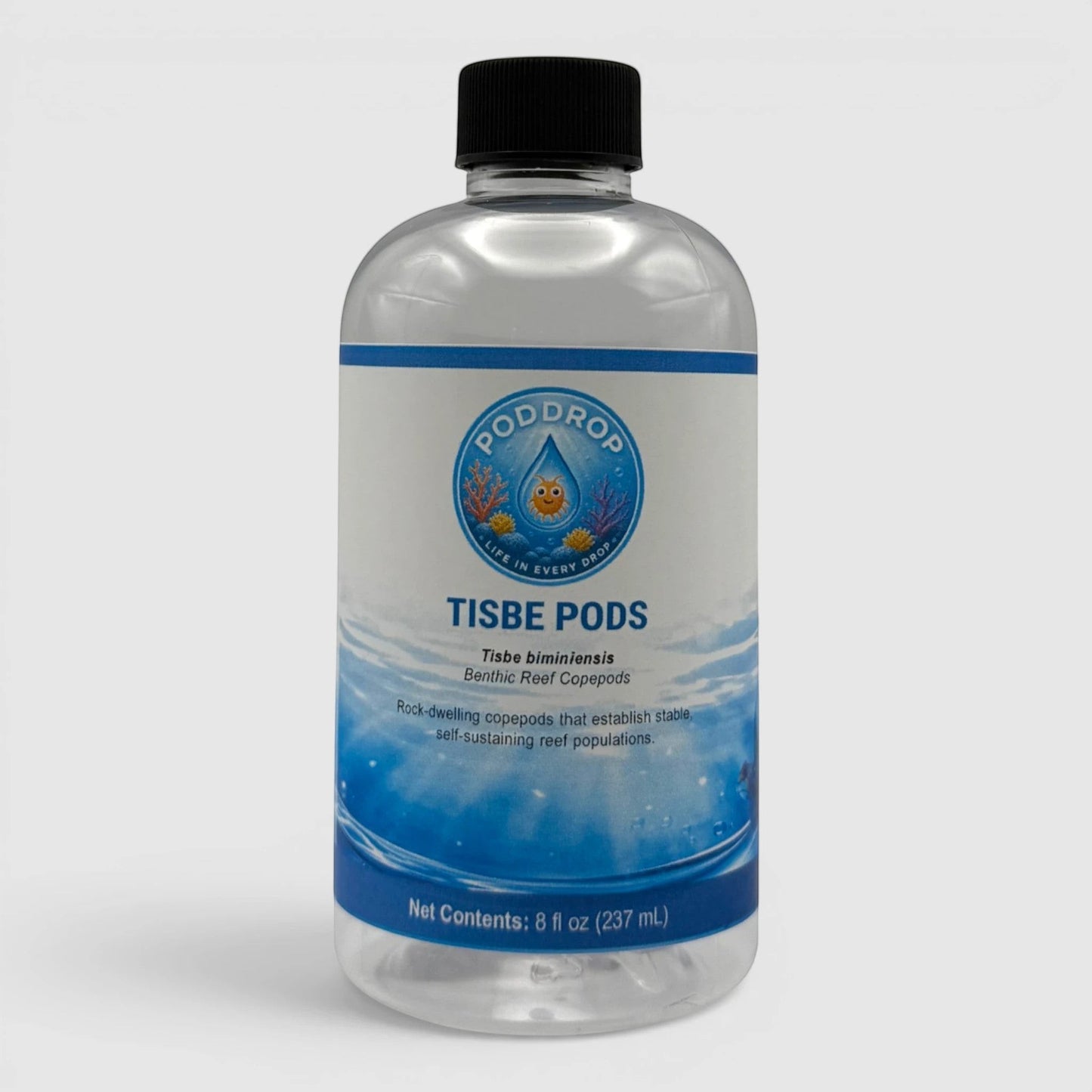
Tisbe biminiensis - The 0.5-0.8mm refugium production engine. Fast reproduction (7-10 day generation time) and detritus processing abilities make Tisbe ideal for establishing massive breeding populations in refugiums or cryptic rock spaces. Small size with prolific output creates continuous clouds of tiny nauplii perfect for small-polyp corals and microphagous fish. Benthic lifestyle protects breeding populations from predation.
Tigriopus californicus - The 1.0-1.5mm surface feeding powerhouse with fastest reproduction rates. Large, meaty adults provide substantial nutrition for mandarins, wrasses, and other planktivores. As the highest omega-3 copepod species, Tigriopus concentrates the Rhodomonas fatty acids and pigments most efficiently, becoming premium coral food. Distinctive red-orange coloration from carotenoid accumulation indicates exceptional nutritional quality. Extreme hardiness allows refugium cultivation for continuous harvest.
Apocyclops panamensis - The 0.6-0.9mm water column specialist and coral feeding expert. Free-swimming planktonic behavior keeps these medium-sized copepods suspended where coral polyps easily capture them. Their cruising patterns through coral colonies make them more available to sessile predators than benthic Tisbe or surface-oriented Tigriopus. Intermediate size bridges the gap between tiny Tisbe nauplii and large Tigriopus adults, ensuring corals of all polyp sizes receive appropriate prey.
Rhodomonas salina (RED) - The elite coloration specialist driving this system. These 6-8 micron red-pink cryptophytes contain the highest combined DHA + EPA levels of any phytoplankton while offering soft, easily digested cell walls that make nutrients immediately bioavailable. Red phycoerythrin pigments provide the raw materials for coral red and orange fluorescent proteins while delivering potent antioxidant protection against light stress.
Rhodomonas represents copepod superfood—its superior digestibility and nutrient density boost copepod reproduction rates beyond what green phytoplankton can achieve. The elevated DHA content is particularly critical for copepod egg production and nauplii development, creating healthier, more nutritious prey for your corals. Active swimming behavior keeps cells suspended in the water column longer, ensuring efficient consumption by both copepods and filter-feeding corals.
Tisbe biminiensis - The 0.5-0.8mm refugium production engine. Fast reproduction (7-10 day generation time) and detritus processing abilities make Tisbe ideal for establishing massive breeding populations in refugiums or cryptic rock spaces. Small size with prolific output creates continuous clouds of tiny nauplii perfect for small-polyp corals and microphagous fish. Benthic lifestyle protects breeding populations from predation.
Tigriopus californicus - The 1.0-1.5mm surface feeding powerhouse with fastest reproduction rates. Large, meaty adults provide substantial nutrition for mandarins, wrasses, and other planktivores. As the highest omega-3 copepod species, Tigriopus concentrates the Rhodomonas fatty acids and pigments most efficiently, becoming premium coral food. Distinctive red-orange coloration from carotenoid accumulation indicates exceptional nutritional quality. Extreme hardiness allows refugium cultivation for continuous harvest.
Apocyclops panamensis - The 0.6-0.9mm water column specialist and coral feeding expert. Free-swimming planktonic behavior keeps these medium-sized copepods suspended where coral polyps easily capture them. Their cruising patterns through coral colonies make them more available to sessile predators than benthic Tisbe or surface-oriented Tigriopus. Intermediate size bridges the gap between tiny Tisbe nauplii and large Tigriopus adults, ensuring corals of all polyp sizes receive appropriate prey.
Elite Pigment Delivery: Rhodomonas's red phycoerythrin and associated carotenoids provide raw materials for coral fluorescent protein synthesis and color enhancement. As copepods consume the phytoplankton, they bioaccumulate these pigments at concentrations 3-5x higher than the original cells. Corals capturing pigment-loaded copepods receive both direct pigment precursors and the amino acids necessary to synthesize their own fluorescent proteins, creating synergistic coloration enhancement impossible from phytoplankton or copepods alone.
Maximum DHA/EPA Content: Rhodomonas contains the highest combined omega-3 levels of any phytoplankton, with balanced DHA for tissue growth and EPA for immune function. The three copepod species concentrate these fatty acids differently based on their metabolic needs: Tigriopus achieves highest overall omega-3 levels, Tisbe optimizes EPA:DHA ratios for rapid reproduction, and Apocyclops balances both for sustained swimming. Together they deliver the complete omega-3 spectrum corals need for growth, wound healing, and stress resistance.
Superior Digestibility: Rhodomonas's soft cell walls and copepods' easily digested chitin ensure maximum nutrient bioavailability. Corals can fully utilize the nutrition within minutes of consumption rather than hours required for hard-walled phytoplankton. This rapid absorption means more nutrients support coral tissue growth rather than being lost to water column bacteria or skimmer extraction.
Antioxidant Protection: The red pigments and elevated vitamin E in Rhodomonas provide powerful antioxidant benefits that copepods transfer to corals. This protection helps corals resist bleaching under high light, recover faster from stress events, and maintain vibrant colors under intense PAR. The combined delivery through both phytoplankton and copepod pathways creates comprehensive antioxidant coverage across all coral feeding strategies.
Elite Pigment Delivery: Rhodomonas's red phycoerythrin and associated carotenoids provide raw materials for coral fluorescent protein synthesis and color enhancement. As copepods consume the phytoplankton, they bioaccumulate these pigments at concentrations 3-5x higher than the original cells. Corals capturing pigment-loaded copepods receive both direct pigment precursors and the amino acids necessary to synthesize their own fluorescent proteins, creating synergistic coloration enhancement impossible from phytoplankton or copepods alone.
Maximum DHA/EPA Content: Rhodomonas contains the highest combined omega-3 levels of any phytoplankton, with balanced DHA for tissue growth and EPA for immune function. The three copepod species concentrate these fatty acids differently based on their metabolic needs: Tigriopus achieves highest overall omega-3 levels, Tisbe optimizes EPA:DHA ratios for rapid reproduction, and Apocyclops balances both for sustained swimming. Together they deliver the complete omega-3 spectrum corals need for growth, wound healing, and stress resistance.
Superior Digestibility: Rhodomonas's soft cell walls and copepods' easily digested chitin ensure maximum nutrient bioavailability. Corals can fully utilize the nutrition within minutes of consumption rather than hours required for hard-walled phytoplankton. This rapid absorption means more nutrients support coral tissue growth rather than being lost to water column bacteria or skimmer extraction.
Antioxidant Protection: The red pigments and elevated vitamin E in Rhodomonas provide powerful antioxidant benefits that copepods transfer to corals. This protection helps corals resist bleaching under high light, recover faster from stress events, and maintain vibrant colors under intense PAR. The combined delivery through both phytoplankton and copepod pathways creates comprehensive antioxidant coverage across all coral feeding strategies.
Acclimation: Float the sealed container in your tank for 15-20 minutes to temperature acclimate. Slowly add small amounts of tank water over 10 minutes.
Introduction: Pour copepods into your refugium or sump after lights out for best survival. If adding directly to display, target low-flow areas near rockwork.
Timing: Add to established tanks (3+ months old) with stable parameters. Best results when added before introducing copepod-eating fish.
Population Boost: For mandarin dragonets, start with 2-3 bottles per 50 gallons. Maintenance doses of 1 bottle monthly help sustain populations.
Acclimation: Float the sealed container in your tank for 15-20 minutes to temperature acclimate. Slowly add small amounts of tank water over 10 minutes.
Introduction: Pour copepods into your refugium or sump after lights out for best survival. If adding directly to display, target low-flow areas near rockwork.
Timing: Add to established tanks (3+ months old) with stable parameters. Best results when added before introducing copepod-eating fish.
Population Boost: For mandarin dragonets, start with 2-3 bottles per 50 gallons. Maintenance doses of 1 bottle monthly help sustain populations.
Upon Arrival: Unpack immediately and inspect for active copepods. Light movement is normal during temperature acclimation.
Short-Term Storage (up to 48 hours): Keep at room temperature (65-75°F) away from direct sunlight. Gentle aeration helps but isn't required.
Adding to Tank: Best added same day as arrival for maximum population establishment. Can be held up to 3 days if kept cool with gentle aeration.
Feeding: Our copepods ship with live phytoplankton food supply—no feeding needed before adding to your tank.
Upon Arrival: Unpack immediately and inspect for active copepods. Light movement is normal during temperature acclimation.
Short-Term Storage (up to 48 hours): Keep at room temperature (65-75°F) away from direct sunlight. Gentle aeration helps but isn't required.
Adding to Tank: Best added same day as arrival for maximum population establishment. Can be held up to 3 days if kept cool with gentle aeration.
Feeding: Our copepods ship with live phytoplankton food supply—no feeding needed before adding to your tank.
All PodDrop copepods are guaranteed to arrive alive and actively moving. Our cultures ship with live phytoplankton to maintain health during transit. If copepods arrive deceased or your order has issues, contact us within 2 hours of delivery with photos for replacement or refund. We ship using proven methods to ensure viable populations reach your reef aquarium.
Shipping: Monday-Wednesday via UPS 2nd Day Air for fast, reliable delivery. Arizona aquaculture license #91 ensures legal, biosecure cultures. Includes insulation and temperature protection.
Weather Delays: We monitor conditions and may hold orders for extreme temperatures to ensure live arrival.
Returns: Live copepods cannot be returned once shipped due to their perishable nature. Contact us before shipping for order modifications.
Tracking: Confirmation email sent when your order ships with UPS tracking number.
Shipping: Monday-Wednesday via UPS 2nd Day Air for fast, reliable delivery. Arizona aquaculture license #91 ensures legal, biosecure cultures. Includes insulation and temperature protection.
Weather Delays: We monitor conditions and may hold orders for extreme temperatures to ensure live arrival.
Returns: Live copepods cannot be returned once shipped due to their perishable nature. Contact us before shipping for order modifications.
Tracking: Confirmation email sent when your order ships with UPS tracking number.
PodDrop operates as a licensed Arizona aquaculture facility (AQ License #91) following strict biosecurity and handling protocols. Our Tigriopus californicus cultures are:
• Raised in isolated, quarantine-controlled systems
• Free from parasites, diseases, and pest organisms
• Packaged in food-grade, sealed containers for biosecurity
• Shipped in compliance with USDA and state aquaculture regulations
• Never wild-collected—100% aquacultured for sustainability
Proper Handling: Wash hands before and after handling. Never release copepods into natural waterways. Dispose of packaging responsibly.
PodDrop operates as a licensed Arizona aquaculture facility (AQ License #91) following strict biosecurity and handling protocols. Our Tigriopus californicus cultures are:
• Raised in isolated, quarantine-controlled systems
• Free from parasites, diseases, and pest organisms
• Packaged in food-grade, sealed containers for biosecurity
• Shipped in compliance with USDA and state aquaculture regulations
• Never wild-collected—100% aquacultured for sustainability
Proper Handling: Wash hands before and after handling. Never release copepods into natural waterways. Dispose of packaging responsibly.
-
Ships Monday through Wednesday
-
USA Aquacultured
-
Free Shipping Order $55+
-
Secure Checkout