

Understanding the Nutritional Profile: Copepods for Reefers
Copepods might slip under the radar because of their tiny size, but these microscopic crustaceans are the backbone of marine ecosystems. You might expect bigger creatures to call the shots, yet over 13,000 copepod species cover nearly every ocean environment on Earth. The real surprise is how much the entire balance of the sea depends on these invisible powerhouses.
Table of Contents
- What Are Copepods And Their Role In Marine Ecosystems?
- The Nutritional Benefits Of Copepods For Coral Health
- How Copepods Contribute To The Food Web In Reef Environments
- Comparing Copepods With Other Marine Food Sources
- Key Considerations For Utilizing Copepods In Coral Farming
Quick Summary
| Takeaway | Explanation |
|---|---|
| Copepods are vital for marine food webs. | They link phytoplankton to larger marine species, maintaining ecological balance. |
| Copepods enhance coral health and growth. | They provide essential nutrients like omega-3 fatty acids that support coral physiology. |
| Optimize conditions for copepod cultivation. | Managing temperature, salinity, and food sources is crucial for effective copepod farming. |
| Select the right copepod species for coral farming. | Different species have unique nutritional benefits; matching them to coral needs is essential. |
| Copepods outperform traditional marine food sources. | They offer superior protein and fatty acid profiles compared to brine shrimp and rotifers. |
What Are Copepods and Their Role in Marine Ecosystems?
Copepods are microscopic crustaceans that form a critical foundation in marine food webs worldwide. As tiny zooplankton, these organisms play an outsized role in oceanic ecosystems, serving as a primary nutritional link between phytoplankton and larger marine organisms. Learn more about marine biodiversity and understand how these minuscule creatures contribute to complex ecological networks.
Biological Characteristics and Diversity
Typically ranging from 1 to 2 millimeters in length, copepods represent an incredibly diverse group with over 13,000 documented species. Their streamlined, torpedo-shaped bodies enable efficient movement through water, and they possess remarkable adaptability across various marine environments. According to research published in NOAA Fisheries, these organisms exhibit incredible metabolic plasticity, allowing them to survive in environments spanning tropical coral reefs to polar marine ecosystems.
Key biological characteristics of copepods include:
- Segmented body structure with distinct head and thorax regions
- Complex reproductive strategies involving sexual and asexual reproduction
- Highly efficient feeding mechanisms using specialized appendages
Ecological Significance in Marine Food Webs
Copepods function as critical intermediary consumers in marine ecosystems. They consume microscopic algae and serve as essential prey for numerous marine species, including small fish, whale populations, and coral reef inhabitants. Their role extends beyond simple nutrition transmission; copepods contribute significantly to global carbon cycling and marine nutrient distribution.
Research from the Proceedings of the National Academy of Sciences demonstrates that copepod biodiversity directly influences marine ecosystem functioning. By rapidly processing and redistributing organic matter, these tiny organisms help maintain delicate ecological balances that support broader marine life sustainability.
The Nutritional Benefits of Copepods for Coral Health
Copepods represent a nutritional powerhouse that significantly contributes to coral reef ecosystem health and vitality. These microscopic organisms provide essential nutrients, fatty acids, and proteins that are crucial for coral growth, development, and resilience. Learn more about marine nutrition strategies and understand how these tiny creatures support complex marine life systems.
Nutritional Composition and Essential Fatty Acids
The nutritional profile of copepods makes them an exceptional food source for coral ecosystems. According to the Food and Agriculture Organization, copepods are rich in highly unsaturated fatty acids (HUFAs), particularly docosahexaenoic acid (DHA) and eicosapentaenoic acid (EPA). These fatty acids play a critical role in coral physiological processes, supporting symbiotic relationships and cellular functions.
Key nutritional components of copepods include:
- High concentration of omega-3 fatty acids
- Diverse protein profiles with essential amino acids
- Trace minerals and micronutrients necessary for coral metabolism
Coral Growth and Developmental Impact
Copepods contribute directly to coral health through their comprehensive nutritional profile. Juvenile coral development depends significantly on these microscopic organisms as a primary food source. Research published in marine biology journals demonstrates that corals fed with copepods exhibit enhanced growth rates, improved tissue thickness, and increased thermal resilience.
A groundbreaking study on juvenile Pocillopora acuta corals revealed that planktonic prey like copepods dramatically influence coral development. Corals receiving regular copepod nutrition showed superior skeletal growth, higher symbiont fluorescence, and remarkable adaptability to environmental stressors.
This evidence underscores the critical role copepods play in maintaining robust and healthy coral reef ecosystems.
How Copepods Contribute to the Food Web in Reef Environments
Copepods function as essential biological connectors within the intricate marine food web, serving as critical intermediary organisms that transfer nutritional energy across multiple trophic levels in reef ecosystems. Their unique position allows them to transform microscopic plant matter into accessible nutrition for larger marine species. Explore reef ecosystem dynamics to understand the complex interactions that sustain marine biodiversity.
Nutritional Transfer and Energy Flow
As primary consumers, copepods consume phytoplankton and transform these microscopic plant nutrients into protein-rich biomass. According to research in Frontiers in Marine Science, these organisms represent a pivotal nutritional vector, enabling energy transfer from primary producers to higher-level consumers in reef environments.
Key roles of copepods in marine food webs include:
- Converting photosynthetic energy from phytoplankton into consumable protein
- Providing essential fatty acids and nutrients to predatory species
- Supporting complex marine food chain interactions
Predator-Prey Relationships
Marine predators extensively rely on copepods as a fundamental food source. Small reef fish, coral larvae, juvenile invertebrates, and even larger marine species like whale sharks depend on these microscopic crustaceans for survival. Their high nutritional density and abundance make them an irreplaceable component of marine ecosystem dynamics.
The feeding relationships demonstrate copepods’ remarkable ecological significance. By consuming phytoplankton and simultaneously serving as prey, they create a dynamic nutritional bridge that supports the entire reef ecosystem’s metabolic processes and biodiversity.
Comparing Copepods with Other Marine Food Sources
In the complex world of marine nutrition, copepods stand out as a superior food source that significantly outperforms traditional marine feed alternatives. These microscopic crustaceans offer a comprehensive nutritional profile that makes them uniquely valuable for reef ecosystems. Explore advanced marine nutrition strategies to understand the nuanced differences between marine food sources.
Nutritional Superiority
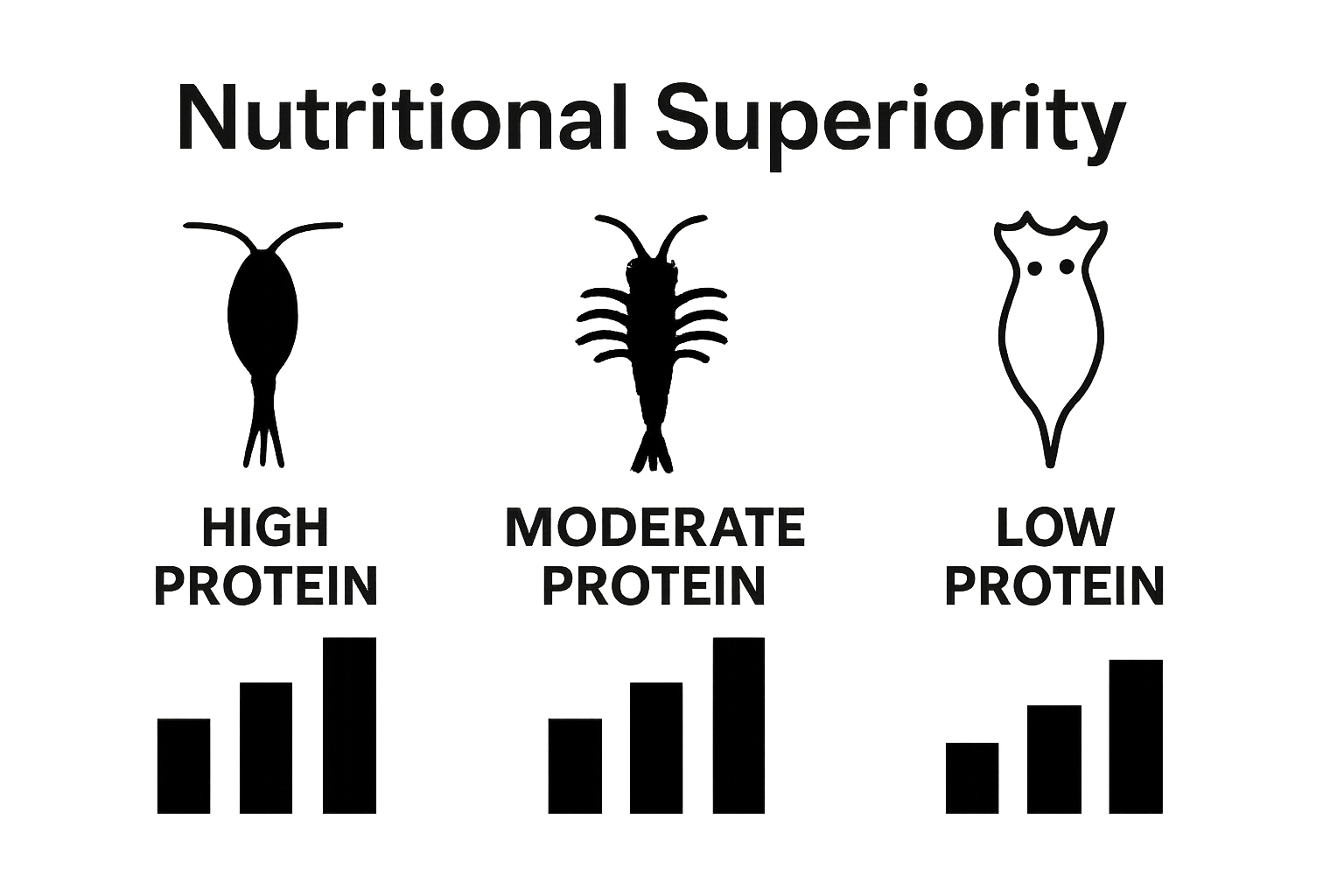
Compared to conventional marine food sources like brine shrimp and rotifers, copepods demonstrate remarkable nutritional advantages. According to research in marine biology, copepods have superior nutritional characteristics that enhance growth and development in marine species.
Key nutritional differences include:
- Higher protein content compared to traditional live feeds
- More complex and complete fatty acid profiles
- Enhanced micronutrient density
- Greater bioavailability of essential nutrients
Performance in Marine Environments
Copepods significantly outperform alternative marine food sources in critical developmental metrics. Studies reveal that marine organisms fed with copepods exhibit superior growth rates, better physiological development, and increased resilience compared to those fed with enriched Artemia or other standard marine feeds.
The nutritional complexity of copepods stems from their diverse diet and metabolic processes. By consuming a wide range of phytoplankton and microorganisms, copepods accumulate a rich spectrum of nutrients that are directly transferable to predatory species, making them an unparalleled nutritional resource in marine ecosystems.
To clarify how copepods compare to other common marine food sources for reef environments, the following table summarizes their key nutritional and performance differences as discussed in the article.
| Food Source | Protein Content | Fatty Acid Profile | Micronutrient Density | Growth & Development Impact |
|---|---|---|---|---|
| Copepods | High | Complex, complete (DHA, EPA) | Enhanced | Superior growth and resilience |
| Brine Shrimp | Moderate | Less complete | Lower | Standard; less effective than copepods |
| Rotifers | Moderate | Incomplete | Lower | Standard; less effective than copepods |
| Enriched Artemia | Improved vs. basic | Improved with enrichment | Varies | Improved, but not equal to copepods |
Key Considerations for Utilizing Copepods in Coral Farming
Utilizing copepods in coral farming requires a strategic approach that considers multiple biological and environmental factors. These microscopic organisms demand precise management to maximize their nutritional benefits and ensure optimal coral health. Discover effective marine cultivation techniques to understand the nuanced requirements of copepod integration.
Nutritional and Cultivation Parameters
According to the Food and Agriculture Organization, successful copepod cultivation hinges on understanding their specific nutritional profiles and environmental needs. These crustaceans require carefully balanced conditions to maintain their high protein content and essential fatty acid composition.
Critical cultivation considerations include:
- Maintaining precise temperature and salinity ranges
- Ensuring consistent phytoplankton food sources
- Monitoring population density and reproductive rates
- Managing water quality parameters
Species Selection and Compatibility
Selecting the appropriate copepod species is crucial for successful coral farming. Different copepod species offer varying nutritional profiles and adaptability to specific marine environments. Research demonstrates that species like Acartia, Parvocalanus, and Bestiolina provide unique advantages in terms of protein content, fatty acid composition, and reproductive efficiency.
Successful integration requires understanding the specific metabolic requirements of both the copepod species and the target coral species. By carefully matching copepod characteristics with coral nutritional needs, farmers can optimize marine ecosystem health and enhance overall coral development and resilience.
The following table outlines essential biological and cultivation characteristics of copepods to help reefers optimize health and productivity when using copepods in coral farming.
| Characteristic | Key Details |
|---|---|
| Body Size | Typically 1-2 millimeters long |
| Nutritional Profile | High in protein, omega-3 fatty acids, trace minerals |
| Environmental Tolerance | Survive in diverse marine settings, from tropical reefs to polar oceans |
| Cultivation Requirements | Precise temperature, salinity, and consistent phytoplankton food sources |
| Reproduction | Both sexual and asexual strategies; rapid reproductive rates |
| Species Selection | Acartia, Parvocalanus, Bestiolina notable for coral farming |
| Contribution to Food Web | Nutritional link between phytoplankton and higher marine organisms |

Give Your Reef the Ultimate Nutritional Edge with PodDrop Copepods
If you are serious about achieving healthy coral growth, strong fish, and a balanced marine ecosystem, you know that not all nutrition is the same. Your research on copepods reveals the importance of complete fatty acids, high-quality protein, and live nutrition to ensure your reef gets the best. Yet, sourcing pure, science-backed copepods can be a struggle for many reefers.
Discover our pure live cultures and experience the PodDrop difference.
Stop settling for options that fall short. Select from our Single Species Copepods or try balanced Copepod Blends for consistent, premium nutrition in every drop. Visit PodDrop today to boost your reef’s biodiversity and give your tank precisely what it needs. Don’t let your ecosystem miss out—take action now and deliver advanced nutrition straight to your aquarium.
Frequently Asked Questions
What are the nutritional benefits of copepods for marine organisms?
Copepods offer a rich nutritional profile, including high concentrations of omega-3 fatty acids, diverse proteins, and essential micronutrients that are vital for the growth and resilience of coral reefs and other marine species.
How do copepods compare to traditional marine feeds?
Compared to traditional marine feeds like brine shrimp or rotifers, copepods provide a superior nutritional profile with higher protein content, more complete fatty acid compositions, and greater bioavailability of essential nutrients, leading to enhanced growth and development in marine life.
What factors should be considered for successful copepod cultivation?
Key factors for successful copepod cultivation include maintaining precise temperature and salinity, ensuring consistent phytoplankton food sources, and monitoring population density and water quality to optimize their nutritional benefits.
How do copepods contribute to coral health and development?
Copepods play a critical role in coral health by serving as a primary food source for juvenile corals, which supports their growth, enhances tissue thickness, and improves their thermal resilience, thereby contributing to the overall health of coral ecosystems.