

A Complete Guide to Tigriopus Californicus Culture for Reef Tanks
Breeding Tigriopus californicus—often just called "Tig Pods"—is all about creating your own sustainable supply of live food for a saltwater aquarium. These little guys are a favorite in the reefing community for a good reason: they're packed with nutrition and remarkably tough, making them a fantastic food source for both fish and corals. Best of all, getting a culture going is surprisingly simple and doesn't require a ton of gear or complicated care.
Why Tigriopus Californicus Is Your Reef Tank's Ultimate Live Food
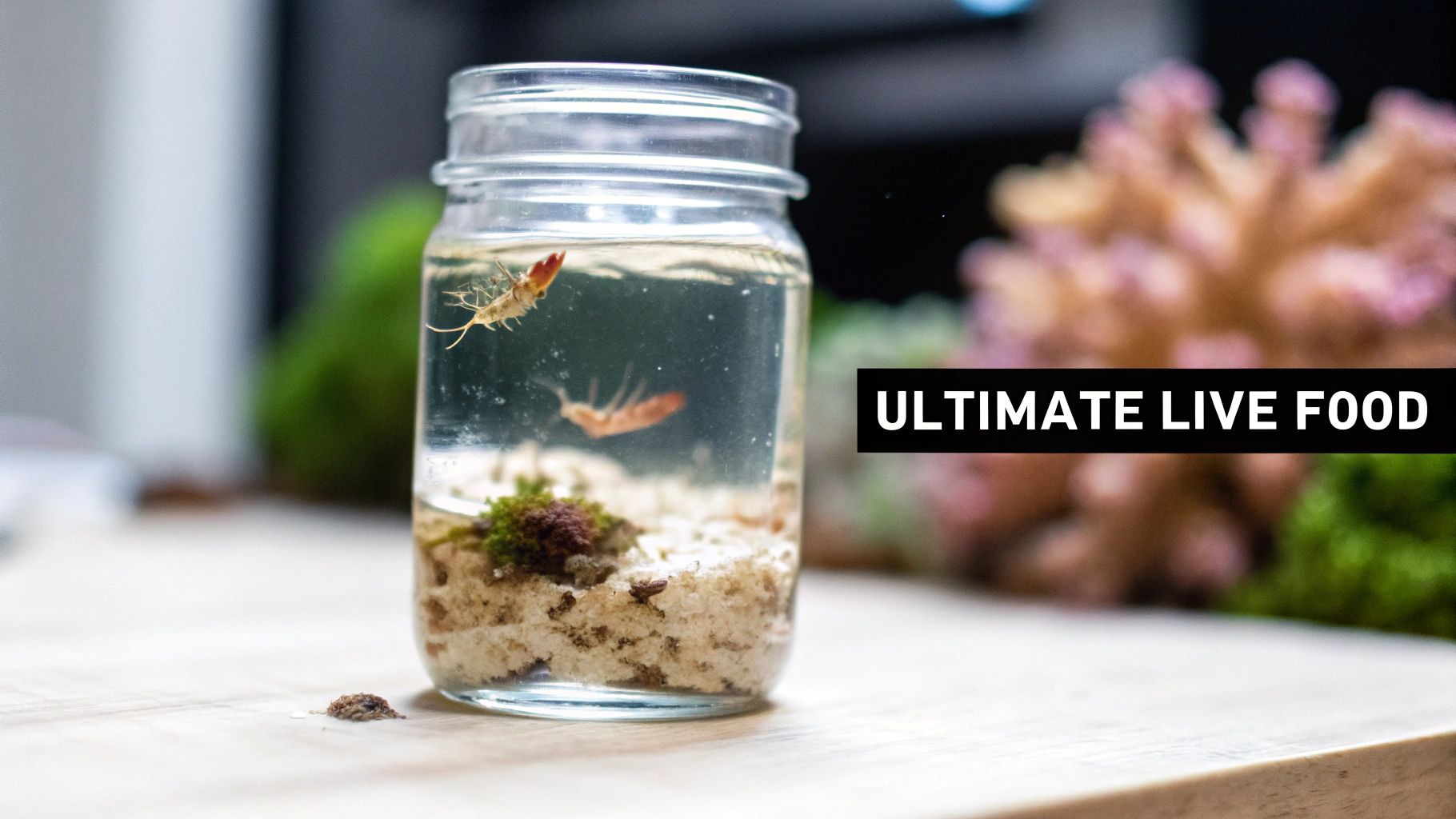
If you're aiming to build a reef ecosystem that truly thrives, you can't do much better than adding Tigriopus californicus. These tiny crustaceans are so much more than just fish food. Think of them as a cornerstone for your tank's entire food web, serving as a nutritional goldmine and a microscopic clean-up crew all in one. Their unique biology makes them perfect for both culturing at home and seeding directly into your display.
These copepods evolved in the brutal, ever-changing environment of coastal splash pools, and that experience has made them incredibly resilient. They can handle swings in temperature and salinity that would wipe out most other marine life. For us aquarists, this built-in toughness makes a Tigriopus californicus culture very forgiving, whether you're a seasoned pro or just starting out.
A Nutritional Powerhouse for Your Aquarium
The real secret to Tigriopus californicus is what's inside. They are absolutely loaded with protein and, crucially, high levels of Highly Unsaturated Fatty Acids (HUFAs) like DHA and EPA. These are the "good fats" of the marine world, and they're essential for:
- Vibrant Coral Color and Growth: Corals that get a steady diet of copepods show deeper coloration and build new tissue much faster.
- Healthier Fish: HUFAs are vital for a strong immune system, proper growth, and even successful breeding, especially for picky eaters like mandarins, pipefish, and wrasses.
- Natural Feeding Instincts: The unique, jerky way Tig Pods swim triggers a natural hunting response in fish. This provides fantastic enrichment and coaxes even the most timid fish out to eat.
More Than Just Food: An Active Clean-Up Crew
Beyond their value as food, these copepods are relentless workers. They spend their days scouring every surface for detritus, uneaten food, and bits of nuisance microalgae. When you add them to your tank or refugium, you're essentially hiring a 24/7 janitorial staff that converts waste into a valuable, protein-rich food source.
This dual-purpose role is what makes a Tigriopus californicus culture such a win. You aren't just growing food; you're cultivating a tiny living engine that improves water quality while feeding your tank's inhabitants. It’s a key step in creating the kind of biodiversity we see on natural reefs. Gaining a deeper understanding of the different types of live copepods available can help you build an even more balanced ecosystem.
Let's take a look at what makes these copepods stand out.
Tigriopus Californicus At a Glance: Why They Excel
| Attribute | Benefit for Your Aquarium |
|---|---|
| High Nutritional Value | Rich in essential fatty acids (HUFAs), promoting vibrant color, health, and growth in fish and corals. |
| Extreme Hardiness | Tolerates wide ranges of temperature (50-90°F) and salinity (15-40 ppt), making cultures easy to maintain. |
| Active Swimmers | Their jerky, "twitching" movement in the water column triggers a strong feeding response from predators. |
| Benthic Lifestyle | Spends time on rocks and substrate, making them accessible to bottom-dwellers and acting as a clean-up crew. |
| Rapid Reproduction | Prolific breeders that can quickly establish a self-sustaining population in your tank or refugium. |
| Ideal Size | Perfect for a wide range of inhabitants, from picky mandarins and seahorses to NPS corals and larval fish. |
As you can see, they bring a lot to the table. This combination of nutrition, resilience, and utility is what makes them a staple for serious reef keepers.
Their ability to reproduce is just as remarkable. Tigriopus californicus breeds all year long, and a population can explode under good conditions. Studies of wild populations have recorded densities jumping from a low of 217 individuals per liter in winter to over 835 per liter in summer. Some splash pools even hit densities approaching 20,000 per liter! This incredible growth potential means your small starter culture can quickly become an endless food factory for your entire reef.
Designing Your Copepod Culture Station
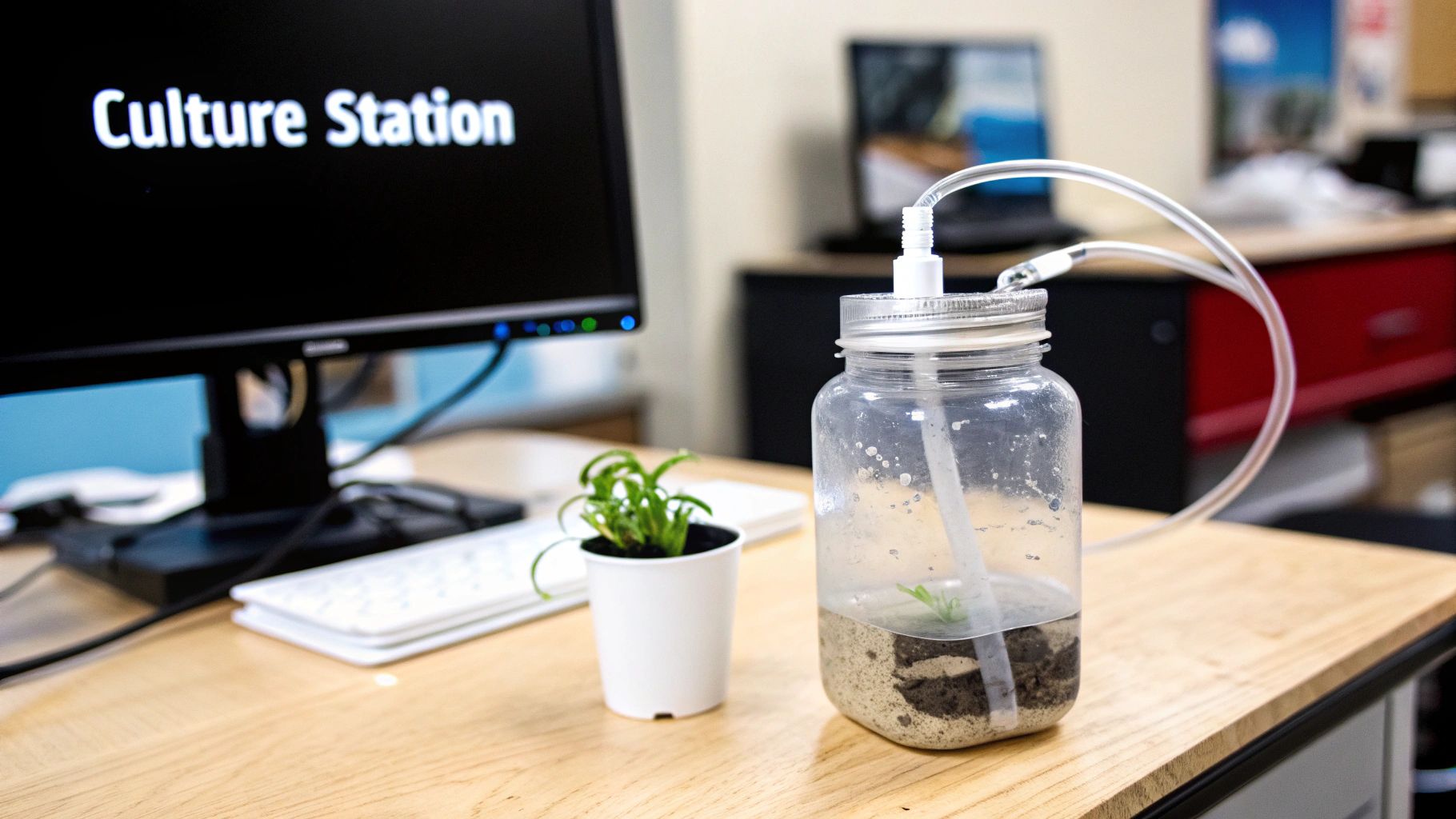
Let's get one thing straight: you don't need a sterile lab or a bunch of expensive gear to get a thriving Tigriopus californicus culture going. The goal here is simple. We just need to create a stable, dedicated space where these little guys can do what they do best—reproduce like crazy with minimal fuss.
A successful culture station can be as simple as a few containers on a shelf in your garage or basement. In my experience, keeping it simple often works best.
The secret sauce is consistency. Tigriopus californicus are tough; they evolved in harsh tide pools, so they can handle some ups and downs. But if we give them a stable environment, we remove all that extra stress. That means all their energy goes into one thing: explosive population growth. And that's exactly what we're after.
Selecting the Right Culture Vessel
The container you choose is the foundation of your entire culture. Sure, you can find specialized reactors out there, but many of us have had incredible success with cheap, everyday options. The perfect vessel is easy to clean, lets you see what’s going on inside, and has a wide surface area for good gas exchange.
Here are a few go-to choices that work great:
- Glass Jars (1-Gallon): A classic for a reason. They’re cheap, you can easily see the population density, and they are a breeze to sterilize between culture cycles.
- 5-Gallon Buckets: This is the workhorse for many hobbyists looking to scale up. They provide tons of volume for a massive population and are nearly indestructible. Just make sure you get a food-grade plastic bucket to avoid any nasty chemicals leaching into the water.
- Plastic Beverage Dispensers: This is a clever hack I've seen work really well. The built-in spigot makes harvesting incredibly easy. You can drain water through a sieve to collect pods without stirring everything up.
I’d steer clear of anything with a narrow opening, like a carboy. They seriously limit the oxygen exchange at the water's surface and are a nightmare to clean. A wider, shorter container is almost always a better bet than a tall, skinny one for culturing pods.
Pro Tip: Whatever you choose, don't seal it up tight. A loose-fitting lid or even just a piece of acrylic laid across the top is perfect. This cuts down on evaporation and keeps dust out, but still allows for that critical gas exchange to happen.
Setting Up Your Aeration System
While T. californicus can get by in still water, adding some gentle aeration is a total game-changer if you want to maximize your harvest. A slow, lazy stream of bubbles does two important things: it keeps the water oxygenated and, crucially, keeps the phytoplankton food suspended in the water column where the pods can eat it.
The setup is dead simple. You'll just need:
- A Small Air Pump: Any basic aquarium air pump will do. You don't need anything powerful; in fact, too much flow is a bad thing.
- Airline Tubing: Standard silicone or plastic tubing is all you need.
- A Rigid Airline Tube: This is the stiff plastic tube that goes into the water, making sure the bubbles start at the bottom.
- An Air Control Valve: This is the most critical component. You absolutely must be able to dial the airflow way back. We're aiming for just 1-2 bubbles per second. Any more than that and you'll create too much turbulence, which just exhausts the copepods and messes with their breeding.
Just run the airline from the pump, through the control valve, and connect it to the rigid tube sitting at the bottom of your vessel. Tweak the valve until you see that gentle, slow stream of bubbles rising. That's all it takes to create the perfect conditions for a population boom.
Water Parameters for Peak Production
The final piece of the puzzle is the water itself. The easiest approach is to simply use clean, dechlorinated saltwater mixed to the same parameters as your display tank. This not only makes acclimating the pods to your tank a non-issue but also ensures any water you transfer during feeding is totally reef-safe.
Shoot for these targets and keep them stable:
- Salinity: 1.025 - 1.026 sg is the sweet spot.
- Temperature: A steady room temperature somewhere between 68-78°F (20-25°C) is perfect. They can handle swings outside this range, but stability is what really kicks reproduction into high gear.
- pH: Keep it in the standard reef range of 8.0 to 8.3.
Once your container is filled and the aeration is gently bubbling away, you're almost there. Just let the newly mixed water sit for at least 24 hours before you add your starter culture. This gives the temperature time to stabilize and lets everything settle before the new tenants arrive.
Feeding Your Culture for Explosive Growth
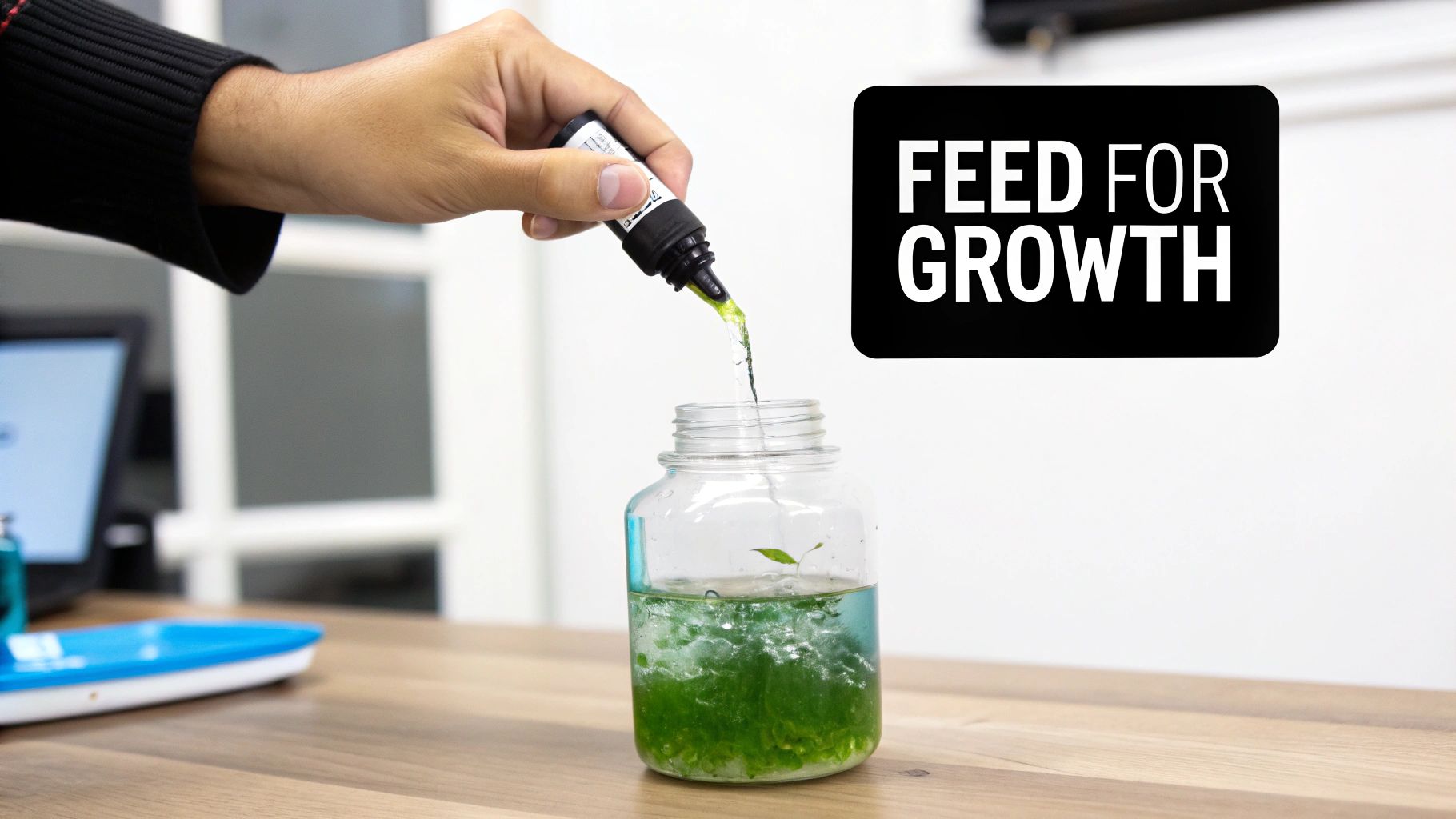
Here's where the magic really happens. The single biggest driver of a booming Tigriopus californicus culture is what you feed them. These copepods are little eating and breeding machines, but you have to give them the right fuel to really get them going.
Get this part right, and you'll have more copepods than you know what to do with. The goal is to provide a constant supply of top-notch food without fouling the water. It’s a balance, but it’s surprisingly easy to master.
Why Live Phytoplankton Is the Only Way to Go
When it comes to feeding your pods, nothing—and I mean nothing—beats live phytoplankton. Sure, you can use dried algae powders or yeast-based foods in a pinch, but they're a distant second choice for a few key reasons. Dried foods fall apart quickly, polluting the water and risking a culture-ending ammonia spike.
Live phytoplankton, on the other hand, is a game-changer. It stays suspended in the water, actively pulling nitrates and phosphates out of the column until it gets eaten. This means it's not just food; it's also a form of biological filtration that keeps your culture clean and stable.
Even better, live phytoplankton gut-loads your copepods with the essential fatty acids (HUFAs) that make them so incredibly nutritious for your reef tank. This is how you turn a simple pod into a little nutrient bomb for your fish and corals, directly boosting their health and coloration.
Master the Art of Visual Feeding
Forget rigid schedules. The best way to feed your culture is by simply using your eyes. This approach stops you from overfeeding (the #1 culture killer) and ensures your pods always have food available. All you have to do is tint the water a light, translucent green and only add more food once it clears up.
Here’s how it works:
- Give it a tint. Add enough live phytoplankton (Nannochloropsis is a great starting point) to give the culture water a light green hue. You should still be able to see through the container easily.
- Watch and wait. Over the next day or two, you'll see the copepods do their thing, grazing away and slowly clearing the water.
- Re-dose when it's clear. Once the water is pretty much back to normal, it’s time to feed again. Just add enough phyto to bring back that light green color.
This simple "tint and wait" method is foolproof. For a brand new culture, you might only need to re-dose every two or three days. But once that population explodes, don't be surprised if you're adding phytoplankton daily just to keep up with their appetite.
Key Takeaway: Your eyes are your best tool. A light green culture is a happy, well-fed culture. If the water is crystal clear, your copepods are hungry, and their breeding will grind to a halt.
The quality of the phytoplankton itself is also a huge factor. Different species offer different nutritional profiles, and the science backs this up. Aquaculture studies have shown that diet dramatically impacts copepod development. For example, the diatom Thalassiosira weissflogii led to an incredible 98.9% development efficiency, while some toxic algae types stopped growth entirely. This is why a premium food source is non-negotiable for a healthy, productive culture.
Choosing the Right Phytoplankton
While a single-species phytoplankton like Nannochloropsis is a fantastic and reliable workhorse, using a blend of different types can create a much more complete and varied diet for your pods.
To get the most out of your feeding strategy, it helps to know what each type of phytoplankton brings to the table.
Phytoplankton Feeding Guide for Tigriopus
| Phytoplankton Type | Primary Benefit | Dosing Frequency Guide |
|---|---|---|
| Nannochloropsis | A tough, easy-to-grow species packed with EPA fatty acids. It's the perfect foundation for any feeding plan. | Re-dose when water clears (typically every 1-3 days). |
| Isochrysis | Extremely rich in DHA, a vital fatty acid for fish health and vibrant coral color. Perfect for gut-loading. | Best used as a supplement or in a blend, as it's a bit more delicate on its own. |
| Tetraselmis | A larger phytoplankton cell, which is great for adult copepods. It adds variety and different amino acids to their diet. | Use as part of a blend. Its larger size means it can sometimes settle out of the water column faster. |
| Phyto Blends | A mix of species that offers a balanced, complete nutritional profile, making sure your copepods get everything they need. | The most convenient and effective choice. Just follow the "tint and wait" method. |
As you can see, a blend is often the best way to ensure your copepods are getting a well-rounded diet, which translates directly into a healthier, more nutritious live food source for your reef.
Many hobbyists eventually start culturing their own phytoplankton for a fresh, endless supply. If you're ready to take that step, we've put together a comprehensive guide on how to culture phytoplankton for your reef tank. It's a rewarding project that saves money and gives you total control over your copepod's nutrition.
Harvesting and Managing Your Copepod Population
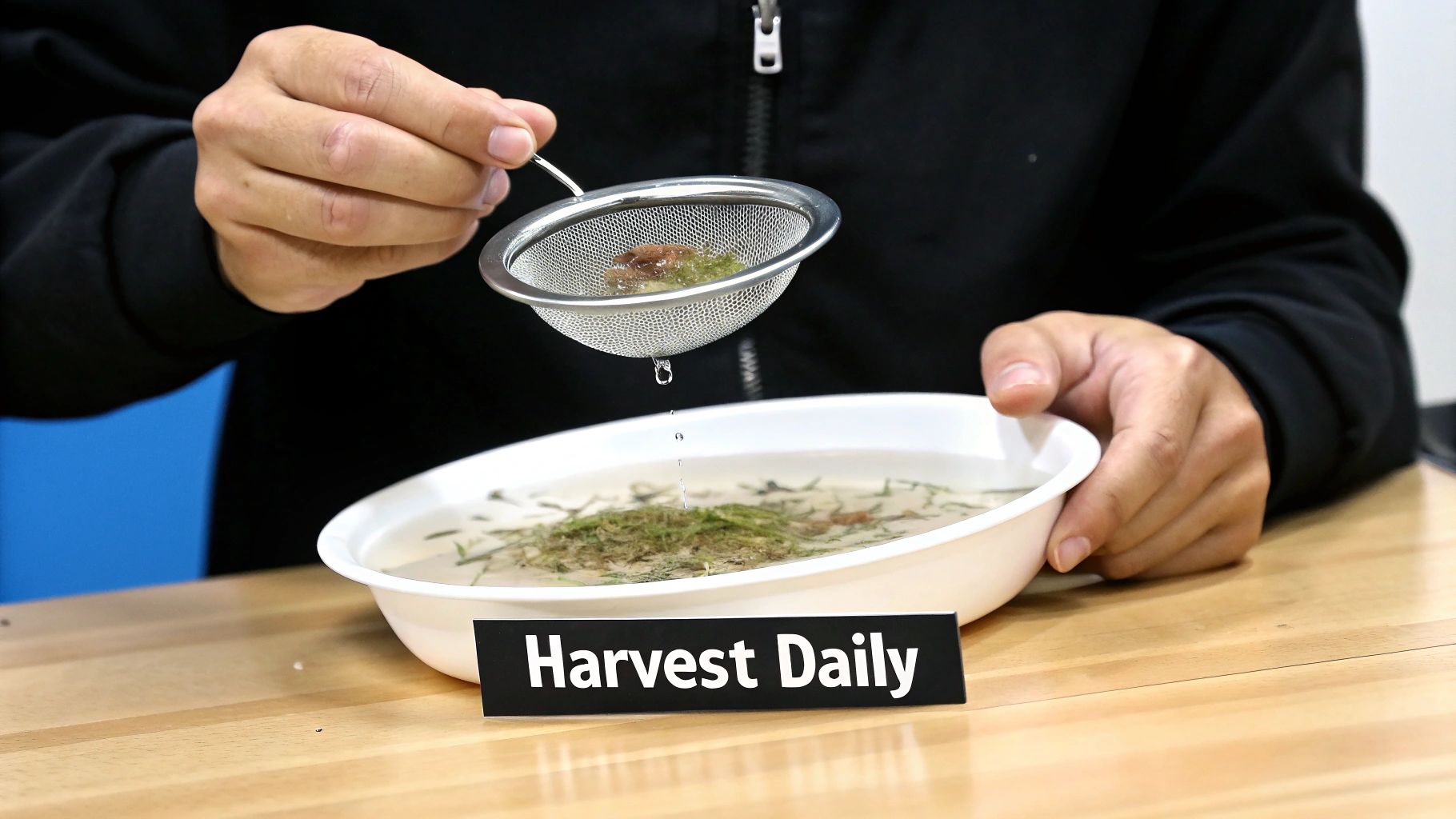
After a few weeks of consistent care, you’ll see the payoff. The water in your culture will look like it's buzzing, filled with tiny reddish specks zipping around. That population boom is your green light—it's time to start harvesting your Tigriopus californicus.
Smart harvesting isn’t just about grabbing pods for a feeding. It’s about creating a sustainable cycle. The idea is to pull enough live food for your aquarium while leaving a strong breeding population behind to keep the culture thriving indefinitely. Do it right, and you'll have a constant supply of fresh, high-quality food on tap.
Knowing When Your Culture Is Ready
The key to a successful harvest is knowing when the population has hit its peak. A mature, high-density culture gives off some pretty obvious signs that are hard to miss. You're not looking for a few scattered pods anymore; you're looking at a bustling metropolis in a bucket.
Keep an eye out for these tell-tale signs:
- Visible Swarms: You’ll see thick clouds of copepods swirling through the water, often clustered near the airline tubing or along the container walls.
- A Reddish Hue: Healthy, well-fed Tigriopus californicus are packed with astaxanthin, which gives the pods—and sometimes the water itself—a noticeable orange-red tint.
- Fast Water Clearing: The culture will tear through phytoplankton. If you add food and the greenish water clears in under 24 hours, you've got a massive, hungry population ready to go.
Once you spot these signs, you can be confident your culture is robust enough to handle regular harvesting without crashing.
Practical Harvesting Techniques
Getting the copepods out is actually pretty simple. All you really need is a fine mesh sieve—specifically, a 53-micron screen. This size is the sweet spot; it lets water and uneaten phytoplankton pass right through but safely catches even the tiniest juvenile copepods.
A tried-and-true method is to siphon water from the culture through your sieve. Get a siphon going with a piece of airline tubing and let the water drain into a bucket, with the sieve placed to catch the flow. The copepods will collect right on the mesh as the water passes through.
Once you have the amount you need, give the captured pods a quick, gentle rinse with some clean saltwater from your main tank. This gets rid of any leftover culture water or gunk. From there, you can feed them directly to your fish and corals. For a full rundown on the best way to get them into your system, check out our guide on https://getpoddrop.com/blogs/blog/how-to-add-copepods-to-tank.
Pro Tip: Want to make harvesting even easier? Shut off the air stone for 15-20 minutes before you start. The pods will naturally swim toward the surface and congregate on the sides, making it a breeze to siphon out a dense group.
Keeping Your Mother Culture Healthy
Remember, your culture is a living, breathing resource. Keeping it healthy is the only way to ensure it keeps producing for you long-term. This just comes down to some basic housekeeping to prevent waste from building up and keep the population cranking.
The two big tasks are partial water changes and splitting the culture.
1. Doing Partial Water Changes
No matter how carefully you feed, detritus and waste will accumulate. A 25-50% water change every two to four weeks is perfect for hitting the reset button on water quality. Just siphon out the old water while you’re harvesting and top it off with fresh, clean saltwater matched to the same salinity and temperature.
2. Splitting Your Cultures
Eventually, your population will get so thick it literally outgrows the container. That’s when you split it. Just pour half of your mature culture into a new, clean container and fill both the old and new one with fresh saltwater. Just like that, you have two productive cultures. This also gives you a fantastic backup in case one culture ever runs into trouble.
Troubleshooting Common Culture Problems
Even with a species as famously tough as Tigriopus californicus, you can still run into the occasional hiccup. The good news? Most issues are easy to spot and even easier to fix. A healthy, thriving culture is vibrant and smells faintly of the ocean; any deviation from that is your first sign that something needs a second look.
Think of troubleshooting as running through a quick mental checklist. By catching the early warning signs, you can correct course long before you're facing a serious problem like a full-blown culture crash. Most of the time, the fix is just a simple tweak to your feeding or maintenance routine.
Diagnosing a Sudden Population Crash
One day your culture is swarming, and the next it looks like a ghost town. This sudden, dramatic drop in population is probably the most common—and alarming—issue you'll encounter. In my experience, it's almost always a water quality problem.
The number one culprit is an ammonia spike, which usually comes from overfeeding. When uneaten phytoplankton or other food dies off and starts to decompose, it releases ammonia. This is toxic to your pods and kicks off a nasty chain reaction: a few pods die, creating more waste and more ammonia, which in turn kills even more.
Key Indicator: Look for cloudy water and a sharp decline in visible copepods. You might also spot pods that look sluggish or aren't actively swimming. This is your cue to act fast.
Tackling Foul Odors and Bacterial Blooms
If you open your culture vessel and get hit with a sour, rotten, or sulfur-like smell, you've got a bacterial bloom on your hands. This is another classic sign of overfeeding and poor water quality. A healthy culture should have a fresh, briny smell—never foul.
That awful smell is caused by anaerobic bacteria feasting on all the excess waste and decaying food settled at the bottom. These bacteria are bad news because they can quickly strip the oxygen from the water, suffocating your copepods.
If you smell trouble, you need to intervene immediately:
- Do a big water change. Siphon out 50-75% of the culture water right away. While you're at it, make sure to suck out as much of the gunk and detritus from the bottom as you can.
- Cut back on food. Hold off on feeding for a day or two after the water change. This gives the system a chance to stabilize and recover.
- Know when to start over. If the smell just won't go away or the population is too far gone, don't be afraid to pull the plug. Sterilize the container and start fresh with a clean starter culture.
Dealing With Unwanted Contaminants
Every now and then, you might notice other tiny critters have moved into your Tigriopus culture. The most common uninvited guests are rotifers or even other, smaller copepod species. While they aren't directly harmful, they are competing for the exact same food.
Contamination usually happens when you use water or equipment from another tank without cleaning it properly first. It’s tough to get rid of them completely without starting over, but you can manage the situation. The good news is that Tigriopus are bigger and more aggressive feeders, so they can often outcompete smaller organisms for food. Just be sure to feed enough for your pods without fouling the water. A clean restart, however, is the only surefire way to get back to a pure culture.
Answering Your Tigriopus Culture Questions
Even the most detailed guide can't cover every single question that pops up. Let's tackle some of the most common things hobbyists wonder about when they first start culturing Tigriopus californicus. Think of this as the "what if" section based on years of experience.
How Long Until I Can Start Harvesting?
This is always the first question, and the answer is: sooner than you think! If you start with a good, dense culture and keep them well-fed, you'll see a noticeable population explosion in just 2-3 weeks. I usually tell people they can start doing small harvests around the one-month mark.
The real magic happens between weeks 6 and 8. That's when your culture hits peak density. You'll literally see swarms of pods in the water, and they'll devour phytoplankton so quickly the water clears in hours. That's your green light for larger, more consistent harvesting.
Can I Mix Tigriopus with Other Copepods in the Same Bucket?
I really don't recommend this. Tigriopus are tough, aggressive, and breed like crazy. If you put them in the same container with more delicate species like Tisbe or Apocyclops, the Tigriopus will almost always win the competition for food. You'll end up with a Tigriopus-only culture anyway, having starved out the others.
The best approach is to culture each species in its own container. You can then harvest a bit from each and mix them together right before feeding your tank. This gives your fish and corals a much more diverse and natural meal.
A Quick Tip from Experience: Keeping separate cultures lets you play to each species' strengths. Tisbe are fantastic for crawling over rockwork and eating detritus, while the bigger, juicier Tigriopus are perfect for enticing picky eaters like mandarins or wrasses.
Does My Culture Need Its Own Light?
It depends entirely on what you're feeding them. If you're using live phytoplankton, then yes, a light is a great idea. A simple LED light on a timer (maybe on a reverse schedule from your display tank to spread out the power usage) will keep the phytoplankton alive and nutritious for much longer.
On the other hand, if your pods are so dense that they clear the water of phyto within a day, a dedicated light isn't a must. The copepods themselves aren't photosynthetic. As long as they have food, they'll be perfectly happy in the ambient light of the room.
What Makes a Culture Suddenly Crash?
A sudden crash is heartbreaking, but it's almost always boils down to one of two things: water quality or food. The number one culprit is an ammonia spike caused by overfeeding. You dump in too much food, it rots, and the ammonia poisons the entire population. The second most common reason is simply forgetting to feed them, which brings reproduction to a screeching halt.
Big, rapid temperature swings can also shock the culture and lead to a crash. The secret to a stable, long-term culture is consistency. Stick to a feeding schedule, and don't be afraid to do a small water change if things start to look murky.
Ready to kickstart your own live food factory at home? PodDrop Live Aquarium Nutrition offers high-quality, lab-grown starter cultures of Tigriopus californicus and other key copepods to get you started on the right foot. See what a difference life in every drop can make for your reef at https://www.getpoddrop.com.