

A Complete Guide to Tigriopus Californicus Copepods for Reef Tanks
Tigriopus californicus are striking, reddish-orange micro-crustaceans that have become a cornerstone of the reef aquarium hobby. They're prized as an incredibly nutritious live food source for finicky fish like mandarins, but they also double as a diligent cleanup crew, tirelessly consuming detritus and nuisance algae. Their legendary hardiness makes them one of the easiest copepod species to culture and establish in a home aquarium.
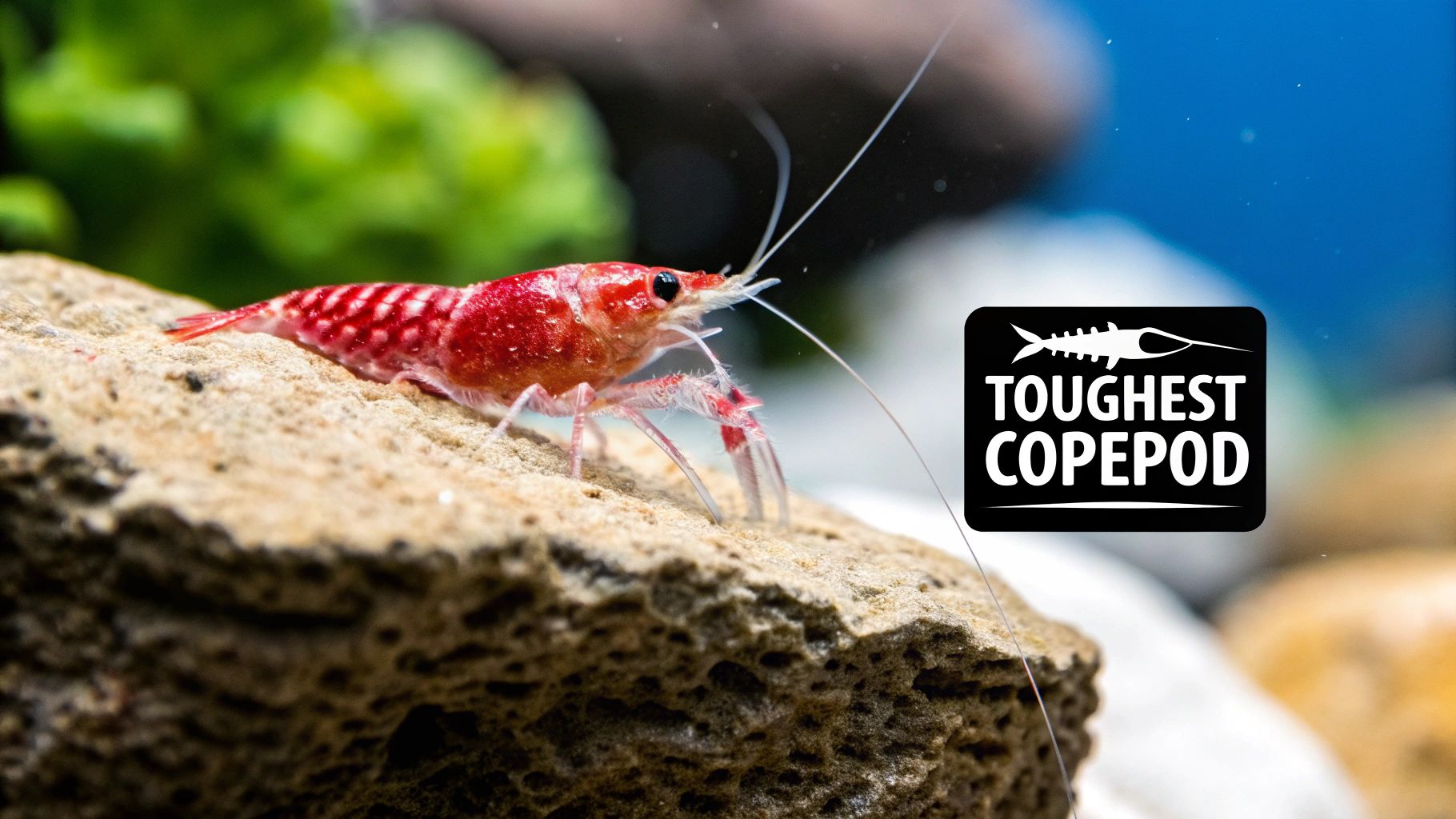
Meet the Toughest Copepod in Your Reef Tank
Imagine a tiny ecological superhero that thrives where most marine life would falter. That’s the Tigriopus californicus copepod. This little creature isn't just another fish food; it's a foundational piece for building a truly vibrant and self-sustaining reef ecosystem. Think of it as the ultimate survivor, perfectly sculpted by nature in harsh coastal rock pools, now ready to bring its unique talents to your aquarium.
Why This Copepod Stands Out
So, what makes Tigriopus californicus so special? It all comes down to a few key traits that give you real, practical advantages for your tank.
The first thing you'll notice is their vibrant reddish-orange color and their signature jerky, twitching swimming motion. This stop-and-go movement is a powerful feeding trigger for many fish, flicking on those natural hunting instincts that keep them active and engaged.
This species is also remarkably tough. Hailing from the Pacific coast of North America, it lives in intertidal rock pools that see wild swings in temperature, salinity, and oxygen. Its built-in ability to handle such harsh conditions means it's perfectly suited for the stable environment of a reef tank, where it can easily reproduce and build a lasting population.
In their natural habitat, these copepods are masters of explosive growth. Their population can rocket from just a few hundred individuals per liter in winter to an astonishing 20,000 individuals per liter during peak summer blooms, a testament to their incredible reproductive power.
This natural resilience means they aren't just a one-and-done meal. When you add them to your aquarium or refugium, they form a self-sustaining colony that continuously provides live food while also serving as a tireless cleanup crew. They actively graze on detritus, leftover fish food, and algal films, converting waste into a valuable, protein-packed food source for everything else in your tank. You can dive deeper into their lifecycle in this detailed study of Tigriopus californicus behavior.
Tigriopus Californicus At a Glance
To quickly break down what makes this species a favorite among seasoned aquarists, here’s a look at its key attributes and the direct benefits they bring to your reef.
| Attribute | Description | Benefit for Your Reef |
|---|---|---|
| Size | Adults are large for a copepod, reaching 1-1.5 mm and visible to the naked eye. | An ideal, substantial meal for picky eaters like Mandarins, Pipefish, and Wrasses. |
| Color | Bright reddish-orange due to high levels of astaxanthin, a beneficial pigment. | The pigment naturally enhances the coloration of the fish and corals that consume them. |
| Behavior | A distinctive jerky, stop-and-go swimming motion. | Triggers natural hunting instincts in fish, providing enrichment and encouraging activity. |
| Hardiness | Extremely tolerant of wide ranges in temperature (50-90°F) and salinity (15-40 ppt). | Easily adapts to aquarium conditions and establishes a self-sustaining population with minimal effort. |
| Diet | Voracious consumers of detritus, phytoplankton, and nuisance algae films. | Acts as a natural "cleanup crew," improving water quality by turning waste into food. |
This combination of size, visibility, and resilience is why Tigriopus pods are an absolute must-have for supporting delicate species and maintaining a healthy, balanced reef ecosystem.
Getting to Know the Tigriopus Copepod
To really get why Tigriopus californicus is such a game-changer for reef tanks, you have to look at what makes it tick. This isn’t just another random speck floating in the water. We're talking about a tiny crustacean that’s perfectly evolved for survival and, as it turns out, for being the perfect live food for your fish and corals. Its success really boils down to how it moves, its life cycle, how it reproduces, and even its vibrant color.
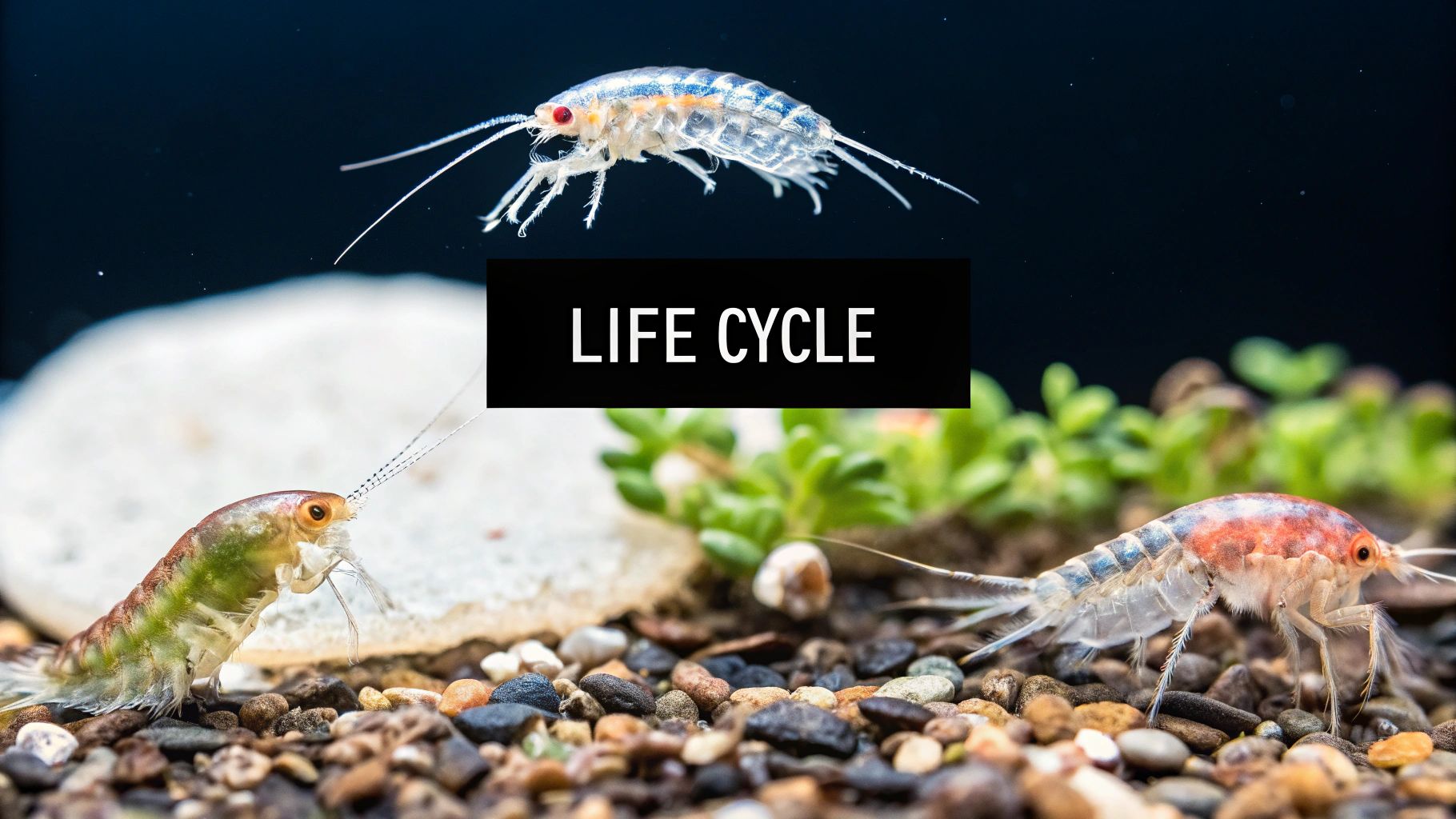
As a member of the Harpacticoida order, Tigriopus californicus is what we call a benthic copepod. In simple terms, it lives and feeds on surfaces. While many other copepods just drift around in the water column, Tigriopus spends most of its time crawling all over your live rock, sand bed, and the aquarium glass. Think of it as a tiny, tireless grazer.
What really sets it apart is its signature movement—a quick, jerky, stop-and-go swimming motion. For picky eaters like Mandarin Dragonets or certain wrasses, this twitchy little dance is like a dinner bell. It’s an irresistible feeding trigger that makes them an easy-to-catch, high-value meal, encouraging those natural hunting instincts we love to see.
From Larva to Adult: A Constant Food Source
One of the coolest things about the Tigriopus californicus life cycle is that every stage offers a meal for something in your tank. This creates a continuous, self-replenishing food source. The whole journey starts with a tiny, free-swimming larva called a nauplius.
- Nauplii (The Larvae): These microscopic babies are the perfect bite-sized meal for filter-feeding corals, especially SPS corals with their tiny polyps. They're also essential for anyone trying to raise fish fry.
- Copepodids (The Juveniles): As they grow and molt, they enter the copepodid stage. Now a bit bigger, they become a great food source for larger coral polyps and small fish.
- Adults (The Breeders): Reaching up to 1.5 mm, the adults are a hearty meal for fish like Mandarins, Pipefish, and wrasses. A healthy adult population is the engine of your pod colony, constantly churning out the next generation of nauplii.
This multi-stage life cycle means you’re not just feeding one specific animal; you're nourishing the entire ecosystem, from the corals all the way up to your favorite fish. To see how different pod types can work together, you might want to read our guide on the best live copepods for a reef tank.
The Fascinating Mating Game
The way Tigriopus californicus reproduces is pretty wild, and it’s the key to establishing a population that can sustain itself in your tank. They have a unique mate-guarding strategy where a male will literally grab onto a juvenile female with his antennae. He’ll then carry her around until she molts into a mature adult, at which point they mate.
This behavior is incredibly effective at ensuring successful reproduction. It also tells us that having a healthy mix of males and females is absolutely crucial for getting the most out of a culture or your in-tank colony. It’s a perfect example of how animal behavior directly impacts your success as a reefer.
While this process is highly efficient, getting a culture to boom depends on a few factors, especially population density. Studies have shown that the right environmental conditions have a huge impact on how quickly a population can expand. You can dive deeper into their reproductive quirks and the science behind nauplii survival in this detailed research on Tigriopus mating behaviors.
More Than Just a Pretty Color
One of the first things you'll notice about Tigriopus californicus is its bright reddish-orange color. This isn't just for looks—it's a flashing sign that says "I'm packed with nutrition!" That vibrant hue comes from a high concentration of astaxanthin, a powerful carotenoid pigment that doubles as an antioxidant.
When your fish and corals eat these copepods, they absorb this incredible pigment. Astaxanthin is well-known for dramatically boosting the natural reds, oranges, and yellows in marine life, making your fish pop with color. More importantly, these pods deliver the essential fatty acids and proteins that fuel growth, support a robust immune system, and improve overall vitality. It’s no wonder Tigriopus californicus is considered a cornerstone species for any thriving reef.
Why Your Reef Tank Needs Tigriopus Californicus
It's one thing to read about the biology of Tigriopus californicus, but it’s another thing entirely to see what they can do for your reef tank. These little guys are so much more than just another bottle of fish food—they are a living, breathing part of a healthy, self-sustaining ecosystem. Think of them as the engine that powers your tank’s microfauna.
When you seed your aquarium with a solid population of these pods, you're laying the groundwork for a more stable and resilient environment. You aren't just adding snacks; you're introducing a fundamental piece of the natural marine food web, boosting biodiversity from the bottom up.
The Ultimate Live Food Factory
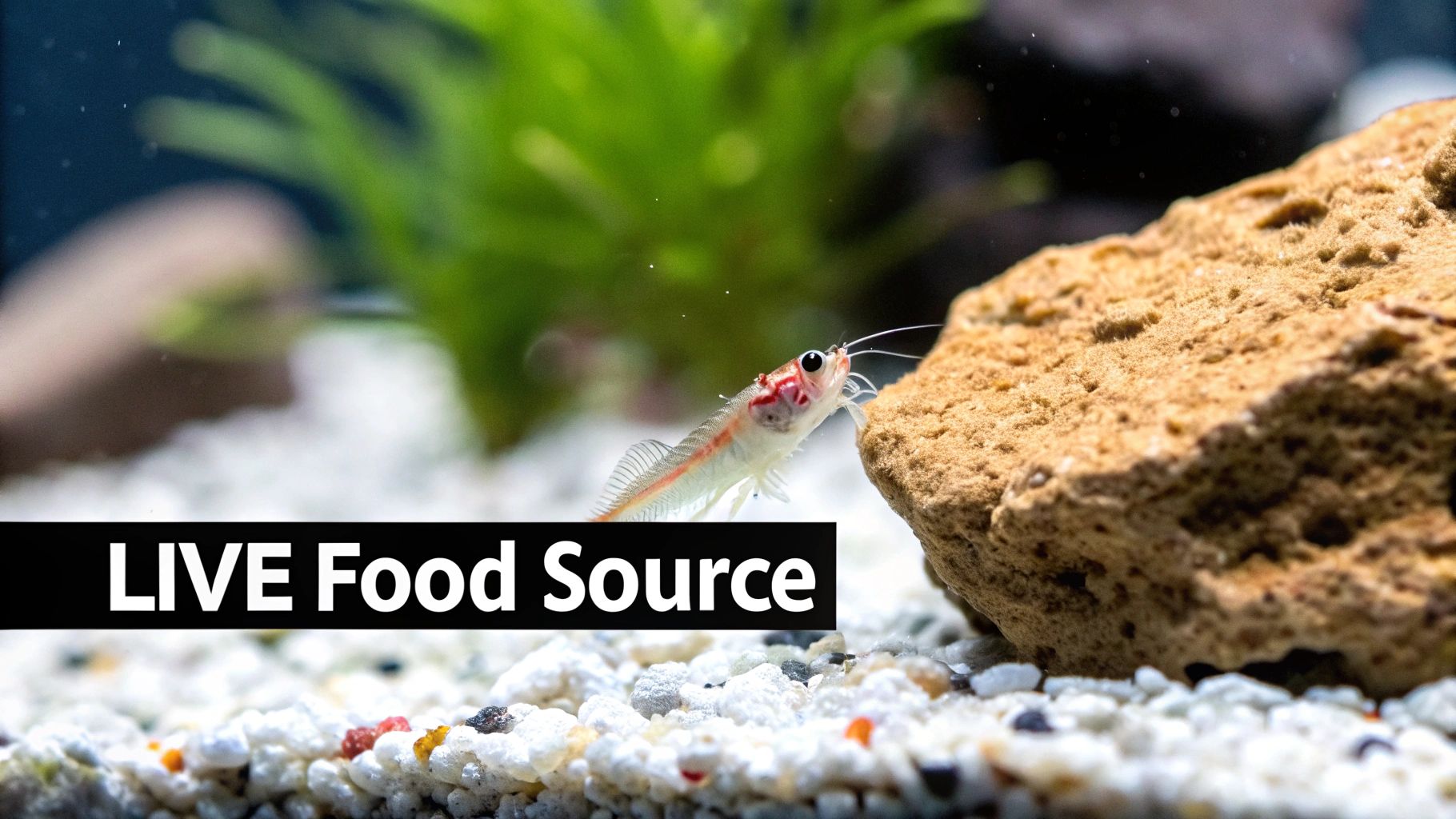
For most hobbyists, the biggest draw for Tigriopus californicus copepods is their role as a premium, always-available live food source. Their larger size and twitchy, jerky swimming style are simply irresistible to some of the most beautiful—and notoriously difficult—fish in the hobby.
Take fish like the Mandarin Dragonet or a Scooter Blenny. These species are what we call "obligate micro-predators," which is a fancy way of saying they must hunt for tiny crustaceans all day long to survive. Frozen foods are often completely ignored, leading to a slow and tragic decline for the fish.
A thriving population of Tigriopus acts as a living pantry for these specialist feeders. It allows them to exhibit natural hunting behaviors, keeping them active, healthy, and brilliantly colored—just as they would be in the wild.
And the benefits don't stop with Mandarins. A whole host of other popular reef fish will absolutely thrive with a steady supply of live pods:
- Pipefish and Seahorses: As slow, deliberate hunters, they depend on having small, moving prey constantly available.
- Wrasses: Species like the Leopard Wrasse or Melanurus Wrasse will spend their entire day picking pods from the nooks and crannies of your rockwork.
- Anthias and other planktivores: These fish will eagerly snatch up any pods that swim out into the open water, adding a huge nutritional boost to their diet.
A Tireless Cleanup Crew
Beyond just being fish food, Tigriopus californicus copepods are an essential part of your tank's janitorial staff. As benthic feeders, they are constantly scouring surfaces for detritus, leftover fish food, and those pesky nuisance algae films.
They get into the tiny crevices of your live rock that snails and other members of your cleanup crew just can't reach. This is a perfect example of nutrient cycling in action. The copepods consume waste that would otherwise break down and raise your nitrates and phosphates. In doing so, they convert that waste directly into a protein-rich food source for your fish and corals.
This dual-action role is what makes them so incredibly effective. They don't just eat waste; they transform it into a valuable, living resource, directly contributing to better water quality and a cleaner, healthier aquarium.
Choosing the Right Copepod for the Job
While Tigriopus californicus is a fantastic all-arounder, it's worth knowing that different copepods fill slightly different roles in a reef tank. Understanding these differences helps you build the most diverse and effective microfauna population for your specific setup. Here’s a quick look at how "Tigs" stack up against other popular species you might see.
Comparing Popular Copepods for Your Aquarium
This table breaks down the key characteristics of three common copepods, helping you see where each one shines.
| Feature | Tigriopus Californicus | Tisbe Biminiensis | Apocyclops Panamensis |
|---|---|---|---|
| Primary Habitat | Benthic (surface-dweller), but swims into the water column. | Strictly benthic, hides deep within rockwork and sand. | Primarily pelagic (free-swimming) in the water column. |
| Adult Size | Large (1-1.5 mm). Easily seen and hunted by fish. | Small (0.5 mm). Ideal for small-mouthed fish and coral polyps. | Medium (0.6-0.8 mm). Great for fish that feed from the water. |
| Reproduction | Moderate. Hardy and establishes populations easily. | Very Fast. Quickly colonizes refugiums and rockwork. | Fast. Populations can grow quickly in the water column. |
| Best For | Feeding picky eaters like Mandarins and Wrasses; all-purpose cleaning. | Seeding new tanks; feeding SPS corals and fish fry. | Feeding corals and planktivorous fish like Anthias. |
By using a blend of different copepods—like combining the large, easy-to-hunt Tigriopus with the tiny, fast-reproducing Tisbe—you can support a much wider range of animals in your tank. This strategy ensures that every creature, from your smallest coral polyp to your prized Mandarin Dragonet, has access to the perfect live food.
How to Culture Copepods Successfully at Home
The idea of culturing your own copepods, especially Tigriopus californicus, might sound like you need a lab coat and a microscope, but it’s actually one of the most rewarding and straightforward projects in the reefing hobby. When you set up your own culture, you’re creating a non-stop, self-sustaining food source for your tank. It’s the difference between buying groceries every week and having a garden in your backyard.
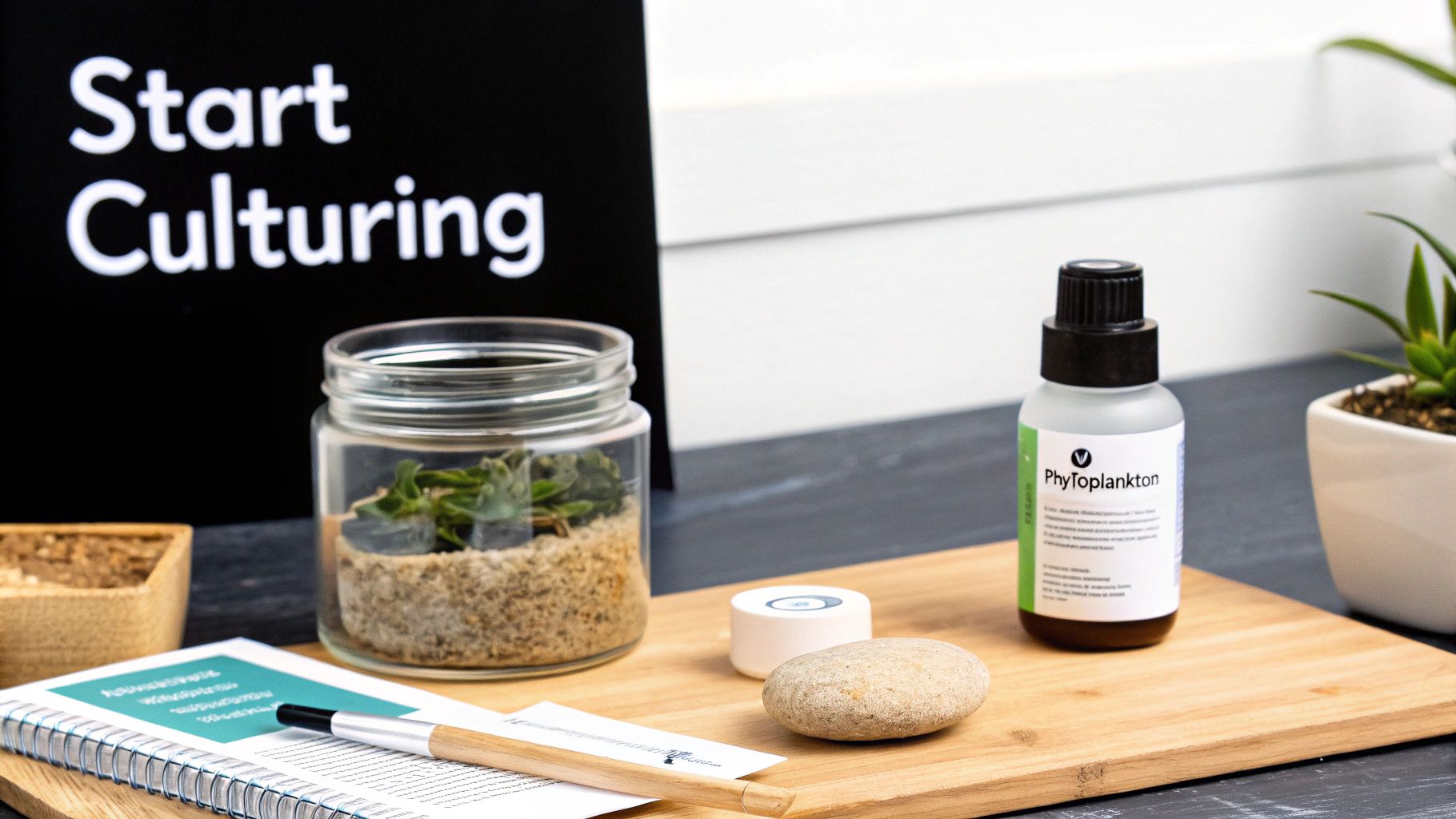
Think of it this way: you’re just creating a tiny, specialized aquarium with a single purpose—to get your copepods to multiply like crazy. You give them a safe home, clean saltwater, and a steady supply of food, and they handle the rest. Before you know it, you'll have a dense, wriggling batch of pods ready to feed your hungriest fish and corals.
Your Simple Setup Checklist
Getting started is easy, and you probably have most of what you need already. The best setups are often the simplest ones, so don’t overthink it.
- A Culture Vessel: Any clear container from one to five gallons is perfect. A big glass jar, a food-grade bucket, or even a small, dedicated aquarium will work beautifully. Being able to see through it helps you keep an eye on how things are going.
- Clean Saltwater: You can mix a fresh batch or just use water from a water change on a healthy tank. Shoot for a salinity between 1.020 and 1.025 sg. The key here is keeping it consistent.
- An Air Pump and Tubing: You’ll need some gentle water movement to keep everything oxygenated and the food suspended. Forget the airstone—that creates too many fine bubbles. A simple rigid airline tube is all you need to create a slow, gentle bubbling.
- A Light Source: Nothing fancy is required. A basic LED light or just the ambient light in the room works fine. A regular light cycle, like 12 hours on, 12 hours off, is ideal for keeping the phytoplankton food source healthy.
Step-by-Step Culturing Process
Got your gear? Great. Setting up the culture itself will only take a few minutes.
-
Prepare Your Vessel: Give your container a good rinse with hot water. Do not use any soap or chemicals. Any leftover residue can wipe out your culture before it even starts.
-
Add Saltwater: Fill the container about three-quarters of the way up. This leaves some headspace so the bubbling from the airline doesn't splash everywhere.
-
Set Up Aeration: Drop the rigid airline tubing to the bottom of the container. Turn on the air pump and dial it back so you get a very gentle stream of bubbles. You’re aiming for a slow, rolling circulation, not a jacuzzi.
-
Introduce Phytoplankton: Now for the food. Pour in enough live phytoplankton to give the water a light green tint. You want to be able to easily see through the water—think light green tea, not pea soup.
-
Add Your Starter Culture: It’s time for the main event! Gently add your bottle of Tigriopus californicus. They’ll get right to work, munching on the phytoplankton and starting the reproductive cycle.
Maintaining Your Copepod Culture
Once you're set up, the day-to-day work is incredibly minimal. It really boils down to feeding them and keeping their little world stable. A thriving culture will have a light green to brownish-green color and a faint, clean "smell of the ocean." A quick look should reveal thousands of tiny white specks zipping through the water. You should see a noticeable boom in the population in the first week or two.
The real secret to success is just being consistent. Tigriopus californicus are tough as nails, but they’ll multiply much faster in a stable environment where they don’t have to waste energy adapting to constant changes in temperature or salinity.
Feeding Schedule
Your job is simply to replace the phytoplankton as the copepods eat it. As soon as you notice the green tint in the water starting to fade, it’s time for a top-up. For most setups, this means adding a bit of phytoplankton every 2-3 days. Learning more about live phytoplankton for your reef tank will help you pick the best possible food to really supercharge their growth.
Water Changes
Honestly, you’ll rarely need to do a water change if you’re careful not to overfeed. But if you see a lot of gunk building up on the bottom or the culture starts to smell funky, it’s time for a quick refresh. Siphon out about 25% of the water, making sure to suck up any debris, and replace it with fresh saltwater.
Harvesting Your Copepods
After a couple of weeks, your culture will be buzzing with life and ready for harvest. Here’s the easiest way to do it: turn off the air pump for about 10-15 minutes. Without the water movement, the copepods will naturally swim toward the surface.
From there, you can either scoop them out with a fine mesh sieve (a 100-150 micron screen works best) or suck them up with a turkey baster. Then, just squirt your catch directly into the reef tank and watch the feeding frenzy begin. Harvesting regularly actually helps the culture, as it prevents overcrowding and encourages the remaining pods to keep on breeding.
Getting Your Copepods Settled In For Good
Think of adding Tigriopus californicus to your aquarium less like a single meal and more like planting a self-sustaining garden for your entire reef. You're establishing a living food source, and how you introduce them makes all the difference. A few simple steps can turn your copepod addition into a thriving, permanent population instead of just an expensive snack for your fish.
The whole idea is to give these little critters a fighting chance to settle in, find shelter, and start making more copepods before they get gobbled up. That means creating a calm, safe environment for their big arrival.
The Right Way to Add Pods to Your Tank
We’re aiming for a "soft landing." The biggest dangers for newly introduced copepods are your water pumps, filter intakes, and protein skimmer, all of which can suck them right out of the water column before they have a chance.
To give them the best possible start, just follow this simple process:
- Kill the Flow: Shut off your return pump, powerheads, and protein skimmer for about 30-60 minutes. This quiets the water and stops the pods from being swept away into oblivion.
- Wait for Lights Out: The best time to add copepods is at night, after your main tank lights are off. Most fish are less active in the dark, giving the pods precious time to scurry into hiding spots within your rockwork and sand bed.
- Pour Near Cover: Don’t just dump them in the middle of the tank. Gently pour the bottle directly onto your live rock or into your refugium. This places them right where they need to be to find immediate safety.
After about an hour, you can switch all your equipment back on. By then, a good number of them will have found a safe place to start their new life in your tank.
How Many Copepods Do You Really Need?
So, what's the right dose? That really comes down to your tank's size and what you're trying to accomplish. Are you trying to keep a notoriously picky Mandarin dragonet fat and happy, or just looking to boost your tank's overall biodiversity?
A solid starting point is one bottle of copepods for every 10-20 gallons of water for your initial seeding.
- For New or Bare Tanks: Starting with a heavier dose is a good move. It helps establish a strong breeding population from scratch.
- For Tanks with Finicky Eaters: If you have a Mandarin, Pipefish, or certain wrasses, you’ll want to "recharge" the population with a new bottle every month or two. This ensures the food supply stays well ahead of what your fish are eating.
- For General Health & Biodiversity: Often, a single solid seeding is all it takes for the population to become self-sufficient, especially if you have a refugium.
A mature tank with lots of complex live rock and a deep sand bed provides more surface area for copepods to hide, graze, and reproduce. These are the tanks that can support a huge, stable population long-term.
Refugium vs. Main Display: Where to Add Them
Hands down, the best place to introduce Tigriopus californicus is a refugium. This little safe zone, usually packed with macroalgae like chaetomorpha, is a predator-free haven. Here, they can breed like crazy, and the booming population will naturally overflow into your display tank, delivering a constant, steady stream of live food.
But don't worry, a refugium isn't mandatory. Adding pods directly to the main tank works perfectly well, especially in systems with plenty of live rock. The key is simply providing all those nooks and crannies for them to colonize. For a complete walkthrough, check out our detailed guide on how to add copepods to your tank for lasting success.
Your Top Tigriopus Questions Answered
So, you're thinking about adding Tigriopus californicus to your tank. It's a great move, but even the best plans come with a few questions. Let's tackle the most common ones that pop up, so you can feel completely confident about introducing these little powerhouses to your reef.
Can I Actually See Tigriopus Copepods in My Tank?
You bet! This is one of the best parts about Tigriopus. Unlike some of the smaller species that are practically invisible, adult Tigriopus californicus are giants of the copepod world, reaching up to 1-1.5mm in length.
Their bright reddish-orange color and their signature jerky, darting movement make them easy to spot. You'll often see them crawling on the glass or zipping around on your live rock. Pro tip: grab a flashlight and scan the tank after the main lights go out. That’s when they often become most active and visible.
How Often Do I Need to Add More Copepods?
This really boils down to what's living in your aquarium. If you're setting up a new tank, you'll want to start with a large "seeding" dose. The goal is to get a robust breeding population established before any fish start to heavily graze on them.
For a mature reef tank with hungry predators like a Mandarin Goby or a Leopard Wrasse, think of it as a regular restock. Adding a fresh batch every 1-2 months keeps the "live food pantry" full and your fish happy. If your tank doesn't have any dedicated pod-eaters, a good refugium can help the population become fully self-sustaining after that initial introduction.
Will Tigriopus Survive in a Warm Reef Tank?
Absolutely, and this is where they truly shine. These critters are famously tough. They come from coastal tide pools, where temperatures can swing wildly throughout the day. This natural resilience makes them incredibly well-suited for the stable, warm environment of a reef tank.
They don't just survive; they thrive in the typical 75-80°F (24-27°C) range where we keep our corals. This hardiness is precisely why they're a favorite among seasoned aquarists—they handle conditions that would wipe out more fragile pod species.
Is a Refugium Mandatory for Keeping These Copepods?
While a refugium is the perfect safe haven for copepods to breed without fear of being eaten, it's definitely not a deal-breaker. You can add Tigriopus californicus right into your display tank and still have great success.
The key is giving them places to hide. A tank with plenty of complex live rock, full of nooks and crannies, gives them the cover they need to reproduce. To give them the best shot, try adding them after lights-out and turn your pumps off for an hour or so. This lets them settle into the rockwork instead of getting blown around.
Ready to build a thriving, self-sustaining ecosystem in your aquarium? PodDrop Live Aquarium Nutrition offers pure, lab-cultured Tigriopus californicus copepods to fuel your reef's health and vitality. Order your live copepods today and witness the difference life makes!