


A Reef Keeper's Guide on How to Prevent Coral Bleaching
- fabianbehague
- 4 days ago
- 17 min read
Preventing coral bleaching really boils down to one core principle: stability. Think of a bleached coral not as a dead one, but as one that's severely stressed and on the brink of starvation. Sudden, jarring changes to their environment are what push them over the edge, causing them to expel the very algae that keep them alive and colorful.
Why Corals Bleach and What It Means for Your Tank
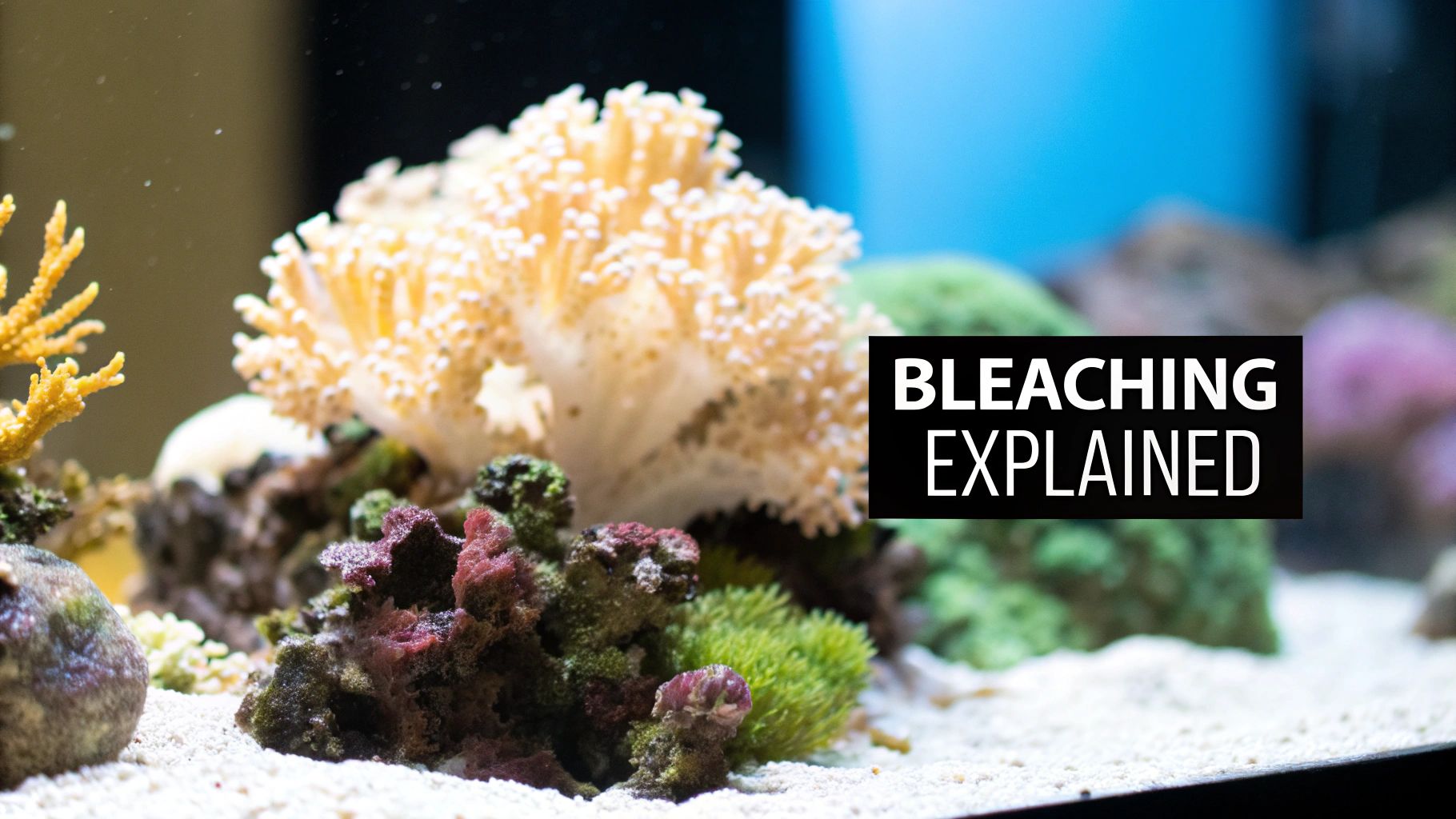
To get ahead of bleaching, you first have to appreciate the delicate partnership at the heart of every coral. And no, it’s not just about the heat. Those stunning colors we work so hard to cultivate in our reef tanks come from tiny algae called zooxanthellae that live right inside the coral’s tissue. It's a textbook symbiotic relationship.
These microscopic algae are little sugar factories. Through photosynthesis, they provide the coral with up to 90% of its food. In exchange, the coral gives them a safe, sunlit place to live and the compounds they need to photosynthesize. This partnership is the engine that drives coral growth and builds the incredible reef structures we love.
The Science of a Stressed Coral
When a coral gets hit with a major stressor, this critical relationship starts to crumble. The zooxanthellae, now under duress, can begin producing reactive oxygen species—nasty molecules that are actually toxic to their coral host. In a desperate act of self-preservation, the coral evicts the algae.
Once its colorful tenants are gone, the coral’s naturally transparent tissue reveals the stark white calcium carbonate skeleton beneath. That’s what we see as bleaching. It's a survival tactic, but a last-ditch one. The coral is still alive, but it has just kicked out its primary food source and is now effectively starving to death.
Key Takeaway: Coral bleaching is a stress response, not an instant death sentence. The coral evicts its symbiotic algae to protect itself from toxins, leaving it pale and vulnerable. If stable conditions are restored quickly, corals can recover by reacquiring zooxanthellae.
Common Stressors in a Home Aquarium
While massive bleaching events in the ocean are driven by global climate change, the culprits in our living rooms are usually far more localized and, thankfully, much more within our control. Pinpointing these triggers is the first real step toward prevention.
Here are the usual suspects in a home reef tank:
Temperature Swings: This is the big one. A heater sticking "on" or a chiller failing can cause rapid temperature spikes or drops. Even a few degrees outside the sweet spot of 24-27°C (75-81°F) can be enough to start the eviction process.
Intense or Sudden Lighting Changes: Did you just upgrade your light fixture? Ramping up the intensity too quickly can photo-shock your corals. They need time to acclimate, and a blast of new light, especially with high UV, can be incredibly damaging.
Unstable Water Chemistry: Wild swings in alkalinity, calcium, magnesium, or pH throw a coral's basic biology into chaos. High pollutants from poor nutrient management are another huge stressor. You can see just how one parameter gets out of whack in this complete guide to reef aquarium phosphate levels.
Improper Acclimation: Just plopping a new coral into your tank is a recipe for disaster. Moving it from one system to another without a slow, careful acclimation process is like hitting it with a shockwave of new temperature and water parameters.
At the end of the day, a bleached coral is a flashing red light telling you something is seriously wrong with your tank’s environment. By understanding the "why" behind this process, you’re much better equipped to build a resilient reef where your corals don't just survive—they thrive.
Mastering the Art of a Stable Reef Environment
If there's one golden rule in this hobby for keeping corals happy and colorful, it's this: stability is king.
Corals are creatures of habit. They don’t just dislike change; rapid shifts in their environment can trigger a biological panic mode. Our main job as reef keepers isn’t just to dial in perfect parameters, but to lock them in and keep them there, day in and day out.
Think of this consistency as a shield. It builds up your corals' resilience, making them tough enough to shrug off the minor stressors that are just part of life in a glass box. It’s all about turning your daily and weekly routines into a fortress of stability that protects your entire ecosystem.
Taming Temperature Swings
Temperature is, without a doubt, the number one culprit behind bleaching in home aquariums. A heater that gets stuck "on" or a chiller that can't keep up on a hot day can cause a temperature spike that sends your corals into a tailspin. Keeping your temperature stable is more than just setting it and forgetting it; it's about building a system you can actually trust.
Most reef tanks do best somewhere between 24-27°C (75-81°F). But honestly, the exact number is far less important than preventing it from swinging. A drift of even a degree or two within 24 hours is enough to stress out more sensitive corals.
Here's how to lock your temperature in for good:
Calibrate Everything: Never, ever trust the dial on your heater. Use a separate, calibrated thermometer you know is accurate to check the real water temperature, and then adjust your heater to match.
Get a Controller: An aquarium controller is one of the single best investments you can make for stability. It will kick your heater or chiller on and off to hold the temperature within an incredibly tight range—often as little as +/- 0.5°F.
Have a Backup Plan: What's your plan if the power goes out or a heater fails? A battery backup for your pumps or a smart power strip that sends you an alert can literally save your tank. For overheating, something as simple as a small fan pointed at the sump can make a world of difference in an emergency.
Keeping your temperature rock-solid is the most powerful thing you can do to prevent coral bleaching in your tank. A reliable controller and calibrated gear are your best friends in this fight.
Dialing in Your Lighting Perfectly
Lighting is another critical factor that can easily push corals over the edge. It's not just about the schedule; it's about the intensity and spectrum. One of the classic mistakes we see is someone getting a powerful new LED fixture and blasting their tank with it at 100% right out of the box. This is a surefire way to end up with pale, unhappy corals.
Think of it like getting a nasty sunburn. Corals need time to adjust their internal machinery to handle different light levels, a process known as photoacclimation. Rushing it never ends well.
Anytime you add new corals or change your lights, start low and go slow. Begin with a lower intensity and a shorter photoperiod, then gradually ramp them up over several weeks. Keep a close eye on your corals—if you see poor polyp extension or paling colors, back off immediately. Using a PAR meter takes all the guesswork out of this, letting you know exactly how much light you're providing.
Achieving Unwavering Water Chemistry
Behind the scenes, the invisible world of water chemistry is running the show. The "big three"—alkalinity, calcium, and magnesium—are the literal building blocks for coral skeletons. When these parameters are all over the place, corals have to burn precious energy just to stay balanced, leaving them weak and vulnerable.
The goal isn't just to be "in the range," but to keep the daily fluctuations to an absolute minimum. This is where automation is a total game-changer.
To give you a clearer picture, here’s a quick-reference guide for the stability zones we’re aiming for. It’s not just about the target range, but the maximum daily swing you should allow.
Key Water Parameter Stability Zones for Coral Resilience
Parameter | Optimal Range | Max Daily Fluctuation |
|---|---|---|
Alkalinity | 8-12 dKH | +/- 0.5 dKH |
Calcium | 400-450 ppm | +/- 15 ppm |
Magnesium | 1250-1350 ppm | +/- 20 ppm |
Keeping these parameters stable is the key to preventing the kind of chronic, low-level stress that leads to bleaching.
While you can manually dose a small tank, it becomes a real chore as your corals grow and their appetite for elements increases. An automated dosing pump is a fantastic upgrade that adds tiny, precise amounts of supplements all day long. This micro-dosing approach completely eliminates the sharp chemical spikes you get from manual additions. For a deeper dive, check out our guide on the essential techniques for reef aquarium care.
This obsession with stability in our tanks directly mirrors what scientists see on wild reefs. They've found that reducing local stressors like pollution makes a huge difference in how well corals handle heatwaves. During the massive global bleaching event of 2023-2025, a staggering 84% of reefs across 82 countries experienced dangerous heat stress. Yet, the reefs in well-managed areas with fewer local problems consistently fared better. You can read more about these global reef resilience efforts and see how our small-scale efforts reflect the bigger picture.
How to Spot the Earliest Warning Signs of Coral Stress
The secret to preventing coral bleaching isn't some magic bullet; it's stopping it before it ever really starts. Corals almost never go from perfectly healthy to bone white overnight. They send out quiet, subtle signals of distress long before the situation becomes a full-blown crisis. Learning to read this silent language is what separates a reactive hobbyist from a proactive, experienced reefer.
Your eyes are, without a doubt, your single most powerful diagnostic tool. Get in the habit of closely observing your corals every single day. You'll quickly develop a gut feeling for what "normal" looks like for each individual piece, making it incredibly easy to spot when something is even slightly off.
Learning to Read Your Corals
Long before a coral expels its zooxanthellae in a dramatic bleaching event, it shows other signs of stress. Catching these gives you a crucial window to figure out what's wrong and fix it. A happy, healthy coral is bursting with rich color and has its polyps extended, with tiny tentacles reaching out to grab food from the water.
Your daily check-in should be a quick scan for these key early warnings:
Paling or Fading Color: This is the very first sign of trouble. Before turning white, a stressed coral will often look washed out or lose its deep, saturated tones. An Acropora might shift from a deep blue to a pale pastel, or a colony of Zoanthids might look dimmer and less fluorescent.
Reduced Polyp Extension: Stressed corals pull in their polyps to conserve energy and protect themselves. If a coral that's normally fuzzy and full suddenly looks smooth and closed up for hours on end, that's a clear signal something in its environment is bothering it.
Increased Slime Production: Some corals produce a slime coat when irritated. While this can be a normal reaction to being touched or shedding debris, excessive or continuous sliming is a sign of persistent stress, often from poor water quality.
Tissue Recession: This is a more advanced sign of stress, but it's critical to catch. You might notice the coral’s living tissue pulling back from its base, slowly exposing the white skeleton underneath. This is a serious red flag that requires immediate action.
Just spending five minutes looking at your tank each day can help you catch these changes while they are minor and, more importantly, easily reversible.
Leveraging Technology as Your 24/7 Watchdog
While your daily observations are non-negotiable, modern aquarium tech can act as your tireless sentinel. It monitors the parameters you can't see with your eyes and can alert you the moment they drift.
Think of an aquarium controller as your tank's central nervous system. It can monitor temperature with pinpoint precision, kicking on heaters or chillers to prevent the dangerous swings that are a primary cause of bleaching. The best part? Many will ping your phone if the temperature moves outside your preset safe zone, giving you a chance to intervene before any real damage occurs.
Constant monitoring is the backbone of proactive reef keeping. By combining daily visual checks with reliable technology, you create a safety net that can catch environmental shifts before they escalate into a full-blown bleaching event.
PAR (Photosynthetically Active Radiation) meters are no longer just for professional coral farmers, either. Using a PAR meter to map out your tank's light intensity lets you place new corals in their perfect spot from day one. It also ensures your lighting isn't accidentally blasting them with too much energy. Logging these values over time helps you track bulb degradation, preventing a slow, unnoticed increase in light-related stress.
The Power of a Good Logbook
Never underestimate the power of just writing things down. Keeping a detailed log of your water test results, equipment maintenance schedules, and simple observations is one of the most effective habits you can build.
A single high phosphate reading could be a fluke. But a logbook showing a slow, steady climb over the last three months tells a clear story. This data helps you connect the dots between a change you made—like switching salt mix or adding a new fish—and the subtle signs of stress you're now seeing.
This proactive approach mirrors strategies used on a global scale. Establishing well-monitored marine protected areas has been proven to reduce bleaching odds on natural reefs, even as a staggering 83.7% of global reef areas have been impacted by heat stress. You can find more insights on how expanded monitoring helps protect reefs on weforum.org. By tracking trends in your own tank, you shift from fighting fires to preventing them entirely, ensuring your reef remains the stable, thriving ecosystem you want it to be.
Your Emergency Response Plan for a Bleaching Event
Even with the most dialed-in reef tanks, stuff happens. A sudden summer heatwave spikes the room temperature, or a critical piece of equipment fails without warning. These are the moments that can trigger a bleaching response.
When you see those first tell-tale signs of paling, how you react in the next few hours can mean the difference between a quick recovery and a devastating loss. The key is to act methodically, not out of panic. Think of it as a fire drill for your reef—you need a clear, pre-planned strategy to get the environment stable and give your corals their best shot.
First Moves: Address Light and Heat
The first two things you need to tackle are almost always light and temperature. When a coral gets stressed, its ability to process light energy plummets. What was a healthy amount of PAR yesterday can become toxic today, rapidly accelerating the bleaching process.
Your first move is to dial back the lights. A good starting point is a 30-50% reduction from your usual peak intensity. If your system allows it, shortening the entire photoperiod by a couple of hours is also a smart play. This gives the coral's remaining zooxanthellae a much-needed break, cuts down on oxidative stress, and lets the coral hang on to its precious energy reserves.
At the same time, you have to get a handle on the water temperature. Grab a calibrated backup thermometer and verify what your controller is telling you. If the temp is high, your goal is to bring it down slowly.
Check your chiller. Don't just assume it's running; make sure it's actually kicking on and actively cooling the water.
Whatever you do, don't dump ice or cold RODI water straight into the tank. That kind of rapid temperature shock will only make things worse.
Aim to lower the temperature by no more than 1°C (about 2°F) every few hours. Slow and steady is the only safe approach here.
What NOT to Do In a Bleaching Emergency
In a crisis, what you don't do is just as important as what you do. It's tempting to want to "fix" everything all at once, but that impulse can lead to total disaster. Your corals are already on the edge, and any sudden chemical swings will push them right over.
Crucial Reminder: Do not make any large, sudden changes to your water chemistry. This is not the time to chase "perfect" numbers for alkalinity, calcium, or magnesium. A bleached coral is incredibly sensitive, and a sudden swing in dKH is far more dangerous than one that's a little low but stable.
Your number one job is to maintain the stability you already have. Keep up with your regular testing, but only make tiny, incremental tweaks if a parameter is truly in the danger zone. You should also avoid large water changes unless you're 100% certain you're dealing with a tank-wide contamination event. A massive influx of new water, even if the parameters are perfectly matched, is just another stressor your corals don't need right now.
Supporting Recovery with Flow and Observation
Once you've stabilized the light and heat, you can make a few more subtle tweaks to help your corals pull through. Gently increasing the water flow around the affected colonies can be a huge help.
More flow is beneficial in two key ways:
It boosts gas exchange right at the coral's surface, helping it flush out excess oxygen.
It helps the coral shed excess slime and prevents opportunistic algae or bacteria from getting a foothold on the weakened tissue.
Finally, just keep observing. Keep a detailed log of the changes you've made and how the corals are responding day by day. Recovery is a marathon, not a sprint—it can take weeks or even months. Watch for the slow, gradual return of color and renewed polyp extension. Those are the signs that your interventions are working and your efforts are paying off.
Building Stronger Corals Through Advanced Nutrition
While keeping a stable environment is your first line of defense against coral bleaching, it's really only half the battle. A well-fed coral is a resilient coral. It has the strength to weather the minor, inevitable stressors that are just part of life in an aquarium. Think of advanced nutrition as the secret weapon that helps corals build up the energy reserves they need to survive—and even thrive—when conditions get a little shaky.
This is about much more than just the occasional target feeding. A truly solid nutritional plan means providing a diverse, consistent diet that fuels every part of a coral’s biology. This approach shifts your corals from just getting by to actively building strength, which makes them far less likely to bleach when the going gets tough.
The Power of Energy Reserves
I like to think of a coral's energy as a bank account. Photosynthesis, thanks to its symbiotic zooxanthellae, is the daily income. But what happens when that income suddenly gets cut off during a stress event? This is where stored energy reserves become absolutely critical.
Corals that have access to a rich diet can store excess energy as lipids, or fats. These fatty reserves are like a built-in power bank. If the coral is forced to expel its zooxanthellae, it can tap into these reserves to sustain itself for weeks. That gives you a much wider window to fix whatever is wrong in the tank and gives the coral a fighting chance to recover.
A coral with substantial lipid reserves can survive for an extended period without its zooxanthellae. This stored energy is the biological buffer that buys your coral precious time during a bleaching event, dramatically increasing its chances of a full recovery.
Without these reserves, a starving coral weakens fast, leaving it wide open to secondary infections and tissue loss. A proactive nutritional plan is honestly the best insurance policy you can have against this.
Why Live Foods Make a Difference
There are a lot of great prepared coral foods out there, but adding live nutrition into your feeding routine brings a level of quality and diversity that's tough to replicate. For any serious reefer, live phytoplankton and copepods are two of the most powerful tools in the nutritional arsenal.
Phytoplankton is the very foundation of the marine food web. When you dose your tank with live phytoplankton—especially nutrient-rich strains like Nannochloropsis or Isochrysis—you're doing more than just directly feeding your corals. You're also feeding the entire microscopic ecosystem in your tank, from copepods to sponges and other filter feeders. It just creates a more natural, balanced environment.
Copepods are tiny crustaceans that are basically a superfood for many corals. They are absolutely packed with Highly Unsaturated Fatty Acids (HUFAs), which are essential for coral health, vibrant coloration, and a strong immune system. A healthy, thriving population of copepods provides a constant, natural food source that corals can graze on all day, just like they would on a wild reef.
You've got a couple of options for getting them into your system:
Culture Your Own: It's surprisingly easy to set up simple cultures for phytoplankton and copepods at home. This gives you an endless supply of fresh, high-quality food right at your fingertips.
Purchase Live Cultures: Buying fresh, professionally grown cultures ensures you're adding pure, uncontaminated, and nutrient-dense food directly to your tank.
If you want to dive deeper into all the different food types, you might find our guide on the best food for corals helpful.
Practical Feeding Strategies for Resilience
Building a resilient reef through nutrition all comes down to consistency. Feeding sporadically just won't build up the deep energy stores your corals need to withstand significant stress. Instead, you want to aim for a varied and regular schedule.
I've had the most success with a multi-pronged approach. Try broadcast feeding the whole tank with phytoplankton a few times a week to fuel the microfauna. At the same time, you can target feed your larger polyp corals with a mix of particulate and liquid foods. Seeding your tank with live copepods, like Tisbe biminiensis or Apocyclops panamensis, establishes a self-sustaining food source they can snack on anytime.
This kind of nutritional strategy is really a form of proactive care. It mirrors the broader conservation efforts needed to protect wild reefs. Globally, the most effective strategy to prevent coral bleaching is to reduce greenhouse gas emissions and limit warming. Data from NOAA's Coral Reef Watch shows that from 2023 to 2025, heat stress has impacted approximately 84.4% of the world's coral reef area. Without urgent action, these mass bleaching events could become an annual disaster. You can discover more insights about NOAA's global reef monitoring efforts and see how they inform international policy. By focusing on resilience in our own tanks, we're practicing the same principles needed on a global scale.
Your Questions on Preventing Bleaching, Answered
Even with the most dialed-in system, things can get stressful, and questions pop up. It's totally normal. Here are some of the most common questions I hear from fellow hobbyists when they're facing down the threat of coral bleaching. Let's get you some clear, straightforward answers.
Can a Fully Bleached Coral Actually Recover?
Yes, it absolutely can, but you're in a race against the clock. A bleached coral isn't dead—it's just kicked out its symbiotic algae and is essentially starving to death in plain sight. If you can quickly pinpoint and fix what’s stressing it out, whether it's a heater gone wild or a light that's cranked too high, the coral can regain its zooxanthellae and color back up over weeks or even months.
The single most important factor here is speed. The longer a coral stays bleached, the weaker it gets. This opens the door for nuisance algae to smother it or for a secondary infection to take hold. A well-fed coral with plenty of energy stored up has a much, much better shot at pulling through.
Will Dimming My Lights Hurt My Other Corals?
This is a huge, and very valid, concern. You've got one coral in trouble, but you don't want to jeopardize the rest of the tank. Here's the good news: while dropping your light intensity by 30-50% is a non-negotiable step for saving a bleaching coral, your healthy corals can handle the temporary dip in PAR just fine.
Think of it like a few cloudy days on a natural reef. A week or two of lower light won't harm their long-term health. In fact, it often gives the whole system a welcome breather. Your top priority has to be saving the coral that's actively crashing, and the others are more than resilient enough to handle the temporary change.
My Two Cents: Once a coral starts bleaching, its entire relationship with light changes. The same intensity that it loved yesterday is suddenly toxic today because it can't process that energy anymore. Cutting the lights immediately is one of the most powerful emergency moves you can make.
How Do I Know If My Coral Is Bleached or Just Changing Color?
It can be tough to tell the difference sometimes, especially with corals that are known to shift colors. A healthy coral might deepen its hue or shift from green to purple under new lighting, but that's a gradual change to another rich, vibrant color.
Bleaching is a loss of color. The coral will look pale, washed-out, or even translucent as its colorful algae disappear, revealing the stark white skeleton underneath. If the color looks like it's fading away rather than morphing into something else, you're almost certainly looking at the beginning of a stress response.
Can Overfeeding My Tank Cause Coral Bleaching?
Indirectly, yes. It’s a bit of a balancing act. On one hand, good nutrition is your best friend for building coral resilience. On the other, consistently dumping in too much food can send your nitrates and phosphates through the roof.
High nutrients can stress corals directly, but they also act as rocket fuel for nuisance algae. That algae then starts competing with your corals for light and real estate, piling on even more stress. The goal is consistent, targeted feeding with high-quality food, backed by diligent nutrient export—think protein skimmers, regular water changes, and whatever other filtration you run to keep that water pristine.
Building a resilient reef is all about creating a robust, living food web. PodDrop Live Aquarium Nutrition gives your system the foundation it needs with live copepods and phytoplankton. By seeding your tank with this live nutrition, you're helping your corals build up the critical energy reserves they need to power through stressful events. You aren't just feeding them for today; you're building a stronger, more stable ecosystem from the ground up.
Check out our live cultures and see the difference for yourself at the official PodDrop website.
Comments