


What to Feed Guppies for Vibrant Colors and Health
- fabianbehague
- Nov 14
- 11 min read
When you're figuring out what to feed your guppies, it's helpful to think of them as tiny, energetic athletes. Sure, the foundation of their diet should be a high-quality flake food, but the real secret to getting those brilliant colors and seeing them thrive is variety. A balanced mix of proteins, fats, and plant matter is exactly what they need to fuel their growth and energy.
Your Guppy's Perfect Diet: A Balanced Approach
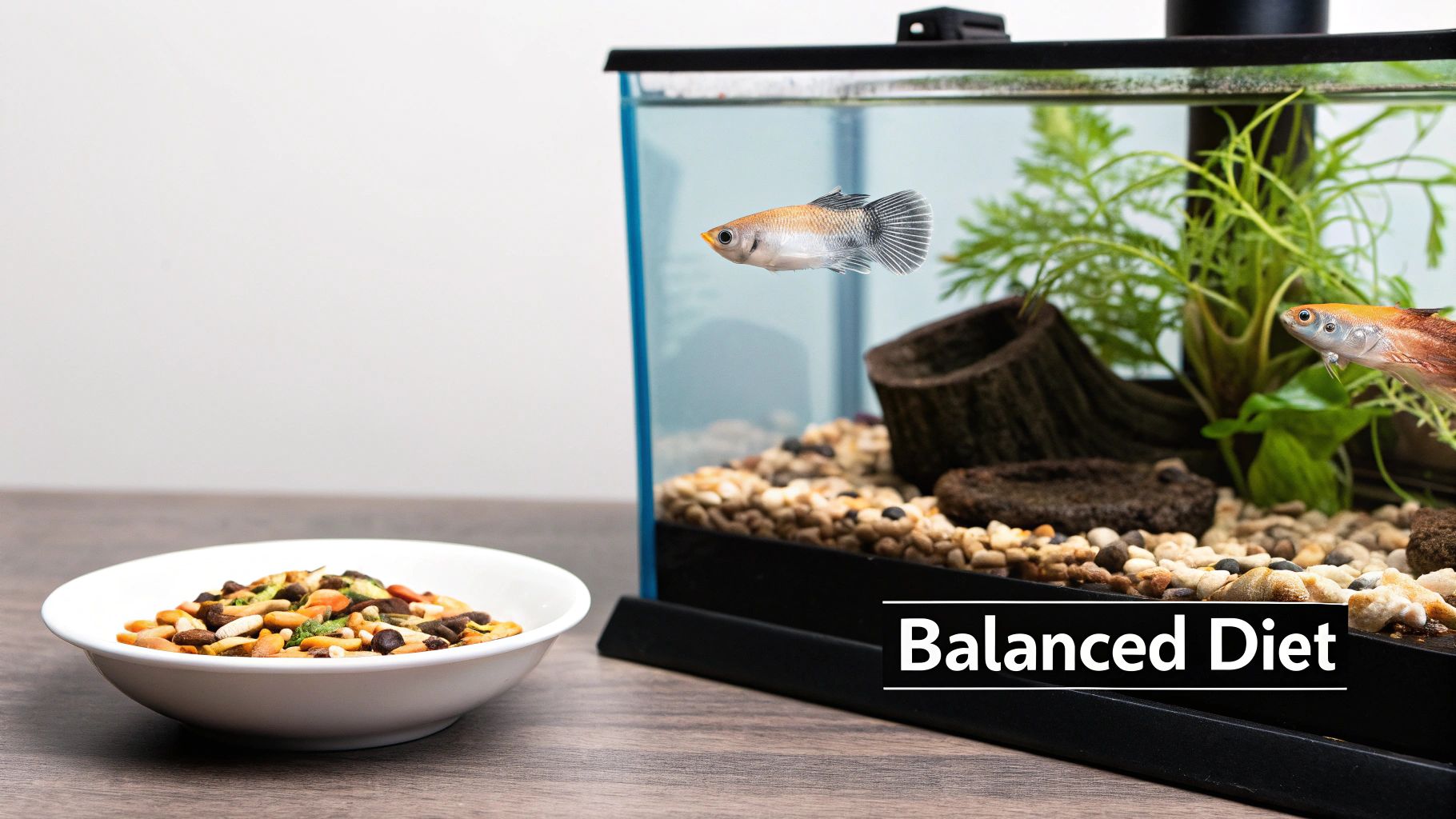
Out in the wild, guppies are classic omnivores, nibbling on a mix of animal-based proteins and bits of plant life. Your goal is to replicate that natural variety in their tank, which is the single best thing you can do for their long-term health.
Think of their daily flakes as their core, balanced meal. But supplementing that staple with other foods is like adding vital protein shakes and green smoothies to their regimen. This approach doesn't just prevent nutritional gaps; it also sparks their natural foraging instincts, keeping them active and engaged.
Of course, a great diet needs a great environment. If you're just getting your fins wet, our guide on how to set up a new aquarium will help you create the perfect home for your guppies to flourish in.
Key Food Groups for Guppy Health
It's no wonder that prepared foods like flakes and pellets are so popular. The convenience and consistent nutrition they offer are a huge plus for any fishkeeper. In fact, the Asia-Pacific aquarium fish feed market hit a staggering USD 26.26 billion in 2024, with over 75% of hobbyists in key areas preferring these processed feeds. You can dig deeper into those numbers over at Market Data Forecast's report on the aquarium fish feed market.
To help you map out a complete feeding plan, I've put together a quick reference table. This little guide breaks down the essential food types, what they do for your guppies, and how often to offer them.
Guppy Feeding Quick Reference Guide
This table summarizes the core components of a healthy, varied guppy diet. Use it as a starting point to ensure your fish are getting everything they need to stay vibrant and active.
Food Type | Primary Benefit | Feeding Frequency |
|---|---|---|
High-Quality Flakes | Daily essential nutrients & minerals | Once or twice daily |
Live/Frozen Foods | High protein for growth & breeding | 2-3 times per week |
Plant Matter | Aids digestion & provides vitamins | 1-2 times per week |
Specialty Pellets | Nutrient-dense, great for fry | Alternate with flakes |
By rotating through these different food groups, you're not just feeding your fish—you're enriching their lives and setting them up for success. A little variety goes a long way.
Choosing the Best Flakes and Pellets
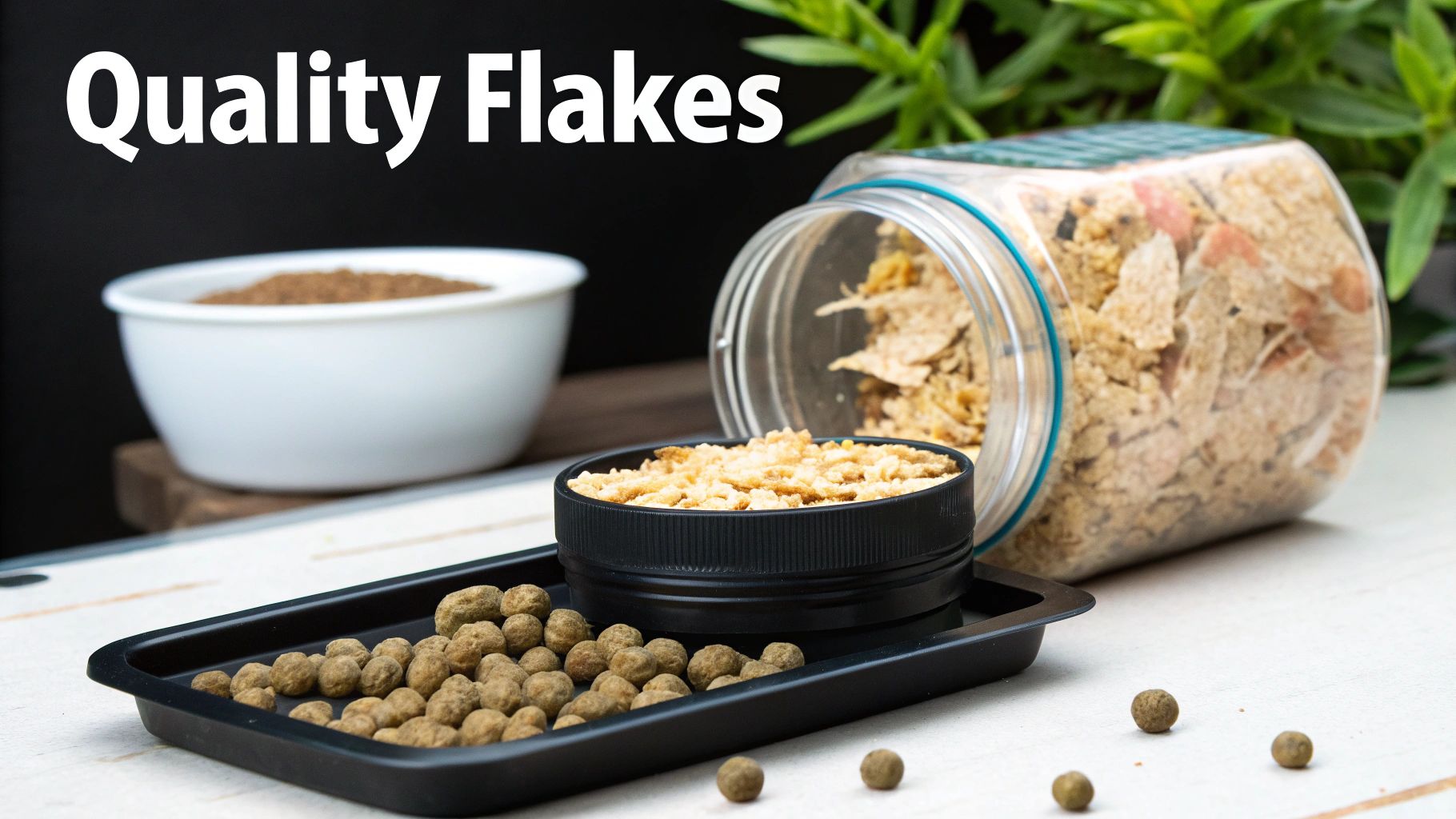
Walking down the fish food aisle can be a bit overwhelming, but picking a great staple food for your guppies is actually pretty straightforward. Flakes and pellets are going to be the bedrock of their diet, the consistent, everyday meals that keep them full of energy and packed with essential vitamins.
Your number one job is to find a food built around high-quality protein. Honestly, the most powerful skill you can have here is just learning to read the ingredient label. Always check what's listed first.
The first three to five ingredients on the label make up the bulk of the food. Prioritize formulas that start with whole fish, shrimp meal, or spirulina rather than vague "fish meal" or cheap fillers like wheat flour.
These better ingredients are much easier for your guppies to digest and provide the right stuff for strong growth, stunning color, and a healthy immune system.
Decoding Different Food Formulas
Not all prepared foods are created equal, and it helps to know what you're looking at. Different formulas are designed for different jobs in the tank.
Standard Flakes: Think of these as your all-purpose daily drivers. They're designed to provide a balanced diet for a typical community tank and float nicely on the surface, which is perfect for how guppies like to eat.
Color-Enhancing Formulas: These foods get a boost from carotenoids—natural pigments found in ingredients like shrimp and algae. They won't magically change your guppy's genetic colors, but they will absolutely make their existing reds, oranges, and yellows pop.
Specialized Fry Food: Guppy fry are tiny and need a ton of energy to grow. These foods are basically ground into a fine powder or micro-pellets, making them easy for newborns to eat. They're also packed with extra protein to fuel that rapid growth.
The market for these foods is always improving. Pelleted and flake feeds make up over 42% of the entire ornamental fish feed market, with a lot of the growth coming from new color-enhancing and immunity-boosting formulas. You can dig into more details about the global guppy fish food market at Accio. Starting with a quality flake or pellet is the first, and most important, step to a thriving aquarium.
Boosting Health with Live and Frozen Foods
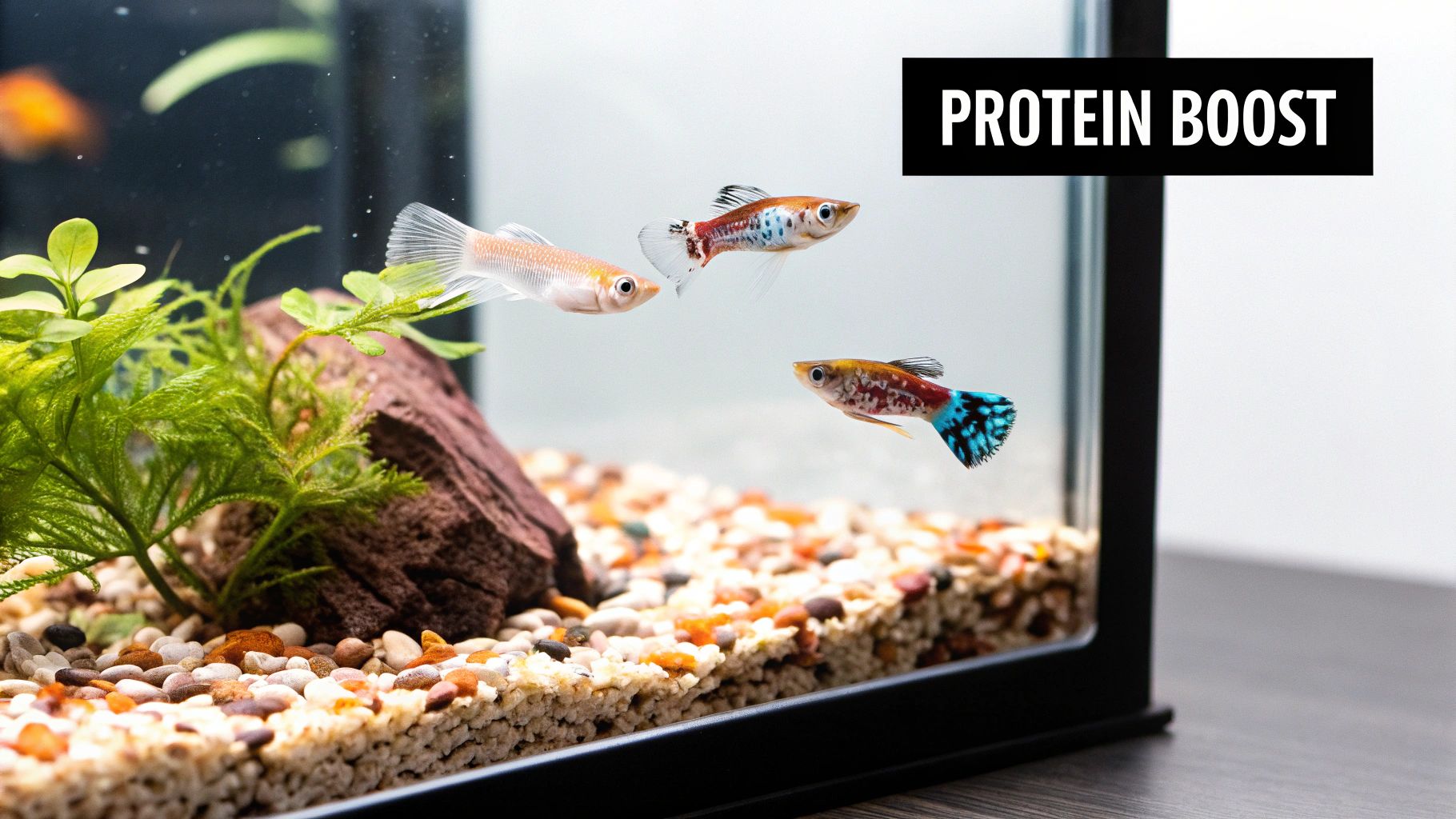
Think of high-quality flakes as the solid, everyday nutrition that keeps your guppies going. But to really see them thrive? That's where live and frozen foods come in. This is like moving from a standard meal plan to a gourmet, high-protein diet designed to make your fish truly shine.
Adding these foods is one of the best things you can do to take your guppies’ health from good to great. They aren't just a simple treat; they’re a powerhouse of proteins and fats that processed foods struggle to replicate. For fueling brilliant colors, strong growth, and even successful breeding, adding these to the menu 2-3 times a week is a fantastic move.
It’s about more than just nutrition, too. Dropping in live food taps into a guppy’s primal instincts. Suddenly, they aren't just passively eating off the surface—they're actively hunting and foraging. It provides crucial mental and physical enrichment that keeps them sharp and active.
Popular and Safe Food Choices
So, what should you look for? You’ll find some incredible options at most fish stores. For anyone just starting out, frozen foods are usually the easiest and safest bet. The freezing process is great because it kills off any potential pests or diseases you wouldn't want to introduce to your tank.
A few guppy-approved favorites include:
Brine Shrimp: A true classic, available both live and frozen. They’re packed with protein and the perfect size for guppies of all ages.
Daphnia: Nicknamed "water fleas," these tiny crustaceans are fantastic for a guppy's digestive system, thanks to their high fiber content.
Bloodworms: Guppies go absolutely crazy for these. They're an amazing source of iron but are very rich, so think of them as a special treat to be offered in moderation.
Tubifex Worms: While fish love them, you have to be careful here. It is critical to get them from a clean, reputable source to avoid bringing nasty contaminants into your aquarium.
A quick pro-tip: always thaw frozen foods in a small amount of tank water before feeding. This stops you from dropping an ice cube into the tank (which can shock a guppy's system) and lets you pour off the cloudy packing liquid that can foul your water.
By introducing these high-value foods into the rotation, you’re mimicking the varied diet guppies would find out in the wild. This variety doesn't just boost their physical health—it creates a more active, vibrant, and fascinating aquarium for you to enjoy.
Why Your Guppies Need Their Greens
It’s easy to focus on protein for guppy growth and energy, but a lot of keepers completely miss the green side of their diet. Guppies are omnivores, and for them, plant matter isn't just filler—it's absolutely essential for smooth digestion and provides vitamins you just won't find in most processed flakes.
Think about how they live in the wild. They spend their days constantly nibbling on algae and soft bits of aquatic plants. Adding some greens to their tank mimics this natural grazing behavior perfectly. It’s a simple move that can head off common problems like bloating and constipation before they start, building a healthier fish from the inside out.
Guppy-Safe Greens and How to Prepare Them
Getting veggies ready for your guppies is incredibly simple. The whole trick is just to soften them up so their tiny mouths can actually eat the stuff. We do this by blanching them.
Here's the quick and easy process:
Boil: Drop a small piece of your chosen vegetable into boiling water for about a minute.
Blanch: Immediately scoop it out and plunge it into a bowl of ice water. This stops the cooking right in its tracks.
Serve: Chop it into tiny, guppy-sized pieces before you drop it into the tank.
Some of the best, safest options to rotate into their diet are deshelled peas, zucchini, spinach, and cucumber. You can also supplement with algae-based foods like spirulina wafers to round things out.
Integrating plant-based foods is a growing trend for a reason. It addresses the complete nutritional profile of omnivorous fish like guppies, promoting better gut health and overall vitality.
This isn't just a hobbyist trend, either. The entire fish food industry is catching on. Plant and algae-based feeds have seen over 22% annual growth in some markets, like Australia, because people are demanding sustainable and complete diets for their fish. You can learn more about these fish food market trends to see just how the industry is adapting. By adding greens, you’re not just following a fad—you’re giving your guppies exactly what they’re built to eat.
Mastering Your Guppy Feeding Schedule
Figuring out the right amount of food and the perfect timing is probably the biggest learning curve for new guppy keepers. Here’s a little secret from years of experience: it’s far more common—and dangerous—to overfeed your fish than to underfeed them.
When uneaten food sits in the tank, it breaks down fast, spiking ammonia levels and quickly fouling your water. Nobody wants that.
To sidestep this common pitfall, just follow the two-minute rule. It's simple but incredibly effective: only give your guppies an amount of food they can completely finish in about two minutes. If you still see flakes or pellets floating around after that time, you've offered too much. Just dial it back a bit at the next feeding.
The goal is to feed small amounts frequently. This mimics their natural grazing behavior in the wild, where they would constantly be nibbling on small bits of food throughout the day.
Frequency for Adults and Fry
For your adult guppies, feeding them once or twice a day is the sweet spot. This schedule provides them with consistent energy without overloading the tank's biological filter with waste.
Guppy fry, on the other hand, are a whole different story. These little guys are basically tiny, fast-growing eating machines. To fuel their incredible growth spurts, you'll need to feed them 3-5 times per day with finely crushed flakes or specialized fry food. This constant stream of nutrition is absolutely critical during their first few weeks of life.
A varied diet is key to keeping your fish not just healthy, but also interested in their food. Rotating different types of food prevents boredom and ensures they get a full spectrum of nutrients they need to thrive.
Sample Weekly Guppy Feeding Schedule
Here is a sample schedule to give you an idea of how to rotate different foods. Think of it as a template you can adjust based on the foods you have available and what your fish seem to enjoy most.
Sample Weekly Guppy Feeding Schedule
Day of the Week | Morning Feeding | Evening Feeding |
|---|---|---|
Monday | High-Quality Flakes | High-Quality Flakes |
Tuesday | Frozen Brine Shrimp (Thawed) | No Feeding (Fast) |
Wednesday | High-Quality Flakes | Color-Enhancing Pellets |
Thursday | Blanched Zucchini Piece | High-Quality Flakes |
Friday | Frozen Bloodworms (Thawed) | High-Quality Flakes |
Saturday | High-Quality Flakes | Spirulina Wafer |
Sunday | High-Quality Flakes | Color-Enhancing Pellets |
Notice the fasting day on Tuesday? Giving their digestive systems a 24-hour break once a week is a great practice for promoting long-term health and helping to keep the tank clean. This simple rotation provides a balanced and stimulating diet that will keep your guppies vibrant and active.
Common Feeding Mistakes and How to Avoid Them
Even with the best of intentions, it's pretty easy to make a few missteps when figuring out what to feed your guppies. The single biggest mistake I see people make? Overfeeding.
Giving your fish too much food, or feeding them too often, is the fastest way to tank your water quality and put your fish at risk. It's a classic rookie error.
All that uneaten food just sinks to the bottom and rots, releasing ammonia and turning the water toxic. Think of it like leaving a half-eaten pizza in a small, sealed room for a few days—things are going to get unpleasant fast. This is exactly why sticking to a schedule and following the "two-minute rule" is a game-changer for your tank's long-term health.
Another common pitfall is falling into the "one food" trap. Sure, a high-quality flake food is a fantastic base for their diet, but it’s not the whole story. Guppies are omnivores, and a single food source just can't give them the complete nutritional profile they need to truly thrive. Over time, this can lead to dull colors, low energy, and a weakened immune system.
Simple Fixes for a Healthier Tank
The good news is that these habits are easy to fix. It all boils down to two things: variety and portion control. A varied diet isn't just a fun treat for your guppies; it's an absolute necessity for keeping them in peak condition.
Don't Use Old Food: Fish food isn't immortal. It starts losing crucial nutrients, especially Vitamin C, just a few months after you open the container. Always seal it up tight after feeding time and grab a new container every couple of months.
Avoid the "Just One Food" Trap: Get in the habit of rotating what you offer. Mix it up between flakes, pellets, frozen foods like brine shrimp, and even some blanched veggies. This ensures they get a well-rounded diet that covers all their needs.
Correcting feeding mistakes often comes down to proactive aquarium maintenance. Keeping your tank clean and stable makes your fish more resilient, even if you accidentally overfeed one day.
By steering clear of these common mistakes, you're actively setting your guppies up for a long, healthy, and colorful life. For more tips on keeping their whole environment pristine, check out our collection of aquarium maintenance tips.
Of course. Here is the rewritten section, designed to sound completely human-written and natural, following all your specific instructions and examples.
Got a Question? We've Got Answers
Even after you've got a feeding routine down, a few tricky situations always seem to come up. Let's tackle some of the most common questions I hear from fellow guppy keepers so you can handle anything that comes your way.
How Do I Feed Guppies When I'm on Vacation?
Heading out of town for a week or less? An automatic fish feeder is going to be your best friend. You can program these gadgets to drop a specific amount of flakes or pellets each day. If you're planning a longer trip, you could use a slow-release vacation feeder block or, even better, ask a trusted friend or neighbor to pop in and feed them every 2-3 days.
Here's a pro tip: A healthy, well-fed adult guppy can easily go a few days without a meal. It's always, always safer to set an automatic feeder to slightly underfeed than it is to overfeed. Too much food will just foul the water while you’re gone, and that’s a disaster waiting to happen.
What Should I Feed Newborn Guppy Fry?
Those tiny newborn guppies are growing like crazy, and they need a high-protein diet to keep up. Because their mouths are so small, their first meals have to be just as tiny. Your best bets are live baby brine shrimp, microworms, or a high-quality flake food crushed into a fine powder.
That powdered consistency is the key—they simply can't eat bigger pieces. You'll want to give them these tiny meals frequently, about 3-5 times per day, to make sure they're getting all the fuel they need.
How Can I Tell If My Guppy Is Overfed or Underfed?
The best way to tell is to just look at your guppy’s belly. A healthy, properly fed guppy will have a nice, gently rounded abdomen. If its stomach looks caved in or concave, it's likely not getting enough food.
On the flip side, a belly that's constantly swollen or looks bloated is a classic sign of overfeeding. You should also watch their behavior—healthy guppies are little busybodies, always active and excited for their next meal.
For more answers to common aquarium-keeping questions, you can always check out our general FAQ page for additional insights.
At PodDrop Live Aquarium Nutrition, we're passionate about the idea that vibrant aquariums start with superior live nutrition. While our specialty is saltwater ecosystems, the core principle of providing high-quality, enriching food holds true for all aquatic life. Feel free to explore our live copepods and phytoplankton cultures at https://www.getpoddrop.com to see how live food can absolutely transform a reef tank.
Comments