


What Do Copepods Eat? A Guide to Their Diet
- fabianbehague
- Nov 17
- 10 min read
So, what's on the menu for a copepod? The short answer is: a little bit of everything. These tiny crustaceans are nature's ultimate survivalists, with a diet that's surprisingly diverse. Think of them as omnivores of the microscopic world, primarily feasting on phytoplankton (microscopic algae), detritus (organic gunk), and bacteria.
They are the most important link between the very bottom of the food chain and the larger animals we love to watch in our tanks.
The Tiny Titans: What Copepods Really Eat
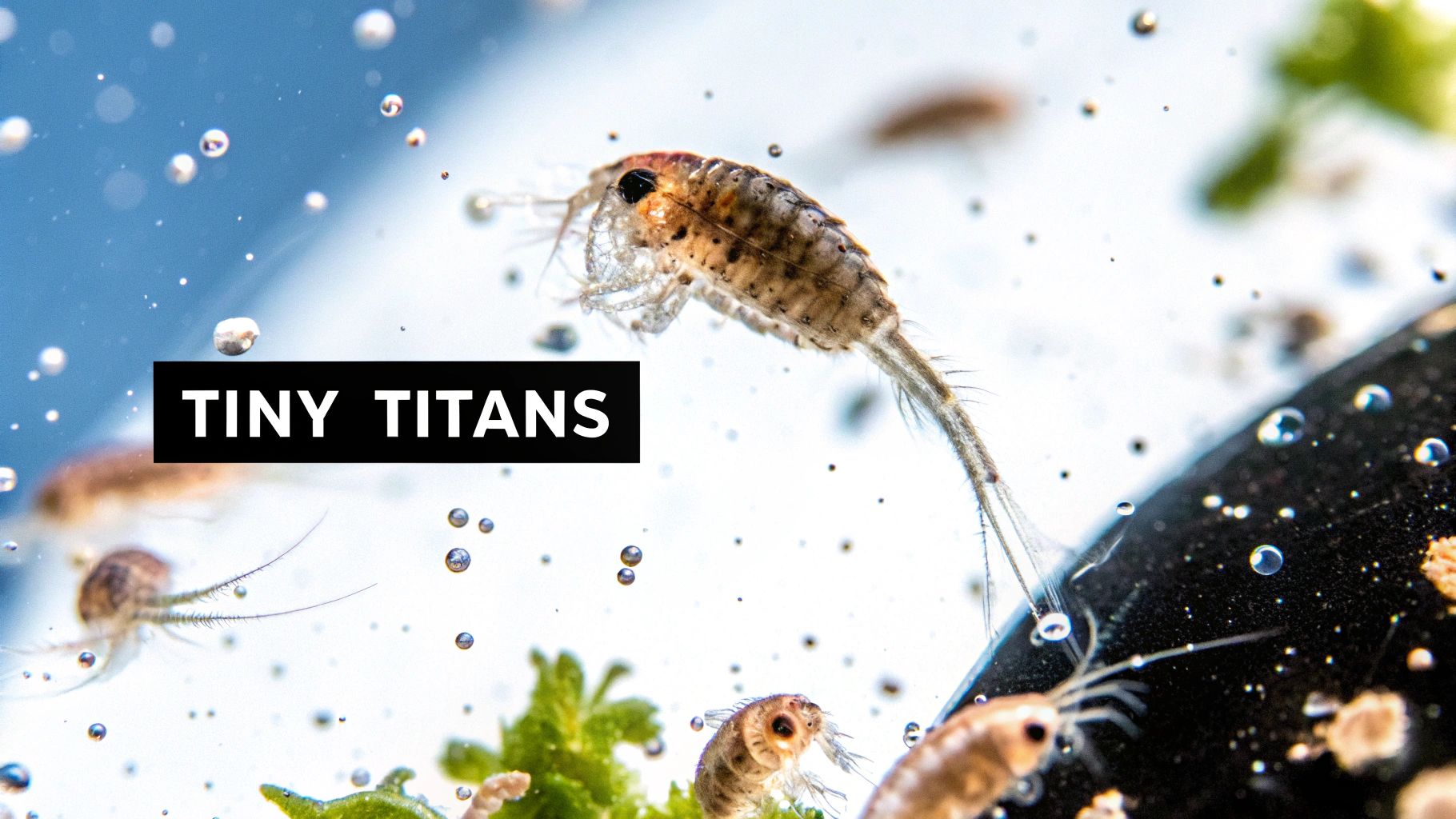
Picture copepods as the grazers of an invisible, underwater pasture. Whether in the vast ocean or your reef tank, they are the primary consumers, turning the simplest forms of life into a nutrient-dense meal for everything else. Their diet isn't just a random buffet of whatever floats by; it's a strategic hunt for energy that powers the entire marine ecosystem.
Figuring out what copepods eat is the first step to building a booming population in your own tank. A well-fed colony quickly becomes a self-sustaining food factory, nourishing corals and even notoriously picky fish like mandarins and pipefish.
A Look Inside the Copepod's Pantry
At its heart, the copepod diet is simple but incredibly effective. They go after the most plentiful and energy-rich foods they can find, a trait that makes them successful in habitats from tropical reefs to frigid polar seas.
Let's take a quick look at their main food sources.
Food Source | Description | Role in Diet |
|---|---|---|
Phytoplankton | Microscopic algae; the base of the marine food web. | The absolute staple. This is their primary source of essential fatty acids. |
Detritus | Decomposing organic matter, fish waste, and uneaten food. | The clean-up crew's special. Recycles waste into valuable nutrition. |
Bacteria & Biofilm | The slimy film that coats rocks, glass, and substrate. | A supplemental snack that helps keep tank surfaces surprisingly clean. |
This varied menu makes copepods more than just fish food; they're an active part of your tank's ecosystem.
More Than Just a Meal: The Role of a Well-Fed Copepod
By munching on these foundational elements, copepods act as a critical bridge. They take things like algae and waste and concentrate the good stuff—essential fatty acids, proteins, and lipids—into a perfect, bite-sized package for the next hungry mouth.
They essentially bundle up all the core nutrients from the bottom of the food web and deliver them straight to your fish and corals.
This role is what makes them so invaluable in a closed system like a reef aquarium. A healthy copepod population isn't just providing live food; it's actively contributing to your tank's stability by keeping algae in check and processing waste before it becomes a problem.
The Foundation of the Copepod Diet
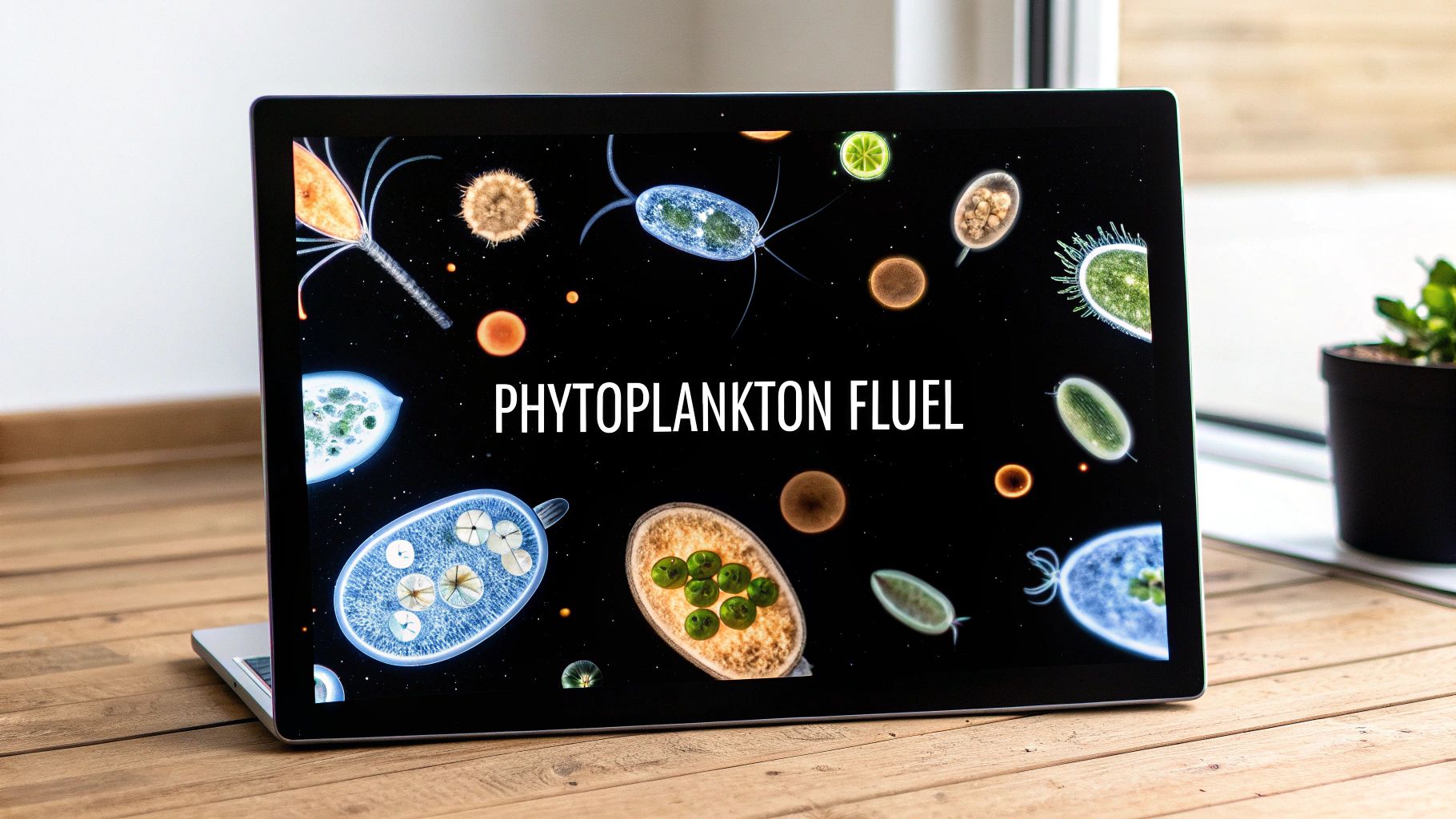
Think of phytoplankton as the superfood that powers the entire marine ecosystem. For copepods, this microscopic algae isn't just random "green stuff"—it's a nutritional powerhouse and the absolute cornerstone of their diet. It's what they eat to store energy, grow, and reproduce.
Simply put, without a steady supply of high-quality phytoplankton, a copepod population just can't sustain itself. The nutritional value locked inside these tiny plant-like organisms provides the essential building blocks for a healthy reef.
Not All Algae Is Created Equal
When we talk about what copepods eat, it’s critical to understand that the type of phytoplankton matters immensely. Just like different vegetables offer us different vitamins, various species of microalgae have unique nutritional profiles.
Some of the heavy hitters for copepods include:
Rhodomonas: This species is exceptionally rich in key nutrients.
Tisochrysis: Known for its high fatty acid content.
Nannochloropsis: A smaller, easily consumed option that's packed with goodness.
A diverse diet that blends multiple phytoplankton species is the secret to ensuring your copepods get the full spectrum of nutrients they need. This is how you cultivate a robust, self-sustaining population that will, in turn, nourish your entire reef tank. You can dive deeper into this in our guide on the best phytoplankton for a reef tank.
A varied phytoplankton diet is the single most important factor for copepod health. It directly impacts their growth rates, reproductive success, and overall nutritional value as a food source for other animals.
This focus on quality isn't just a hunch; it's backed by science. Studies show that a copepod’s diet directly influences its own nutritional makeup. For example, copepods feasting on species like Rhodomonas and Tisochrysis lutea build up the highest amounts of DHA (docosahexaenoic acid)—a critical omega-3 fatty acid vital for healthy growth and reproduction in the animals that eat them. You can check out more on how diet composition impacts copepod nutrition in this detailed marine science study. Giving them this top-tier fuel is how you turn your copepod colony into a true nutritional engine for your aquarium.
Understanding the Copepod's Adaptable Appetite
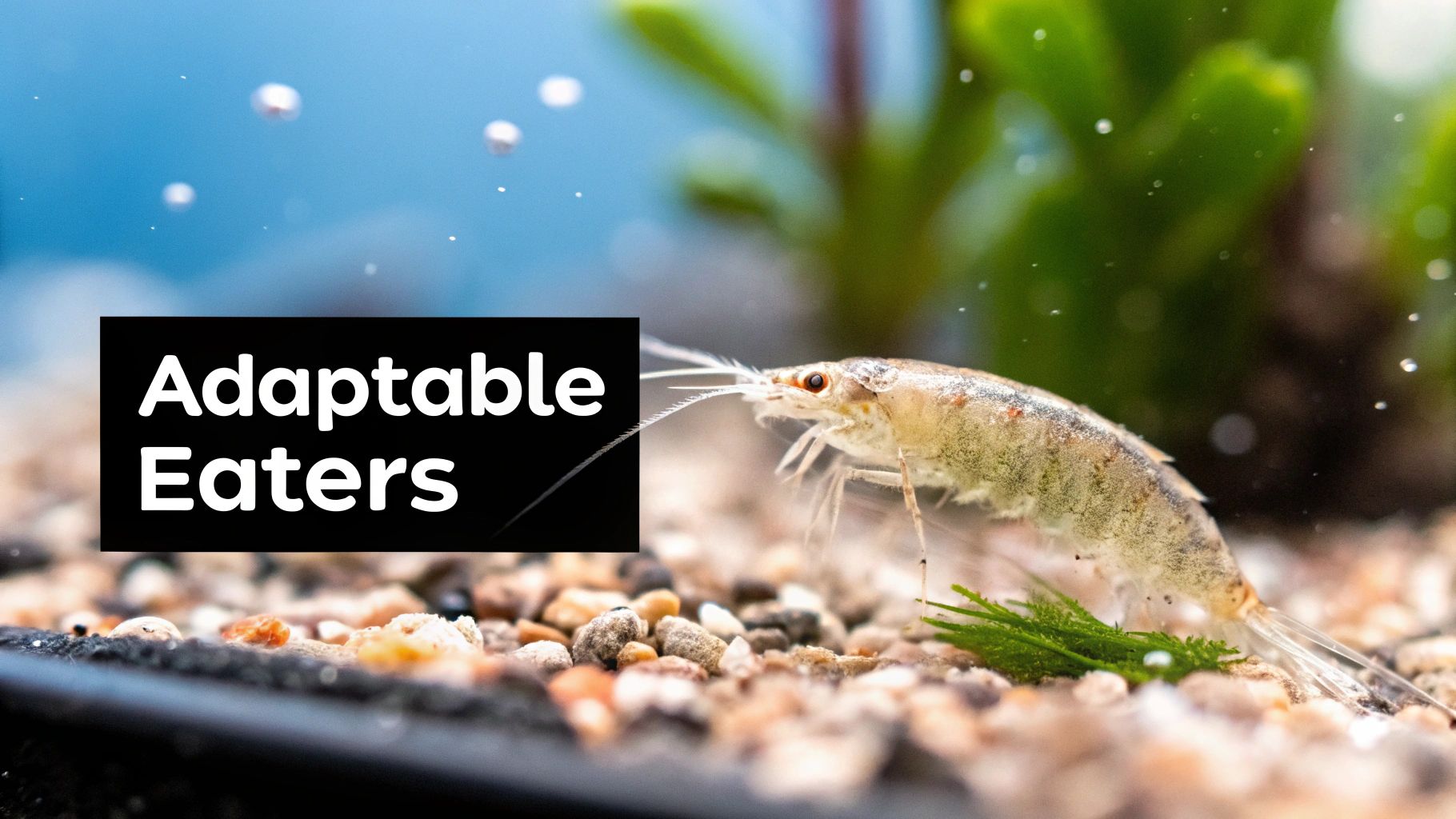
While phytoplankton is the cornerstone of their diet, copepods are far from picky eaters. Think of them as the ocean's ultimate clean-up crew—incredibly flexible and opportunistic. This adaptability is the real secret to their success, letting them thrive in all sorts of environments, from pristine reefs to the harshest corners of the sea.
When their main course of phytoplankton runs low, copepods don't just wait around. They immediately switch gears and start scavenging, showing a remarkable talent for finding nutrition where other organisms wouldn't even look.
This knack for changing their diet based on what's around is called dietary plasticity. It’s their survival superpower, ensuring they have the energy to grow and reproduce no matter what the conditions are.
The Cleanup Crew's Varied Menu
A copepod’s willingness to eat almost any organic material makes it an absolute MVP in a reef aquarium. They aren't just passively waiting for the next phytoplankton bloom; they're actively working around the clock to keep the entire ecosystem clean and balanced.
Their alternative food sources are a reef keeper's dream:
Detritus: This is all the organic "gunk" that builds up in your tank—leftover fish food, waste, and decaying algae. Copepods graze on this stuff constantly, breaking it down and turning waste back into a valuable food source.
Bacteria and Biofilm: That slimy film that coats your rocks, glass, and equipment? It's a gourmet buffet for copepods. By munching on it, they help keep your tank looking pristine while absorbing critical nutrients.
Smaller Zooplankton: Out in the wild, some larger copepod species are also active predators, hunting down smaller organisms whenever they get the chance.
This dietary flexibility is what allows copepods to flourish everywhere from nutrient-rich coastal waters to the barren deep sea. They are nature’s ultimate survivors, built to make the most of any environment.
We've seen this incredible adaptability in some of the planet's most extreme conditions. For example, research in the Arctic has shown that copepods completely change their diets with the seasons. They'll eat everything from diatoms and dinoflagellates to sinking fecal pellets and even other tiny animals like arrow worms. This ensures they keep their energy up even when food is incredibly scarce. You can dive into the full research on copepod dietary flexibility to learn more about these fascinating findings.
In an aquarium, this very same behavior makes them an essential, self-sustaining part of a healthy, thriving marine ecosystem.
Quality Over Quantity: The Copepod Feeding Secret
When it comes to feeding copepods, it's tempting to think that more is always better. But here's a lesson every seasoned aquarist learns, sometimes the hard way: quality always trumps quantity. Just dumping in massive amounts of low-grade food won’t just fail to sustain them; it’s a fast track to a total population crash.
The nutritional value of their food is the single most critical factor for their survival and reproduction. Think of it this way: you could eat a giant bowl of plain rice and feel full, but you'd be missing out on the vitamins and nutrients packed into a smaller, balanced meal. Copepods are no different—they need specific, high-quality nutrients to truly thrive, not just empty calories.
The Science of Survival
This isn’t just a hunch; the science backs it up completely. The type and quality of food directly dictate whether a copepod population booms or busts. For example, research has shown that when copepods are fed top-tier algae like Rhodomonas sp., their daily mortality rate is incredibly low—around 4.1% per day. This is what a flourishing colony looks like.
But what happens when you switch to a poor-quality food source? The results are dramatic. Even with unlimited food available, their mortality rates skyrocket to between 12% and 18% per day. If you want to dive into the data, you can read more in this in-depth study on copepod population dynamics.
The takeaway for any reefer is crystal clear: a nutrient-poor diet is a death sentence for a copepod colony, no matter how much of it you provide.
Ultimately, this is where theory meets practice in your tank. Giving your pods a steady supply of nutrient-dense, high-quality live phytoplankton is the non-negotiable foundation for a healthy reef. We dig deeper into why this is so critical when discussing the importance of live plankton. This simple shift ensures your copepods aren't just surviving—they're breeding, thriving, and enriching your entire ecosystem.
Practical Ways to Feed Copepods in Your Reef Tank
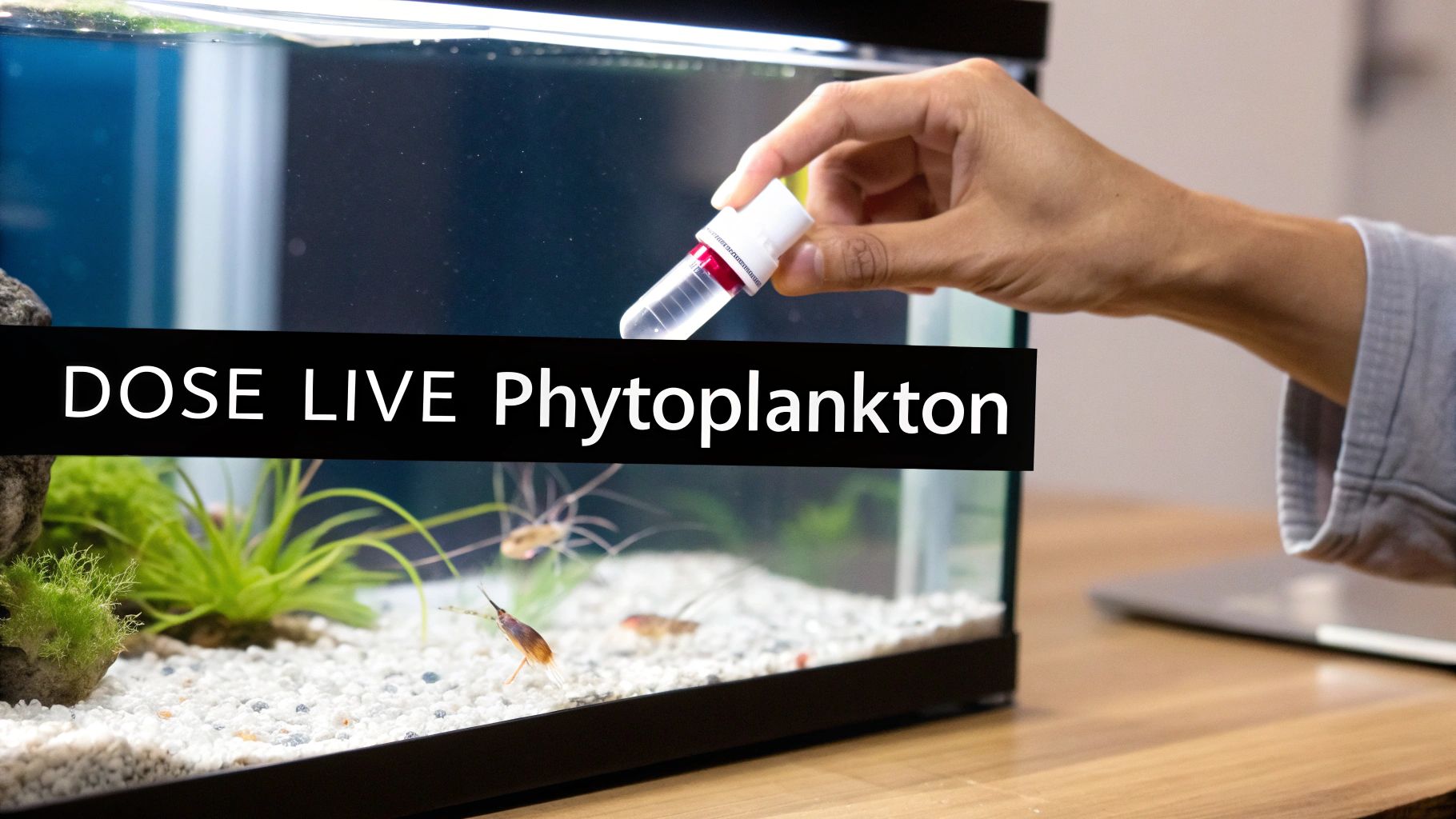
Knowing what copepods eat is one thing, but actually putting that knowledge to work is what makes a reef tank truly come alive. The single most effective way to nourish your copepod population is by dosing live phytoplankton. It's the complete nutritional package, delivered in a form they can easily grab.
Unlike powdered or preserved foods, live phytoplankton cells stay suspended in the water column. This is a huge advantage. It gives your copepods plenty of time to find and eat their meal before it settles into the rockwork or gets yanked out by the filtration. Think of it as a slow-release, floating buffet perfectly designed for your tank’s tiniest residents.
Powdered foods? They often sink like a rock or dissolve, which can lead to nutrient spikes without ever feeding the intended critters. Live phyto, on the other hand, does double duty. Any uneaten cells will actually consume nitrates and phosphates, actively helping to polish your water quality.
Creating a Consistent Feeding Schedule
Consistency is everything when you're trying to establish a robust, self-sustaining copepod colony. A random feeding schedule will just lead to population booms and busts. A steady, predictable routine creates the stability they need to thrive.
For most reef tanks, a great place to start is dosing live phytoplankton 2-3 times per week. The goal isn’t to turn your water into pea soup. You're just looking for a light, consistent "haze" that clears up within a few hours.
Here’s a simple game plan for dosing:
Wait for Lights Out: Add your phytoplankton after the main tank lights have turned off. This is when copepods are most active and out in the open, away from hungry fish.
Pause Your Equipment: For about an hour after dosing, it's a good idea to shut down your protein skimmer and UV sterilizer. This prevents them from accidentally removing all the food you just added.
Observe and Adjust: The right amount really depends on your tank's bioload. Start with the recommended dose on the bottle and watch. If the water clears too fast, you might need more. If it stays cloudy, you can cut back.
Want to see if it's working? One of the best signs of a well-fed population is to do a "flashlight test" at night. About an hour after the lights go out, shine a flashlight on your aquarium glass. If you see thousands of tiny white specks swarming the surface, congratulations—your copepods are flourishing.
For reef keepers who want to take their pod game to the next level, learning how to culture copepods at home can provide a virtually endless supply for your reef. This hands-on approach gives you the ultimate control over their diet and numbers, ensuring your fish and corals never run out of this incredible live food.
Common Questions About Feeding Copepods
Even with a solid game plan, questions are bound to pop up. Understanding the little details of what copepods eat and how they behave can be the difference between a population that just gets by and one that absolutely explodes. Here, we'll tackle some of the most common questions hobbyists have about keeping their tiny cleanup crew well-fed and happy.
Think of this as your go-to guide for fine-tuning your feeding routine. These answers should give you the confidence you need to manage your copepod colony like a pro.
How Do I Know if My Copepods Are Getting Enough Food?
One of the best signs of a healthy, well-fed copepod population is simply seeing them. The easiest trick? Wait about an hour after your main tank lights go out, then grab a flashlight and shine it on the aquarium glass.
If you see thousands of tiny white specks zipping around, you're in business. Your population is thriving. But if you have to squint to spot just a few, they might be struggling from a lack of food or getting eaten too quickly.
Another great indicator is the health of the animals that depend on them for food. Mandarinfish, certain wrasses, and even many corals will look more vibrant and behave more actively when their live food source is everywhere. A fat, active mandarin is the best advertisement for a healthy copepod buffet.
A thriving copepod population is never invisible. Their presence on the glass at night is the most reliable sign that your feeding strategy is working perfectly and your tank's microfauna is in excellent health.
Can Copepods Survive on Fish Waste Alone?
While copepods are fantastic detritivores and will absolutely help clean up fish waste and leftover food, it's not enough to sustain a large, breeding population. Think of detritus as leftovers—it lacks the critical fatty acids (like DHA) and other key nutrients found in fresh, live phytoplankton.
Relying only on tank waste might keep a small baseline number of copepods alive, but it will never fuel the population boom needed to continuously feed hungry fish and corals. To build a truly self-sustaining colony, you absolutely have to supplement with high-quality live phytoplankton.
Is Live Phytoplankton Better Than Powdered Food?
When it comes to feeding copepods, live phytoplankton is almost always the superior choice. The reasons are pretty straightforward and practical.
Superior Nutrition: Live algae brings a complete, unoxidized nutritional profile to the table that powdered foods just can't match. All the essential fatty acids and vitamins are fully intact and ready for absorption.
Stays in the Water Column: Because it's alive, phytoplankton stays suspended in the water much longer. This gives your copepods plenty of time to find and eat it. Powdered foods often sink like a rock or get sucked into the filter before they do any good.
Improves Water Quality: This is a huge bonus. Any phytoplankton that doesn't get eaten will actually consume nitrates and phosphates from the water, helping keep your tank cleaner. Uneaten powdered food, on the other hand, just rots and adds to the nutrient problem.
Ultimately, live phytoplankton is a more natural, effective, and beneficial way to give your copepods exactly what they'd be eating in the wild.
Ready to provide your copepods with the highest quality nutrition available? PodDrop offers a range of live phytoplankton and copepod blends to create a thriving, self-sustaining ecosystem in your tank. Explore our live nutrition solutions at PodDrop and bring your reef to life.