

How to Add Copepods to Tank for a Thriving Reef (how to add copepods to tank)
Adding copepods to your reef tank is about so much more than just feeding a picky fish. You're actually kickstarting a vital micro-ecosystem. The whole process involves adding live cultures to your aquarium—usually at night—to give them the best shot at finding cover in your rockwork and sand bed before they become a quick snack.
Why Copepods Are Your Reef's Unsung Heroes
Before you pour that first bottle of pods into your system, it’s worth taking a moment to appreciate what you’re really adding. These aren't just "fish food." Far from it. Copepods are easily the hardest-working residents you'll probably never see, and they lay the groundwork for a stable, self-sufficient reef by wearing multiple hats at once.
Just think of them as a relentless, microscopic cleanup crew that never clocks out. They are constantly busy, tackling jobs that are absolutely essential for the long-term health and balance of your tank.
The Cleanup Crew in Action
Copepods have a voracious appetite for all the stuff you don't want growing in your aquarium. They are constantly grazing on the early stages of nuisance algae, nipping potential outbreaks in the bud before they ever take hold. Even better, they devour detritus—that organic gunk from fish waste and uneaten food that settles in your sand and on the rocks.
By eating all this waste, they turn a problem into a resource. Instead of letting detritus break down and spike your nitrates and phosphates, the pods convert it into nutritious, protein-packed little morsels. It's a perfect, natural form of nutrient export that helps you keep your water pristine.
This cleanup duty also means they out-compete undesirable organisms. A healthy, thriving copepod population can make it much harder for pests like cyanobacteria to get established by simply eating up the available resources before that "red slime" can move in.
By occupying various little ecological niches within the tank, a diverse population of copepods and other microfauna can prevent pests from ever gaining a foothold. It's one of the most effective natural prevention strategies you can use for a cleaner, more balanced aquarium.
A Living Link in the Food Web
The real magic of a copepod population is its role in creating a self-sustaining food web right inside your tank. When you seed your aquarium with copepods, you aren't just dropping in a single meal; you're planting a reproducing food source. This creates a constant, trickling supply of highly nutritious live food for a huge range of your tank's inhabitants.
- Corals: Plenty of corals, especially LPS and even some SPS, actively hunt and eat copepods. This live food provides essential fatty acids and proteins that fuel incredible growth and really make their colors pop. You can learn more about how copepods support coral growth in our detailed article.
- Fish: For finicky eaters like Mandarin Gobies, Scooter Blennies, and Pipefish, a thriving pod population isn't just a treat—it's an absolute necessity for their survival in an aquarium.
- Invertebrates: Everything from filter feeders and shrimp to crabs will benefit from the tiny copepod nauplii (the larvae) floating around in the water column.
Ultimately, establishing this micro-ecosystem leads to a far more stable and vibrant reef. Your tank becomes less dependent on you for constant cleaning and feeding, transforming into a little world that doesn't just survive but truly flourishes on its own.
Choosing the Right Copepods for Your Aquarium
Stepping into the world of live copepods can feel a bit like staring at a restaurant menu with too many options. You’ll see names like Tisbe, Tigriopus, and Apocyclops, and it’s easy to feel unsure about which one will actually make a difference in your tank.
The key is to match the copepod species to your specific goals and your aquarium's unique environment.
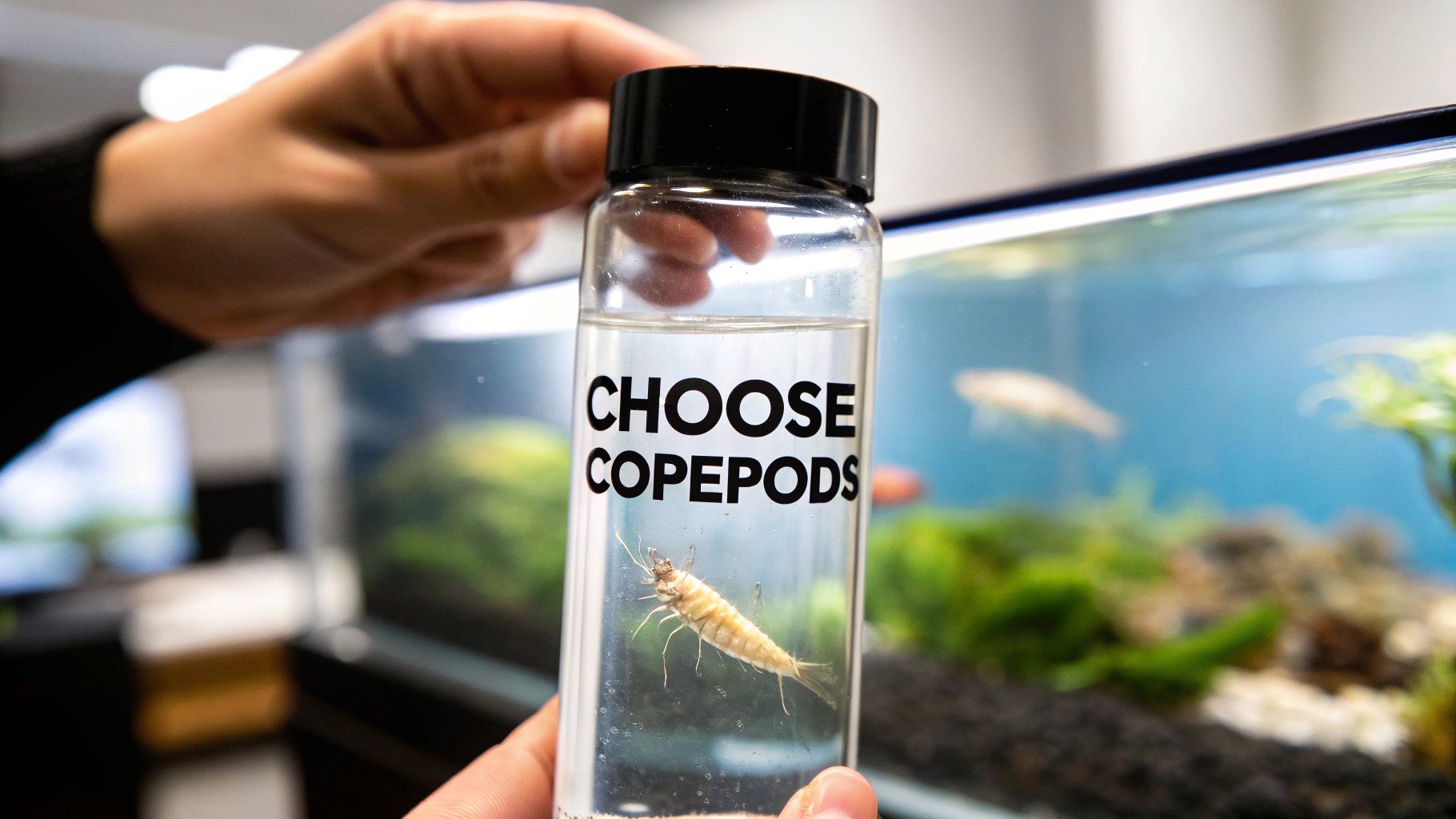
Making a strategic choice is about more than just picking a name from a list; it’s about understanding the unique behavior of each species. Some are homebodies that prefer to crawl on rocks and substrate, while others are active swimmers.
Knowing these differences helps you invest in the right microfauna for your reef.
Benthic vs. Pelagic Copepods: Location, Location, Location
The first big question is: where do you want your pods to hang out? This single factor heavily influences their effectiveness, whether you're trying to clean the sand bed or feed hungry fish in the water column.
-
Benthic Copepods: These are your bottom-dwellers. Species like Tisbe biminiensis are masters of hiding in the nooks and crannies of your live rock and sand bed. As exceptional detritivores, they’re constantly working to clean up waste. Their tendency to stay hidden is exactly what makes them ideal for establishing a self-sustaining population that can feed picky eaters over the long term.
-
Pelagic Copepods: These guys, like Apocyclops panamensis, spend most of their time swimming freely in the open water. This makes them an easily accessible snack for corals and fish that feed from the water column. They might get eaten faster, but they deliver an immediate, highly nutritious food source that can trigger a strong feeding response.
Then you have species like Tigriopus californicus, which are really the best of both worlds. They tend to crawl on surfaces but will readily jump into the water when disturbed, making them a fantastic all-around choice for both seeding a tank and feeding its inhabitants.
The real power move? Introduce multiple species at once. A diverse blend ensures that you populate every niche in your aquarium—from the deepest crevices in the rockwork to the open water—creating a much more robust and resilient micro-ecosystem.
Matching Pods to Your Purpose
Okay, let's connect these behaviors to what you're actually trying to accomplish. Your end goal will point you directly to the best species or blend for the job.
Are you trying to establish a permanent food source for a Mandarin Goby? Then your priority has to be a species that reproduces quickly and is a master of hide-and-seek. Tisbe is the undisputed champion here. Its tiny size and benthic nature allow it to build a massive population in your refugium and rockwork, providing a constant stream of nauplii (babies) for your Mandarin to hunt.
On the other hand, if your main goal is to directly feed hungry corals or less-picky fish like wrasses and clownfish, a larger, more active pod is better. The jerky swimming motion of Tigriopus is like a dinner bell, triggering an immediate feeding response. They’re a much more substantial meal and are perfect for "broadcast feeding" your tank.
For a deeper dive into these differences, check out our guide on comparing popular copepod species for marine aquariums.
The Power of a Pod Blend
For most reef keepers, the smartest strategy isn't choosing just one species but introducing a curated blend. Think of it like assembling a cleanup crew where each member has a specialized job. A high-quality blend combines the strengths of multiple species to cover all your bases.
A well-designed blend might include:
- Tisbe biminiensis to colonize the substrate and act as the primary reproductive engine of your pod population.
- Tigriopus californicus to serve as a larger, more visible food item for fish and larger polyp corals.
- Apocyclops panamensis to stay in the water column, feeding filter feeders and corals that grab food from the flow.
This multi-species approach builds a much more dynamic and stable food web within your aquarium. It ensures that no matter what new fish or coral you add, there will be a suitable food source available, creating a truly flourishing reef.
Below is a quick reference table to help you visualize the different roles these popular copepod species play in a reef tank.
Copepod Species Comparison for Reef Tanks
| Species | Size (Adult) | Behavior | Best For | Notes |
|---|---|---|---|---|
| Tisbe biminiensis | 100-300 µm | Benthic (bottom-dwelling) | Seeding refugiums, feeding mandarins, cleanup crew | Excellent at hiding and reproducing. The backbone of a sustainable pod population. |
| Tigriopus californicus | 800-1400 µm | Semi-Benthic | Direct feeding fish & LPS corals, broadcast feeding | Large and jerky swimming motion triggers a strong feeding response. Very hardy. |
| Apocyclops panamensis | 400-600 µm | Pelagic (water column) | Feeding corals, filter feeders, and larval fish | Stays in the water column, making it an easy target for hungry mouths. |
| Euterpina acutifrons | 400-700 µm | Pelagic | General-purpose feeding for fish and corals | A good all-around pelagic pod that adds diversity to the water column. |
Using this table can help you decide whether a single species or a strategic blend is the right call for your aquarium's specific needs.
How to Get Copepods into Your Tank the Right Way
So, your bottle of live copepods has finally landed on your doorstep. This is the moment where a bit of smarts can turn a simple purchase into a long-term investment in your reef's health. The whole point here is to give these tiny critters the absolute best shot at survival. We want them to find shelter, get settled, and start making more copepods before your fish even know the buffet is open.
Just dumping the bottle into your display tank in the middle of the day? That's the fastest way to turn your expensive pods into a very quick, very temporary fish snack. A few thoughtful steps, however, can make a huge difference, helping them become a self-sustaining part of your little ocean.
Setting the Stage for Success
Before you even think about cracking open that bottle, you need to prep the tank. Think of it as rolling out the welcome mat for your new microscopic residents. This is all about cutting down the immediate threats and making the environment as calm as possible.
The single most important thing you can do is add copepods after your main display lights have been off for at least an hour. When the tank is dark, most fish are tucked in for the night or are far less active. This darkness is the perfect cover for the copepods to spread out and find safety in your rockwork and sand.
Next, you'll want to create a low-flow, peaceful environment.
- Kill the protein skimmer. Skimmers are fantastic at pulling out gunk, but they're not smart enough to tell the difference between waste and a copepod. They'll suck the pods right out of the water. Keep it off for at least 1-2 hours after you add them.
- Shut down the high-flow powerheads. A water-blasting powerhead is like a hurricane for a copepod. It prevents them from settling down into the nooks and crannies. If you can, turn off everything but your main return pump for about 30-60 minutes.
- Pause UV sterilizers and filter socks. Just like skimmers, these filtration tools are indiscriminate. They'll trap and remove your new pods from the water column before they even have a chance to find a home.
By creating this calm, dark tank, you're stacking the deck in the copepods' favor. You're giving them that crucial quiet window they need to get their bearings.
Picking Your Spot: Location, Location, Location
Where you add the copepods is just as critical as when. You've got two main options, and the best one really depends on your setup and what you're trying to accomplish.
Hands down, the most effective method is to seed your refugium first. A fuge, especially one packed with chaeto or other macroalgae, is basically a five-star resort for copepods—no predators allowed. By dumping the whole culture in here, you give them a safe haven to reproduce without any pressure from fish. Their population will explode, and a steady stream of pods will naturally overflow into your display, creating a continuous, live food source.
No refugium? No problem. You can add them directly to the display tank, but you have to be a bit more tactical. You can't just pour them into the open water.
Pro Tip: A simple turkey baster is your best friend for this job. Use it to gently suck up the pods and water from the bottle, then carefully squirt them deep into the crevices of your live rock and onto the sand bed. This helps them bypass hungry fish and puts them right into safe territory from the get-go.
This direct placement method helps ensure a much higher percentage of your initial pod population survives to start breeding inside the main aquarium.
The Actual Introduction
With the tank prepped and your location chosen, it's go-time. Don't stress about temperature acclimation like you would with a fish; copepods are incredibly tough. The key here is just being gentle.
- Gently turn the bottle upside down a few times to get the copepods mixed evenly throughout the water. Don't shake it like a cocktail; you can easily damage them.
- If you're seeding a refugium, slowly pour the bottle's contents right into the macroalgae.
- For a display tank seeding, use that turkey baster (or even some airline tubing to start a siphon) to place the pods directly into your rockwork. Hit a few different spots around the tank to spread them out.
This careful process is what separates a successful, reproducing colony from an expensive fish dinner. It's a small-scale version of what the pros do. Commercial aquaculture facilities, for example, will seed their huge tanks at densities of 10,000-20,000 nauplii (baby copepods) per cubic meter. By harvesting these daily, they can slash malformation rates in sensitive fish species by up to 40%. You can find more fascinating insights on these large-scale techniques over at The Fish Site.
By taking a few extra minutes to do it right, you’re mimicking these proven principles. You're ensuring enough of your pods survive to build a breeding colony, turning that one-time buy into a permanent, living food factory that will benefit your entire reef for years.
Cultivating a Self-Ssustaining Copepod Population
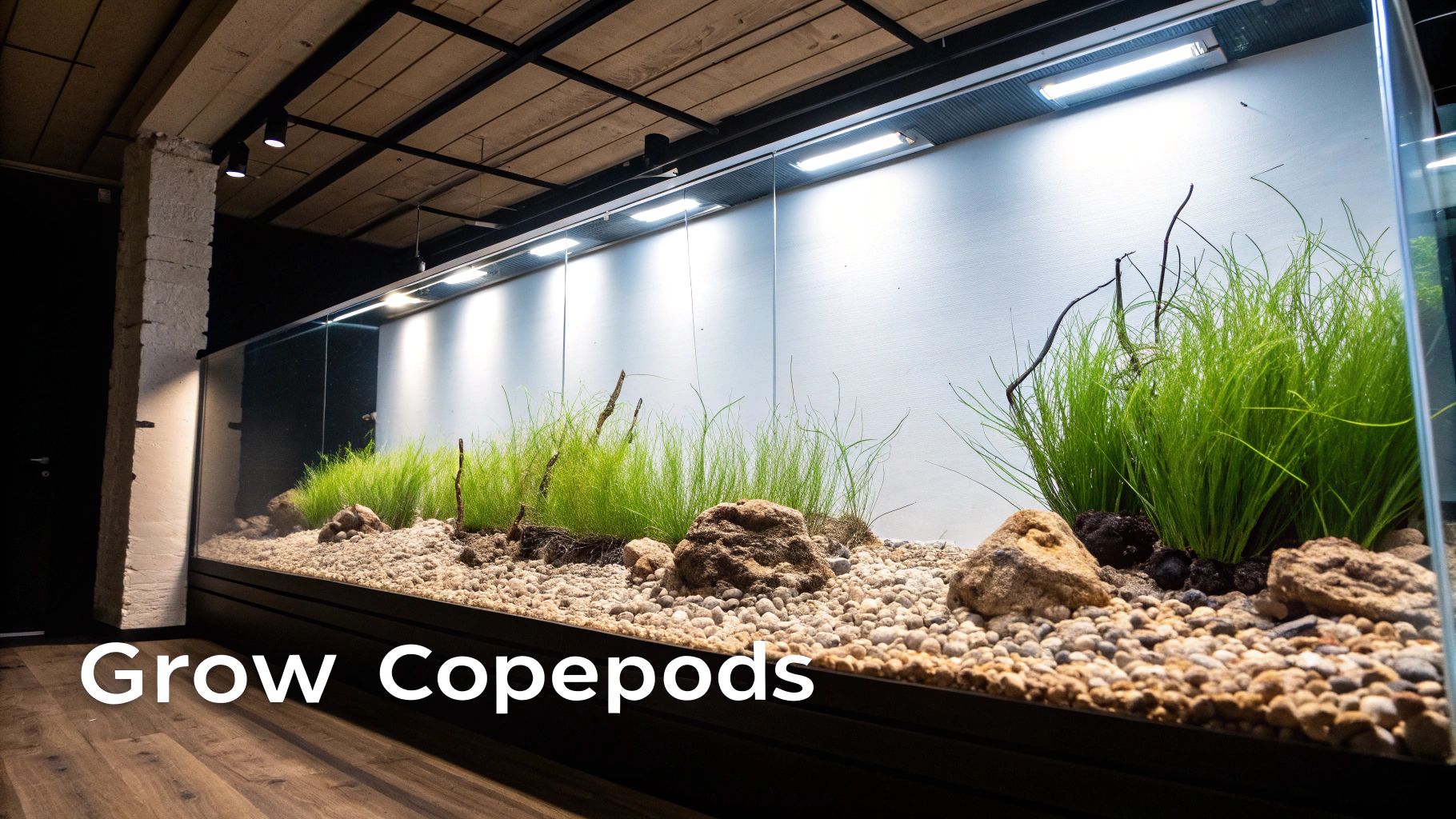
Tossing a bottle of copepods into your tank is a great start, but it's just that—a start. The real magic happens when you turn that initial seeding into a thriving, permanent colony that reproduces on its own. It's a total mindset shift. You stop being a food delivery service and start becoming an ecosystem architect.
The goal is simple: get your pods reproducing faster than your fish and corals can eat them.
When you nail this, you create incredible stability for your reef. Your pickiest eaters, like Mandarin Gobies or Pipefish, will have a constant, 24/7 buffet. Your tank transforms from a system that depends on you for every meal into a more balanced, natural environment.
The Refugium: Your Pod Paradise
If you're serious about this, the single most powerful tool in your arsenal is a refugium. Think of it as a safe house for your pods. Tucked away in your sump, it's a protected zone where they can breed like crazy without getting hunted down.
Pack that refugium with macroalgae like chaetomorpha, and you've basically built a five-star copepod resort. The tangled structure of the chaeto provides a massive surface area for pods to graze on biofilm and lay their eggs. It's the perfect predator-free nursery.
As the population explodes in the 'fuge, the overflow of adult pods and their babies (nauplii) gets swept into your display tank. This creates a constant, natural food delivery system. For anyone keeping pod-dependent fish, a refugium isn't just a nice-to-have; it's practically a necessity.
Don't Forget to Feed Your Pods
Just like everything else in your tank, copepods need to eat to thrive and reproduce. They're great little scavengers, but you can kick their population growth into high gear by feeding them directly. This is where phytoplankton enters the picture.
Dosing live phytoplankton a few times a week is like pouring gasoline on a fire. It’s a direct, high-quality food source that fuels their reproductive cycle, leading to more eggs and a faster population boom.
Here's a pro-tip: Dosing phytoplankton doesn't just supercharge your pod population. It’s also a fantastic direct food source for many corals and other filter-feeders, boosting the health and vibrancy of your entire reef.
You can also toss in other foods to round out their diet, like a pinch of spirulina powder or specialized invertebrate foods. This is especially important in those super clean, ultra-low nutrient systems where natural food sources are hard to come by. If you want to dive deeper, our guide on how to culture copepods at home breaks down these techniques in detail.
Create Safe Havens and Pod Hotels
No refugium? No problem. You can still foster a healthy copepod population right in your display tank by getting a little creative. The trick is to give them places to hide and breed away from hungry fish.
-
Rubble Rock Piles: A small pile of live rock rubble tucked into a low-flow corner of your tank works wonders. This "pod hotel" creates a network of nooks and crannies that are perfect for a breeding colony.
-
Dense Macroalgae: Planting decorative macroalgae like Dragon's Breath or Red Gracilaria in your display can act as a mini-refugium, offering both food and shelter.
-
Deep Sand Beds: If you have a sand bed that's a few inches deep, it’s a perfect home for benthic species like Tisbe. They can burrow down and reproduce safely, out of sight from most predators.
These simple additions can dramatically increase your tank's carrying capacity for copepods. To really make it work, aim for a pH of 7.8-8.2 and keep ammonia below 0.1 ppm. When the environment is right, you can see population booms in just 10-14 days, reaching densities of 50-100 individuals per liter. By applying these strategies, you’re not just adding pods; you're building a sustainable food web for your reef's future.
Troubleshooting Common Copepod Problems
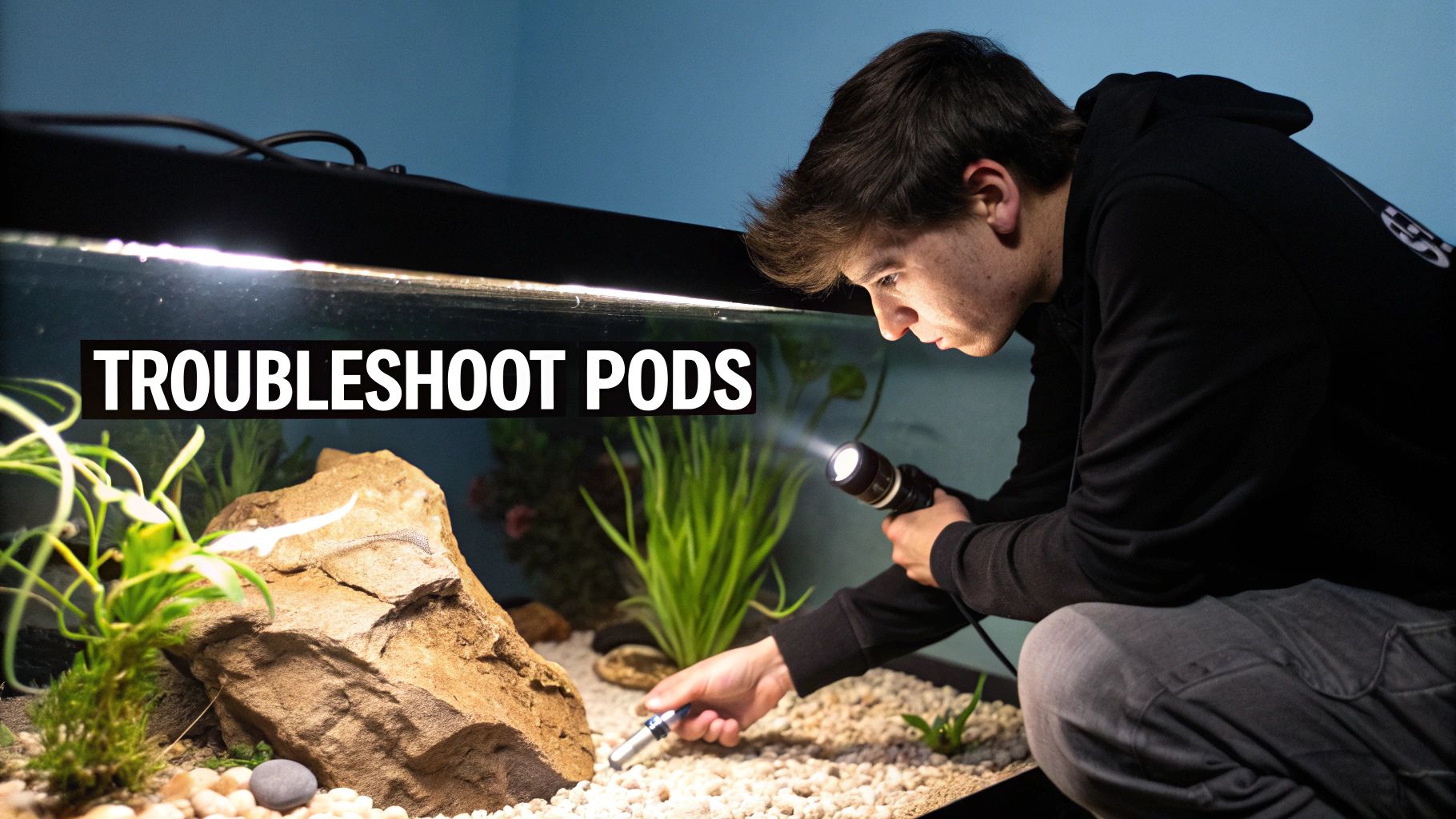
So you've carefully added a fresh culture of copepods to your tank, killed the lights, and waited. The next day, you’re peering into the aquarium, expecting to see a bustling city of micro-crustaceans, but... nothing. It’s a common moment of panic for reefers, but don't sweat it—this almost never means you’ve failed.
This disappearing act is completely normal. Most of the beneficial copepod species we use are masters of stealth. Their first instinct is to dive into the rockwork and sand bed to escape predators, which is exactly where you want them to be.
Why Can't I See My Copepods?
The number one question we get after someone adds pods is, "Where did they go?" If you've added benthic species like Tisbe, their entire survival strategy revolves around becoming invisible. They immediately seek refuge deep within your live rock and substrate.
Want to confirm they're still in there? Grab a flashlight and try this simple trick:
- Wait until the tank has been totally dark for at least a couple of hours.
- Shine the light on a small patch of glass or rockwork. A red light is even better, as it's less likely to spook them.
- Look closely for tiny white specks darting away from the beam. Those are your pods.
This late-night check-in is the most reliable way to get a visual. Seeing even a few is a fantastic sign that your population is alive and settling in for the long haul.
Don’t judge your success by what you can see during the day. A hidden population is a protected, breeding population. The real proof is the long-term health of your pod-eaters, like a fat and happy Mandarin Goby, and a cleaner tank.
Are My Fish Eating Them Too Fast?
Another common fear is that your fish scarfed down the entire culture overnight. This is a legitimate concern, especially if you have wrasses, dottybacks, or other hungry micro-predators. While some will definitely get eaten right away, a proper seeding dose is designed to be large enough to overcome that initial feeding frenzy.
If you suspect your fish are wiping out the pods before they can establish a foothold, here are a few things you can do to give them a fighting chance:
- Feed Your Fish First: Right before adding the pods, give your fish a normal meal of their usual food. A fish that isn't starving is far less likely to go on an immediate hunting spree.
- Seed the Refugium: This is the best strategy. Adding pods to your 'fuge first gives them a predator-free zone to breed, creating a constant, slow-release food source for the display tank.
- Add Booster Doses: For a tank with high demand, plan on adding smaller "booster" bottles of copepods every few weeks. This reinforces the population until it becomes self-sustaining.
The goal is to get the copepods’ reproduction rate to outpace the rate at which they're being eaten. Even commercial aquaculture facilities deal with this. They often hatch eggs in dedicated tanks at densities of 100,000-200,000 per liter, hitting 80-90% hatch rates before moving them to larval tanks to overwhelm predation. You can read more on these large-scale methods in this article from Fish Farming Expert. By using these tips, you’re applying the same principles to make sure your investment thrives.
Your Copepod Seeding Questions Answered
Even when you've done your homework, adding something new like copepods to your tank is going to bring up questions. It happens to everyone. Let's tackle some of the most common things reefers ask about seeding their aquariums.
Getting these details right from the start can be the difference between a thriving pod population and one that fizzles out. Think of this as the practical advice you need after the pods are in the water.
How Often Should I Add New Copepods to My Tank?
That's a fantastic question, and the honest answer is: it depends on your tank.
For a brand-new reef, your best bet is to go big with the initial seeding. You want to establish a strong, breeding population right out of the gate. Coming back with a smaller "booster" dose about a month later is a great way to really lock in their numbers.
Now, if you're working with an established tank—especially one with hungry fish like mandarins, pipefish, or certain wrasses—you're dealing with constant predation. In that scenario, adding a fresh culture every 1 to 3 months helps keep the population from being wiped out. On the flip side, if you have a mature, packed refugium and you’re dosing phytoplankton, you might only need to add new pods once a year just to keep the gene pool fresh.
Is It Possible to Add Too Many Copepods?
Short answer: no. It's pretty much impossible to overdo it with copepods.
Unlike dosing chemicals or even overfeeding with processed foods, copepods won't foul your water or cause a nutrient spike if some don't make it. They're a natural, living part of the ecosystem.
Any "extra" pods will just find a nook in the rockwork to hide and reproduce, or they’ll become a super nutritious snack for your fish and corals. In fact, a larger initial dose is what we usually recommend—it dramatically increases the odds that enough pods survive the initial fish frenzy to establish a breeding colony. The only real limit here is your wallet, not your tank's biology.
The whole idea of "overdosing" on copepods just doesn't apply to a reef tank. A higher initial number is your best insurance policy for establishing a self-sustaining colony, which is really the end goal.
Will Copepods Survive Without a Refugium?
They absolutely can, but you have to be a bit more deliberate about it. Without that safe haven of a refugium, your display tank's live rock and sand bed become their main hiding spots. This means your technique for adding them is crucial.
To give them a fighting chance in a display-only system:
- Wait until the lights go out. This gives them cover from hungry, active fish.
- Turn off your pumps, powerheads, and skimmer for at least 30-60 minutes. Let them settle into the rockwork instead of getting blasted into the water column.
- Create "pod piles." A few small pieces of rubble rock tucked into a low-flow corner can become an instant pod condominium.
In a tank without a 'fuge, regularly dosing phytoplankton becomes non-negotiable. They have fewer safe places to graze on biofilm, so giving them a direct food source floating right in the water is the best way to keep them fed and breeding.
What Is the Difference Between Live Copepods and Copepod Eggs?
This one's simple but important. Live copepods show up ready for action—you get a mix of adults, sub-adults, and nauplii (babies). This provides an immediate, multi-stage food source for your tank's inhabitants and a population that's ready to start breeding on day one. For seeding a tank or feeding picky eaters, live is the way to go.
Copepod eggs (or cysts) are basically dormant pods in waiting. They have a much longer shelf life and are used heavily in commercial aquaculture, but they need very specific conditions to trigger hatching. For the home aquarist, starting with a live, multi-stage culture is far more reliable and effective for getting a colony established quickly.
Ready to build a vibrant, self-sustaining ecosystem in your reef? PodDrop Live Aquarium Nutrition provides the high-quality, lab-cultured copepods and phytoplankton you need to see real results. Boost your biodiversity and watch your tank flourish by visiting us at https://www.getpoddrop.com.