

Hair Algae Eaters Marine: Your Guide to a Cleaner Reef
Staring at a stubborn bloom of green hair algae can feel like you're losing a war inside your own aquarium. These unwelcome green strands are more than just an eyesore—they're a bright, waving flag signaling an imbalance in your reef's delicate ecosystem. The best hair algae eaters marine aquarists rely on are a combination of hardworking fish and invertebrates that naturally graze on this nuisance, restoring the balance and beauty you work so hard to maintain.
The Unseen Battle Beneath the Surface
Think of your reef tank as a pristine garden and hair algae as the invasive weeds. If you let them go, these algae will choke out your prized corals by blocking essential light and aggressively stealing nutrients from the water. It’s a silent, slow-moving invasion that can quickly overrun even the most carefully kept systems, turning a vibrant underwater landscape into a monotonous green field.
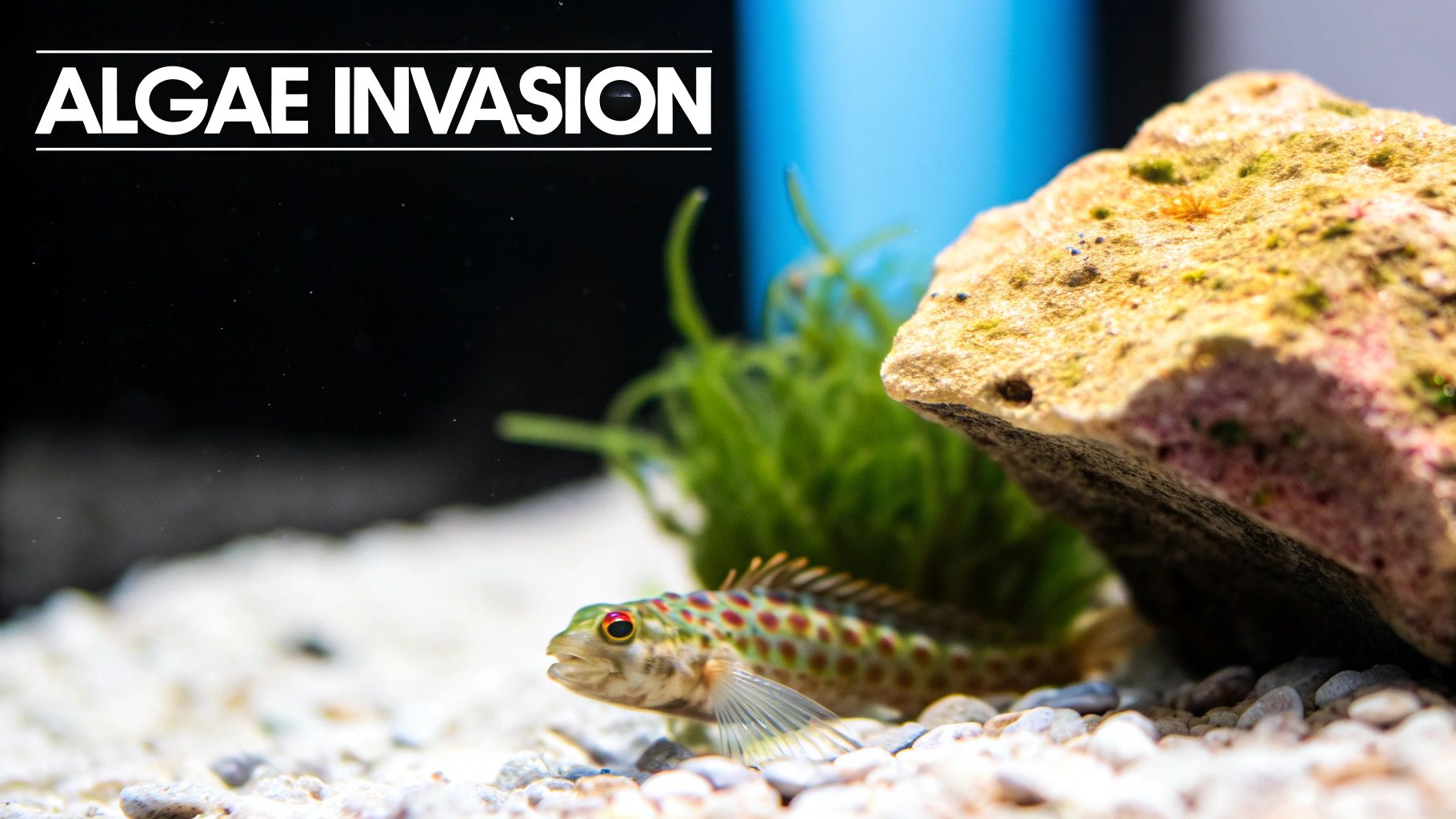
This isn't just about looks; it’s about the very health of your miniature ocean. The presence of hair algae almost always points to an underlying issue, typically an excess of nutrients like nitrates and phosphates. While pulling it out by hand and doing water changes can help, they're often just temporary fixes to a deeper problem.
Nature's Solution to a Common Problem
The most sustainable—and effective—strategy is to recruit nature’s own cleanup crew. Bringing in dedicated hair algae eaters marine life provides a biological solution that works around the clock, long after you've put the siphon away. These animals aren't just tools; they're essential "gardeners" that actively maintain the health of your reef.
- Continuous Maintenance: Unlike you, these critters don't take weekends off. They graze constantly, keeping algae from ever getting a real foothold.
- Reaching Difficult Spots: Many invertebrates can get into all the nooks and crannies in your rockwork that are impossible for you to clean.
- Restoring Natural Balance: The right cleanup crew helps create a more self-sustaining ecosystem, reducing how much you have to rely on additives and elbow grease.
With reef-keeping's growing popularity, managing algae effectively has become more critical than ever. The global reef aquarium market was valued at around USD 5.49 billion in 2023, driven by hobbyists just like you who are dedicated to cultivating healthy coral ecosystems. In these tanks, out-of-control algae can directly harm corals, making a reliable cleanup crew an absolutely indispensable asset.
The key is to see these animals as part of a whole system. They address the symptom—the algae—while you work on the root cause, which is almost always nutrient control. This two-pronged attack is the secret to long-term success and a thriving aquarium.
While nuisance algae is a problem, remember that not all algae is bad. Understanding the difference is a huge step toward a balanced tank. For a deeper dive, check out our complete guide to marine aquarium macroalgae. For now, let's get you introduced to nature's best algae fighters and turn your frustration into a plan of action.
Meet the Best Fish for Algae Control
Picking the right fish to tackle a hair algae problem isn't just about finding something that eats greens. You're adding a new personality to your little slice of the ocean—a living, breathing partner with its own needs and a real impact on the tank's community. So, let's go beyond a simple list and properly introduce the most reliable and hardworking fish you can add to a marine aquarium.
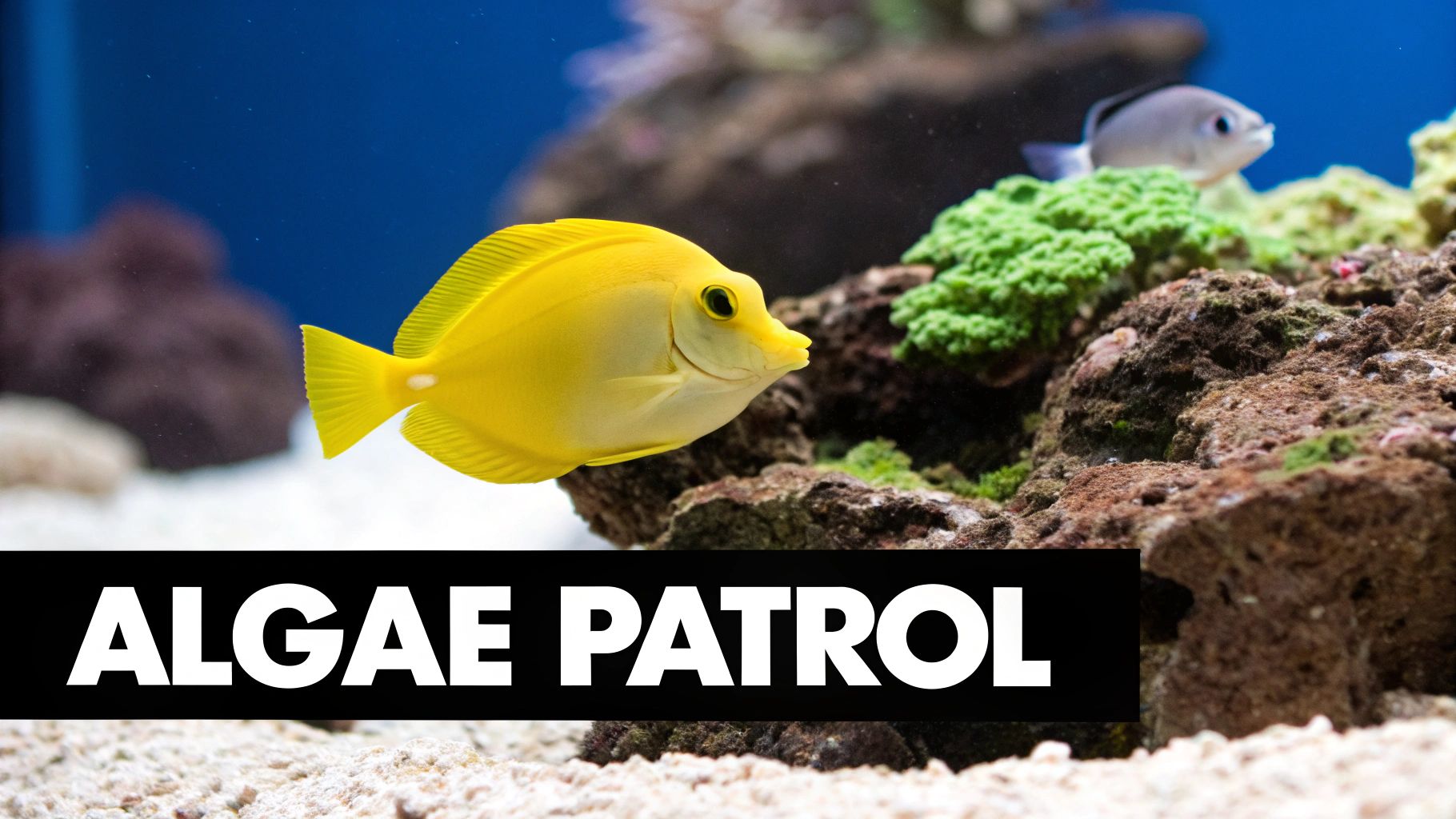
These fish aren't just tools; they're dynamic members of your reef. Getting to know their specific behaviors and requirements is the only way to build a successful partnership where both your tank and the fish thrive.
This approach of using natural solutions is a huge part of why the hobby is growing. The global aquarium fish market was valued at around USD 7.1 billion in 2023 and is expected to hit USD 12.8 billion by 2032. A big driver for that growth is the popularity of effective algae eaters like tangs and blennies. They offer a natural way to keep water clean and stop delicate corals from getting smothered.
Comparing Top Marine Hair Algae Eating Fish
To make your decision a bit easier, here’s a quick-glance table comparing our top contenders. Think of it as a cheat sheet to help you match the right fish to your specific tank setup and algae situation.
| Species | Minimum Tank Size | Reef Safe? | Primary Diet | Temperament |
|---|---|---|---|---|
| Lawnmower Blenny | 30 gallons | Excellent | Hair Algae, Biofilm | Peaceful |
| Yellow Tang | 100 gallons | Yes | Filamentous Algae | Semi-aggressive |
| Kole Tang | 70 gallons | Very Good | Biofilm, Detritus | Semi-aggressive |
| Foxface Rabbitfish | 75 gallons | Yes | Various Algae, Weeds | Peaceful |
Each of these fish brings something different to the table. One might be a specialist for fine algae, while another is a powerhouse for tougher jobs. Let's dig into what makes each one unique.
The Lawnmower Blenny: A Tireless Worker
The Lawnmower Blenny (Salarias fasciatus) absolutely lives up to its name. This fish is a true specialist, spending its days methodically scraping algae off rocks and glass with its funky, comb-like teeth. Its quirky personality, always perching on rocks to survey its domain, makes it a reefer's favorite.
Because they're so laser-focused on their job, they are considered one of the most reef-safe options out there. They just don't care about corals.
- Minimum Tank Size: 30 gallons
- Temperament: Peaceful, but can be territorial with other blennies.
- Reef Safety: Excellent. Shows little to no interest in corals or inverts.
One critical thing to remember with the Lawnmower Blenny is making sure it has enough to eat. In a perfectly clean, algae-free tank, this specialist can actually starve. Be ready to supplement its diet with dried seaweed (nori) or algae wafers if its natural food source runs low.
The Yellow Tang: An Iconic Algae Grazer
Vibrant, active, and always on the move, the Yellow Tang (Zebrasoma flavescens) is an icon in the marine hobby for a reason. It’s a fantastic grazer of filamentous algae, including many types of hair algae, using its pointed snout to pick strands off live rock with precision.
Of course, besides its cleaning duties, the Yellow Tang adds a brilliant splash of color and energy to any aquarium. It is, however, a fish that needs a lot of swimming room to stay healthy and keep its classic tang aggression in check. For more ideas on effective grazers, you might be interested in our guide on the best algae eaters for a reef aquarium.
The Kole Tang: A Precision Cleaner
Where the Yellow Tang is a bold, grab-and-go grazer, the Kole Tang (Ctenochaetus strigosus) is more of a meticulous artist. It uses its bristle-like teeth to scrape up the thin film of diatoms and detritus from surfaces, which often includes the very early, shorter stages of hair algae. This makes it more of a preventative cleaner than a first responder for a full-blown algae invasion.
Its subtle beauty, with a deep brown body covered in fine lines and spots, gives it a sophisticated look. The Kole Tang is also generally more peaceful than its Yellow Tang cousins, but it still needs a well-established tank with plenty of rockwork to graze on all day.
- Minimum Tank Size: 70 gallons
- Temperament: Semi-aggressive, especially toward other tangs with a similar body shape.
- Reef Safety: Very good, though it may occasionally nip at stressed LPS corals.
The Foxface Rabbitfish: A Hardy Solution
For reefers dealing with more stubborn or less tasty types of algae, the Foxface Rabbitfish (Siganus vulpinus) is a secret weapon. It’s known to devour algae that many other herbivores won’t even touch, making it an excellent problem-solver for persistent algae outbreaks.
A huge plus for the Foxface is its hardy nature and peaceful attitude toward most other fish. It does have venomous dorsal spines for defense, so you need to be careful when handling it, but it rarely uses them aggressively in the tank. With its bright yellow body and distinct black-and-white face, it's a beautiful fish and a powerful choice for larger community reef tanks that need serious algae management.
The Unsung Heroes of Your Cleanup Crew
When you look at a stunning reef tank, it's the fish that usually grab your attention with their flashy colors and constant motion. But the real secret to a pristine, algae-free tank often lies with a different group of residents: the invertebrate cleanup crew.
These are the janitors, the ground crew, the methodical workers that get into every nook and cranny where fish can't. Building a solid team of these marine hair algae eaters is hands-down one of the smartest moves you can make for the long-term health of your reef.
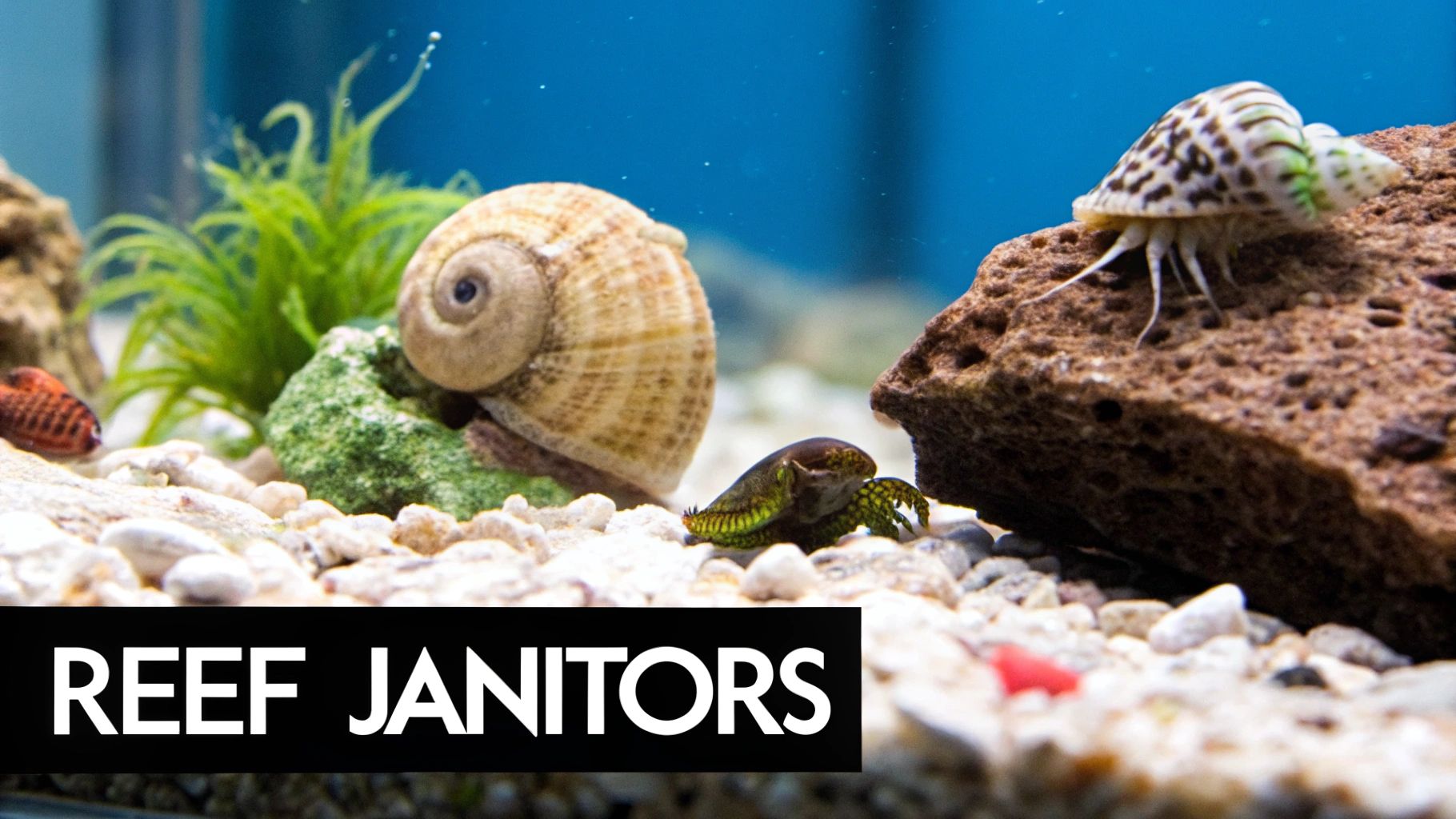
Think of it this way: you wouldn't hire a single person to clean an entire office building. You'd have a specialist for the windows, another for the floors, and someone to handle the detailed work. The same logic applies here. Each invertebrate has a specialty, and combining their skills creates a cleanup strategy that leaves no algae behind.
The Trochus Snail: The Glass and Rock Scraper
First up are the Trochus snails (Trochus sp.). These are the quiet, dependable workhorses of any cleanup crew. With their classic pyramid-shaped shells, they diligently patrol your glass, rockwork, and even equipment, scraping away biofilm, diatoms, and the first hints of hair algae.
What really sets them apart is their uncanny ability to right themselves. Many snails, if they fall and land upside down, are done for. A Trochus, however, will just extend its foot, flip over, and get back to work. This simple survival skill makes them a fantastic long-term investment.
- Role: Glass and flat surface cleaner.
- Best For: Nipping algae growth in the bud before it becomes a real issue.
- Stocking: A good rule of thumb is about one snail per 2-3 gallons of tank volume.
The Turbo Snail: The Heavy-Duty Bulldozer
Got some established patches of hair algae that are starting to look like a green carpet? It's time to call in the heavy machinery. The Turbo snail (Turbo sp.), especially the Mexican Turbo, is the bulldozer you need.
These guys are big, powerful, and have an appetite to match. They can mow down thick mats of hair algae with astonishing speed. But that size and power have a trade-off—they're clumsy. Expect them to occasionally bulldoze over loose frags or corals. They also can't right themselves, so you might have to give them a hand every now and then.
Here's a classic rookie mistake: adding too many Turbo snails at once. They can be so effective that they wipe out their food source and end up starving. Start with just one or two for a medium tank and only add more if the algae is winning.
The Emerald Crab: The Nook and Cranny Specialist
Meet the detailer of your crew: the Emerald Crab (Mithraculus sculptus). These small green crabs are absolute masters at picking algae out of the tiny holes and crevices in your live rock—places snails and fish just can't reach.
While they're famous for devouring bubble algae, they won't turn their noses up at a meal of hair algae either. They are generally reef-safe, but keep in mind they're opportunistic. A hungry Emerald Crab might be tempted to nip at a coral or bother a slow snail. The key is to keep them well-fed so they stick to their real job.
- Role: Crevice and detail cleaner.
- Best For: Getting at stubborn algae in all the hard-to-reach spots.
- Stocking: One crab per 10-15 gallons is usually plenty to keep things in check without causing trouble.
The Sea Hare: The Emergency Algae Demolisher
Okay, so what happens when things get completely out of hand? When you're facing a hair algae apocalypse, you need an emergency response team. That's the Sea Hare (Aplysia sp.).
These bizarre-looking sea slugs are eating machines. A single Sea Hare can obliterate a tank-wide hair algae infestation in just a few days. It's truly incredible to watch. But they are a temporary fix, not a permanent resident. Once the algae is gone, they run out of food and will starve. The common practice is to "rent" one from your local fish store or pass it along to another hobbyist in need after it has saved your tank.
Be warned, they have two quirks. When stressed, they can release a cloud of purple ink, which you don't want in your system. They're also big and squishy, making them incredibly vulnerable to powerhead intakes. Make sure every piece of equipment is covered before you even think about adding one.
By bringing these specialists together, you create a powerful, multi-pronged defense. The Trochus snails run daily prevention, the Emerald Crab handles the detailed rockwork, and the Turbo snail is your heavy-hitter for tough spots. It's this kind of teamwork that keeps a reef clean from top to bottom.
Creating the Perfect Home for Your Algae Eaters
Tossing a few hair algae eaters into your tank and hoping they’ll solve all your problems is a classic rookie mistake. It just doesn't work that way. For your cleanup crew to do its job—and to live long, healthy lives—they need an environment that actually supports them. You have to stop thinking of them as disposable tools and start seeing them as valuable pets with their own set of needs.
Getting their new home right starts the second you bring them home from the store.
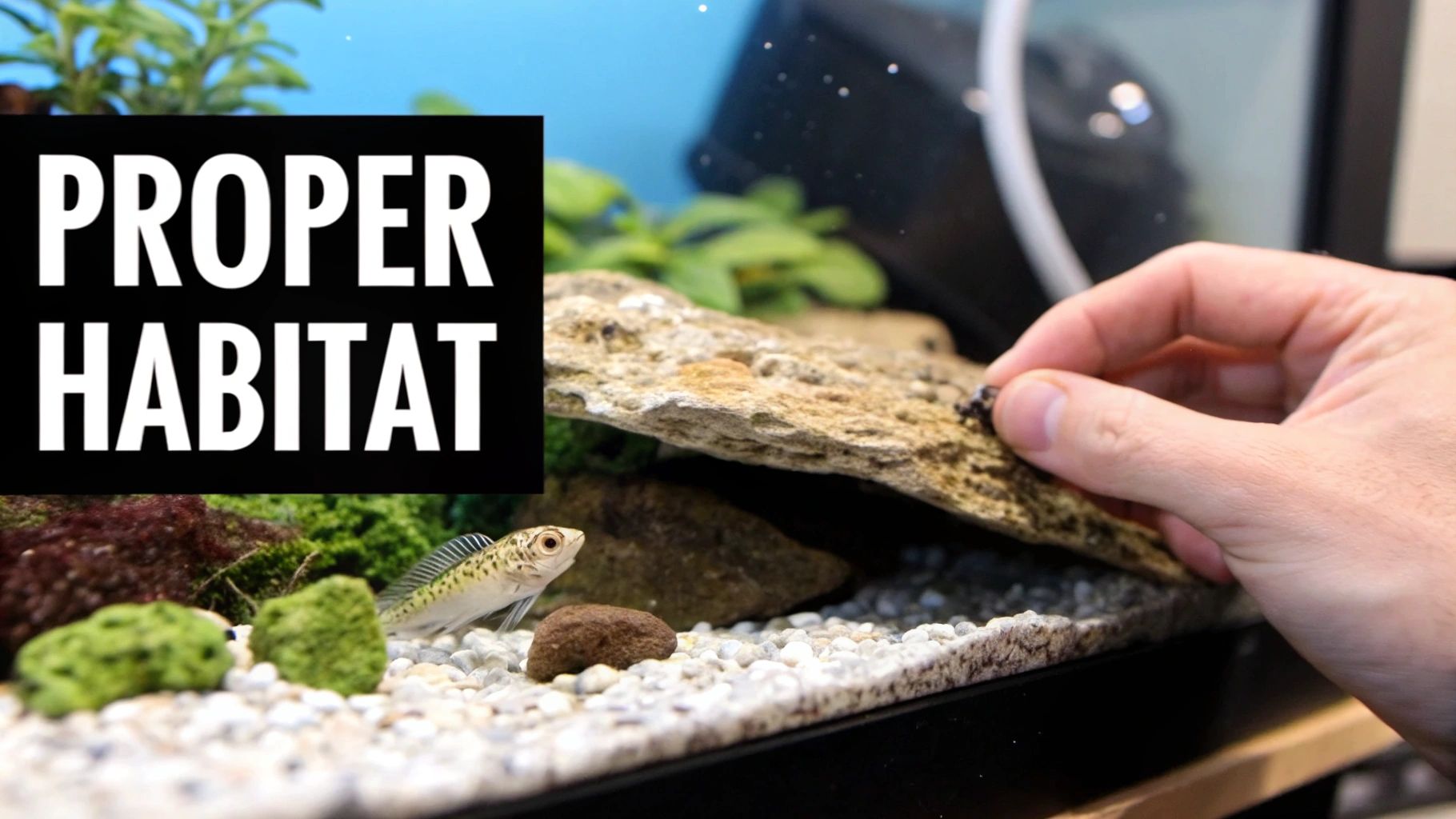
Acclimation Is Non-Negotiable
The trip from the local fish store to your aquarium is a brutal, stressful journey for any marine animal. Proper acclimation is the only way to safely bridge the gap between the water they came in and the water in your tank, minimizing the shock that can easily lead to sickness or even death.
Drip acclimation is the gold standard here, especially for the more sensitive invertebrates like snails, crabs, and shrimp. The process is simple but crucial: it slowly equalizes the temperature, pH, and salinity between their bag and your tank over 30-60 minutes. Rushing this is probably one of the biggest and most preventable mistakes a reefer can make.
A Stable, Mature Tank Is Key
Your algae-eating crew needs the exact same stability your prized fish and corals do. Wild swings in salinity, temperature, or alkalinity are just as stressful for them, weakening their immune systems and making them sluggish. In a reef tank, consistency is everything.
They also do much, much better in a mature aquarium that’s loaded with established live rock. This rockwork isn't just for looks; it's a living, breathing surface that grows the biofilm and microfauna forming a huge part of their natural diet, even when there’s no obvious hair algae to munch on. A brand-new, sterile tank offers almost nothing for them to graze, and they can starve.
A mature ecosystem provides a constant, renewable food source. The microscopic life on your live rock acts as a nutritional safety net, ensuring your cleanup crew has something to forage for between major algae outbreaks.
What Happens When the Algae Is Gone?
This leads us to the most overlooked part of keeping these animals: What do you feed them when they do their job too well? It's a tragic but common story. A reefer gets a great cleanup crew, the algae vanishes, and then the crew slowly starves to death.
It's your job to provide supplemental food to keep them healthy. After all, a well-fed crew is an effective crew.
Here are a few easy ways to keep them nourished:
- Offer Dried Seaweed (Nori): Grab an algae clip and stick a small sheet of nori to your rockwork. Tangs, rabbitfish, blennies, and even snails will go to town on it.
- Use Sinking Algae Wafers: These are perfect for your bottom-dwelling critters like hermit crabs and snails, making sure food gets down to them.
- Provide Spirulina-Based Foods: Flakes or pellets packed with spirulina are fantastic for your herbivorous fish. It keeps them full and happy, which means they're less likely to get bored and start nipping at your corals.
By adding these foods to their diet, you're making a mental shift. You're no longer just fighting an algae problem; you're properly caring for the animals that help you manage your reef's ecosystem. This proactive approach turns them from temporary fixes into permanent, thriving partners in your beautiful marine aquarium.
Building a Balanced Algae Management Strategy
While it's tempting to think a cleanup crew of hair algae eaters marine aquarists recommend is the final answer, they're really just one piece of a much bigger puzzle. Relying only on them is like constantly mopping up a flooded floor but never bothering to fix the leaky pipe.
Real, long-term success comes from getting ahead of the problem. You need a proactive strategy that tackles the root cause of algae growth, not just the green stuff you can see.
The Three Pillars of Algae Control
The best way to think about this is like a three-legged stool. If you kick out any one of the legs, the whole thing comes crashing down, and algae will inevitably win. To keep your reef tank balanced and pristine, you have to manage all three pillars at the same time.
It’s not about finding one magic bullet. It's about being consistent across three key areas that all support each other, creating an environment where your corals flourish and nuisance algae can barely get a foothold.
So, what are these three pillars?
-
Biological Control: This is your cleanup crew—the snails, crabs, and fish we’ve been talking about. Think of them as your front-line defense, constantly grazing on algae as it appears and keeping all the surfaces clean.
-
Nutrient Control: This is where you actively manage the fuel for algae—nitrates and phosphates. Honestly, this is the most critical leg of the stool and the one that needs the most hands-on attention from you.
-
Lighting Control: Algae is a plant, and plants need light to grow. Simple as that. By optimizing your lighting schedule and spectrum, you can give your corals exactly what they need without leaving extra energy on the table for algae to exploit.
When these three work in harmony, you'll find the need for manual scraping and reactive treatments drops to almost zero. You’ll officially switch from fighting algae to preventing it.
A classic mistake is going all-in on one pillar while totally ignoring the others. For instance, throwing more and more algae eaters into a tank with sky-high nitrates is a battle you will always lose. The algae will simply grow faster than your crew can possibly eat it.
A Quick Guide to Hair Algae Management
Managing marine hair algae effectively boils down to a three-pronged strategy. This table breaks down the core pillars of control—Nutrient, Lighting, and Biological—into actionable steps. By balancing these elements, you create a reef environment that naturally resists algae outbreaks, ensuring your corals remain the main event.
| Control Pillar | Key Actions | Tools & Techniques |
|---|---|---|
| Nutrient Control | Minimize nitrate and phosphate input. Remove organic waste before it breaks down. | Reduce overfeeding, use a high-quality protein skimmer, perform regular water changes, and consider a refugium or GFO reactor. |
| Lighting Control | Set a consistent and appropriate photoperiod. Avoid excessive light intensity or duration. | Use an aquarium light timer for an 8-10 hour schedule. Adjust the spectrum and intensity to match coral needs, not algae's. |
| Biological Control | Introduce a diverse team of grazers. Maintain a crew that targets different types and stages of algae. | Select a mix of snails (like Trochus and Cerith), hermit crabs, tangs, and blennies suited for your tank size. |
By consistently applying these principles, you shift from a reactive "clean-up" mode to a proactive management approach, fostering a healthier and more stable reef ecosystem.
Actionable Steps for a Balanced System
Putting this theory into practice is all about building simple, consistent habits.
Start with nutrient input. The easiest fix? Stop overfeeding. Give your fish only what they can devour in a minute or two. Any uneaten food just rots and turns directly into algae fuel. On top of that, a good protein skimmer is non-negotiable; it yanks organic waste out of the water before it becomes a problem.
Next, get your lighting dialed in. For most corals, a photoperiod of 8-10 hours is plenty. Running your lights for 12 hours or more is often just feeding the algae. A simple timer is your best friend here, as it guarantees a consistent schedule day in and day out.
Finally, bring in your cleanup crew as the finishing touch. They are the gardeners who maintain the pristine environment you’ve created through smart nutrient and lighting control. A well-rounded team of hair algae eaters marine life will polish off any small patches that pop up, stopping them from turning into major outbreaks.
This comprehensive approach is the key to a stable system. For a deeper dive, check out our guide on mastering the control of algae in a saltwater aquarium. By balancing these three pillars, you're not just managing algae—you're building a resilient ecosystem that actively resists it on its own.
Your Hair Algae Eater Questions Answered
Even with the best plan in the world, you're still dealing with a living, breathing ecosystem. Questions are going to pop up. Building the perfect team of hair algae eaters marine hobbyists swear by always involves a bit of trial and error. This section is all about tackling those common hurdles head-on, giving you direct answers to help you troubleshoot and make confident choices for your tank.
Think of this as your field guide to managing your cleanup crew. We'll dig into those frustrating moments and offer up some practical advice to get your algae strategy back on track.
What Should I Do If My Algae Eater Isn't Eating Hair Algae?
It’s one of the most frustrating things in the hobby. You bring home a new "employee" for your tank, and they just seem to ignore the very job you hired them for. Before you write them off as lazy, let's run through a quick diagnostic.
First off, check for stress. A new fish, snail, or crab is in a completely alien environment. It needs some time to settle in, map out the territory, and feel safe before it starts its natural grazing behavior. Give it a few days to acclimate to its new home and tank mates before you hit the panic button.
Second, consider the "easy meal" problem. This is, by far, the most common reason a new algae eater goes on strike. If you're overfeeding your other fish, there's a constant buffet of delicious, high-energy leftovers snowing down onto the sand and rocks. Why would they bother scraping away at tough algae when they can just snack on fish food?
The Fix: Try cutting back on how much food you're adding to the tank. This simple change often forces the cleanup crew to get back to work on their primary food source. You can also reignite their natural instincts by clipping a small piece of nori (dried seaweed) to a rock. This often stimulates their grazing response and gives them a little reminder of what they're supposed to be eating.
Finally, double-check that you've identified the algae correctly. Some grazers are specialists. A Lawnmower Blenny, for instance, is an absolute machine when it comes to hair algae but might completely ignore other types like Bryopsis or tough turf algae. Make sure you've matched the right animal to the specific problem you're fighting.
How Many Algae Eaters Do I Actually Need?
When you’re staring down an algae outbreak, the temptation to go nuclear and dump in a massive cleanup crew is powerful. Resist it. This is a classic mistake that often backfires, leading to a much bigger problem down the road: starvation.
It's always, always better to start slow and add more crew members later if you need them. This approach lets you watch their impact and avoids the all-too-common scenario where the crew eats itself out of house and home, leading to a population crash.
Here are a few good starting points:
- Grazing Snails (like Trochus or Cerith): A solid baseline is one snail per 1-2 gallons of tank volume.
- Hermit Crabs: For the smaller, reef-safe species, one crab per gallon is a decent starting number.
- Emerald Crabs: These guys can be a bit more territorial. Stick to one crab per 10-15 gallons to keep the peace.
- Algae-Eating Fish: For stars like tangs or blennies, you're almost always limited to just one of that particular species per tank because of aggression.
Your goal is to strike a delicate balance where the crew keeps the algae managed without completely wiping out their own food supply.
Are All Hair Algae Eaters Considered Reef Safe?
"Reef safe" is one of the most loaded terms in the hobby. The most honest answer for most popular hair algae eaters is "reef safe with caution." What this really means is that while the species as a whole has a great reputation for leaving corals alone, you can never predict the behavior of an individual animal.
An animal's personality—and more importantly, its hunger level—plays a massive role. A happy, well-fed Foxface Rabbitfish or Kole Tang will spend its days peacefully grazing on algae. But if that same fish is starving because the algae is gone and you haven't offered it anything else, it might just get tempted to start nipping at the fleshy polyps of your expensive LPS corals.
The key to minimizing the risk is to keep your crew well-fed. Always be ready to supplement their diet with nori or quality algae pellets. Meeting their nutritional needs keeps them focused on the right job and away from your prized corals.
Can I Mix Different Types of Algae Eaters?
Not only can you, but you absolutely should! A diverse cleanup crew is infinitely more effective than an army of a single species. The reason is simple: different animals are specialists that clean different parts of your aquarium's terrain.
It helps to think of it like assembling a specialized cleaning service for your house. You wouldn't hire a window washer to scrub the floors, right?
- Trochus Snails are your surface experts. They methodically clean the glass and the flat faces of your rocks.
- An Emerald Crab is the detailer, using its nimble claws to pick algae out of all the tiny nooks and crannies in your rockwork where snails can't fit.
- A tang or blenny acts as the landscaper, mowing down the longer strands of hair algae in the open areas of the tank.
By combining the unique skill sets of fish, snails, crabs, and other inverts, you build a comprehensive team that provides cleaning coverage for every single square inch of your aquarium.
At PodDrop Live Aquarium Nutrition, we know that a truly balanced ecosystem is the secret to a stunning reef. When you supplement your tank with live copepods and phytoplankton, you’re not just feeding your corals and pickiest fish. You're also supporting the entire microfauna food web that your cleanup crew grazes on between algae outbreaks. Keep your reef healthy from the ground up by visiting PodDrop.