

Mastering control algae in saltwater aquarium
The best way to control algae in a saltwater aquarium is to get ahead of it long before you see the first green strand. It’s all about a proactive strategy that zeroes in on nutrient management.
Instead of treating algae like a pest you need to wipe out, think of it as a symptom of an imbalanced ecosystem. By cutting off its main food sources—nitrates and phosphates—you can create an environment where algae just can't get a foothold.
Winning the War on Algae Before It Starts
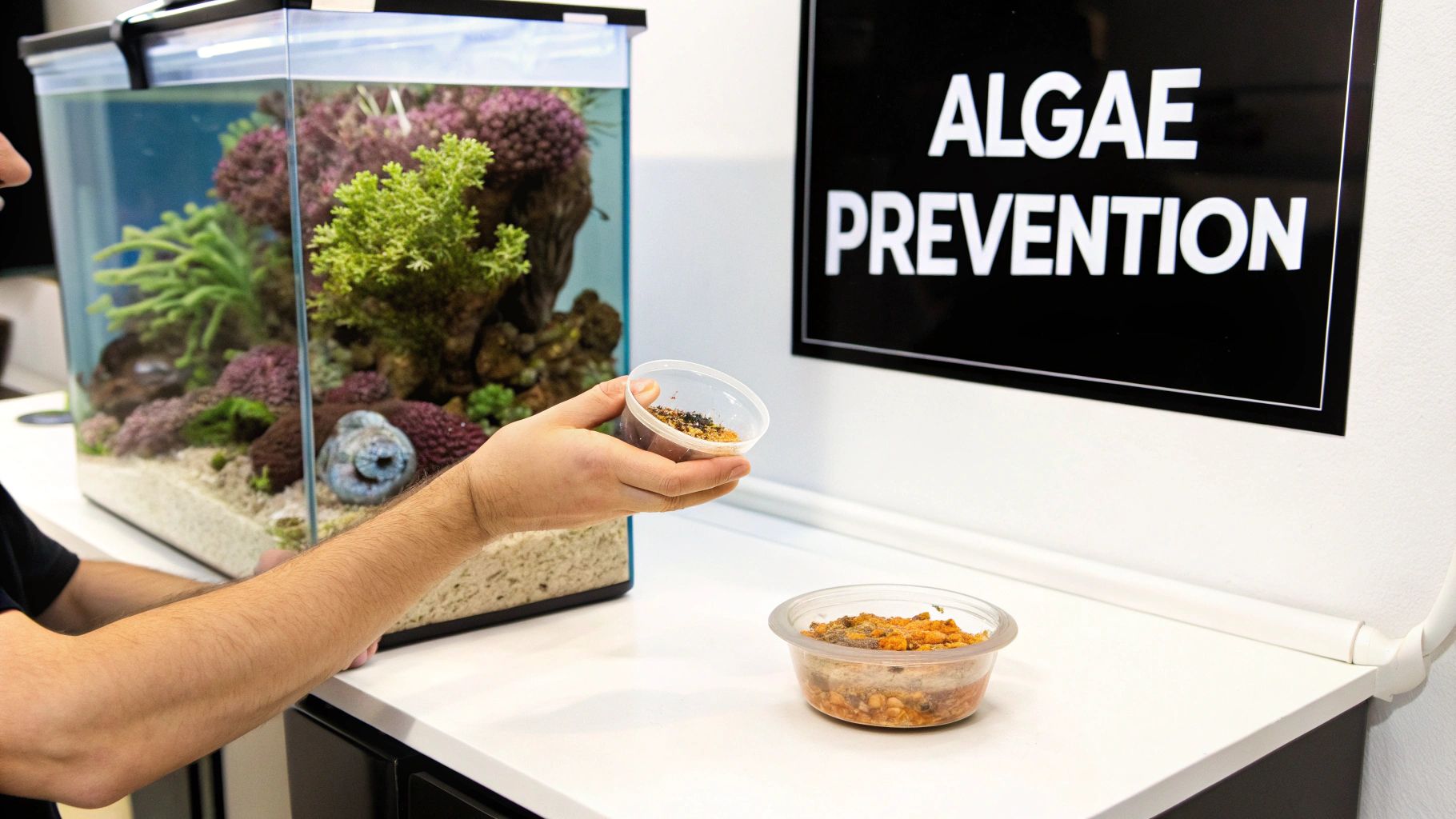
Think of nuisance algae like an opportunistic weed. It’s always there in some form, just waiting for the perfect conditions to take over. And for algae, "perfect conditions" mean a buffet of two key ingredients: nitrates and phosphates. These compounds are basically fertilizer, and they have a knack for sneaking into your tank.
Where do these excess nutrients come from? A few usual suspects:
* Overfeeding your fish: Any uneaten food and the waste that follows break down directly into nitrates and phosphates.
* Using unfiltered tap water: Your tap water might be fine for you, but it often contains phosphates, silicates, and nitrates that fuel explosive algae growth.
* Skipping water changes: This is non-negotiable. Regular maintenance is how you physically pull accumulated nutrients out of the system.
Instead of getting stuck in a cycle of scrubbing and scraping, the real goal is to build a nutrient-poor environment from day one. This proactive mindset is the secret to effectively controlling algae in a saltwater aquarium. It shifts your focus from reacting to an outbreak to preventing one in the first place.
A Familiar Story for Many Reefers
Let’s look at a classic scenario. A reefer spots the first hints of green hair algae on their live rock. At first, it's just a tiny patch—easy enough to ignore. But in a matter of weeks, it’s spreading like wildfire. The hobbyist swears they haven't changed their maintenance routine. So what gives?
After a little detective work, they connect the dots: the outbreak started right after they switched to a new, richer fish food. That one small change sent the nutrient levels through the roof. The extra phosphates and nitrates were all the fuel the algae needed to turn a minor annoyance into a major headache. It’s a perfect example of how our daily habits are directly tied to the health of our tanks.
If there’s one critical lesson in reefing, it’s this: algae isn't the problem, it's the indicator. It’s your aquarium’s way of screaming that something in the underlying chemistry is out of whack, and it’s almost always pointing a finger at excess nutrients.
This is exactly what happens in the wild. Controlling algae is absolutely essential for a balanced reef where corals can thrive. In fact, global coral reef surveys show that algae cover on natural reefs shot up by about 20% between 2009 and 2018, while coral cover declined. It’s a stark reminder of the constant battle between algae and coral for resources—a battle that plays out in our home aquariums, too. You can get a deeper look into the research on algae and aquarium ecosystems to see just how critical this balance is.
To help you get a head start, it's useful to know what you're looking for. Different types of algae tend to show up under specific conditions.
Common Saltwater Algae Types and Their Triggers
Here’s a quick guide to help you identify some of the most common nuisance algae you might encounter and what’s likely causing them. Pinpointing the type of algae is the first step in figuring out which specific nutrient or environmental factor you need to address.
| Algae Type | Appearance | Common Triggers |
|---|---|---|
| Green Hair Algae (GHA) | Fine, green filaments that grow in clumps on rocks and substrate. | High nitrates, high phosphates, and intense lighting. |
| Bryopsis | Fern-like, feathery green tufts that can be tough to remove. | Low magnesium levels, high nutrients (especially nitrates). |
| Diatoms | Brown, dusty film that easily wipes off surfaces. | Excess silicates, often from new tank setups or using tap water. |
| Dinoflagellates (Dinos) | Slimy, bubbly, brownish strands or mats. | Bottomed-out nitrates and phosphates (ULNS), nutrient imbalance. |
| Cyanobacteria (Red Slime) | Dark red or maroon slimy mats that cover surfaces. | Low flow areas, high phosphates, and organic waste buildup. |
| Bubble Algae | Green, bubble-like sacs that grow in clusters. | High organic nutrients, often introduced on live rock or frags. |
By recognizing these different invaders and understanding their preferred food sources, you can take much more targeted action. Instead of just scrubbing away the visible problem, you can start tackling the root cause and bring your tank's ecosystem back into balance for good.
Building a Nutrient-Poor Environment
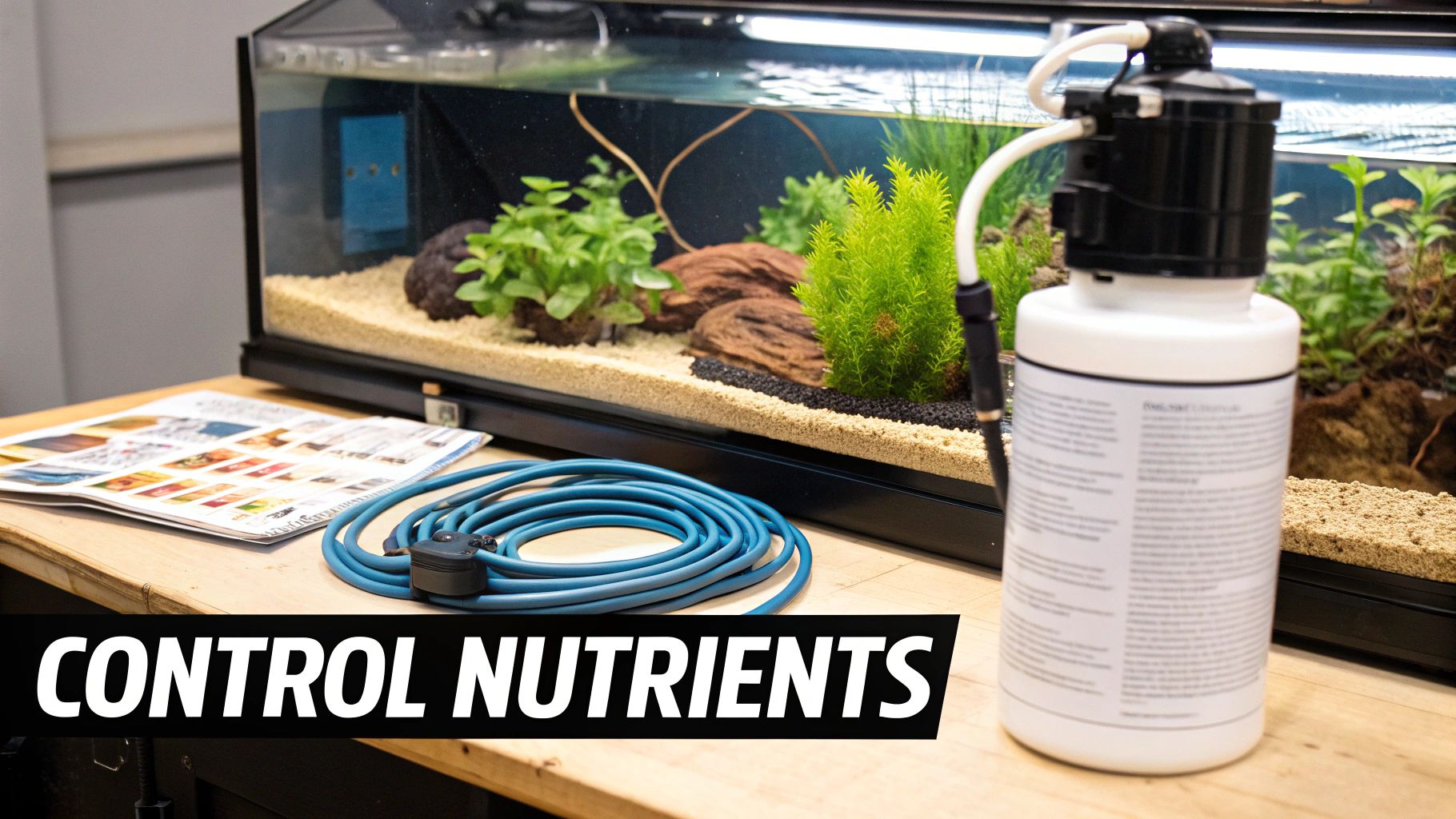
Telling a fellow reefer to "lower your nutrients" is probably the most common advice in the hobby, but it's also one of the least helpful without a game plan. The real magic happens in the engine room of your tank—the sump and your maintenance routine. Creating a nutrient-poor environment is, hands down, the best way to keep algae from ever getting a foothold. It's all about starving it of the fuel it needs to grow.
Your first line of defense, and maybe the most powerful, is a rock-solid water change schedule. This isn't just about topping up trace elements. It's about physically exporting nitrates, phosphates, and dissolved organic compounds before they have a chance to build up. For most tanks, a weekly 10-15% water change is the sweet spot. Think of it as hitting the reset button on your water chemistry every single week.
Targeting Specific Nutrients with Media
Beyond just swapping out water, you can get more surgical with specialized filter media. These are your chemical sponges, designed to pull specific nutrients right out of the water column. This is where you can really dial things in.
- Granular Ferric Oxide (GFO): This is the undisputed champ for phosphate removal. GFO binds with phosphates and locks them away for good. It's incredibly powerful, but you have to be careful. Stripping phosphates out too fast can seriously stress out your corals.
- Activated Carbon: While it doesn't directly target nitrates or phosphates, high-quality carbon is a master at grabbing dissolved organics—the gunk that eventually breaks down into those nutrients. As a bonus, it makes your water crystal clear.
Running a little of both in a media reactor gives you a constant, gentle export process. This proactive approach keeps the nutrient "bank account" low, leaving almost nothing for opportunistic algae to feed on.
A personal horror story: I once fought a nasty, stubborn outbreak of cyanobacteria that just wouldn't quit. I thought I was doing everything right—regular water changes, running GFO, feeding lightly. It drove me nuts for weeks. Finally, I tested the water coming out of my RODI unit and saw the TDS was creeping up. My DI resin was shot, and I was unknowingly feeding the cyano with every top-off and water change. Never, ever underestimate the importance of pure source water.
Learning from Nature's Blueprint
Interestingly, if you want a masterclass in nutrient control, you just have to look at corals themselves. Inside their tissue, corals host symbiotic algae called zooxanthellae. To keep this internal algae from going rogue and harming them, corals have a brilliant strategy.
They feed their algae partners sugars from photosynthesis but are incredibly stingy with the nitrogen they provide. It's a delicate balancing act that gives the coral energy without letting the algae multiply out of control. A 2023 study confirmed this nitrogen-carbon trade-off is how corals keep their algae in check—a biological blueprint we can copy in our own tanks. Discover more about how corals control their internal algae populations.
By sticking to a consistent maintenance schedule and using targeted filtration, you create an environment where corals flourish and nuisance algae simply can't compete. This isn't about quick fixes; it's about addressing the root cause of algae for long-term success. If nitrates are your main headache, our guide has some practical tips on how to reduce nitrates in your saltwater aquarium.
Recruiting the Right Clean-Up Crew
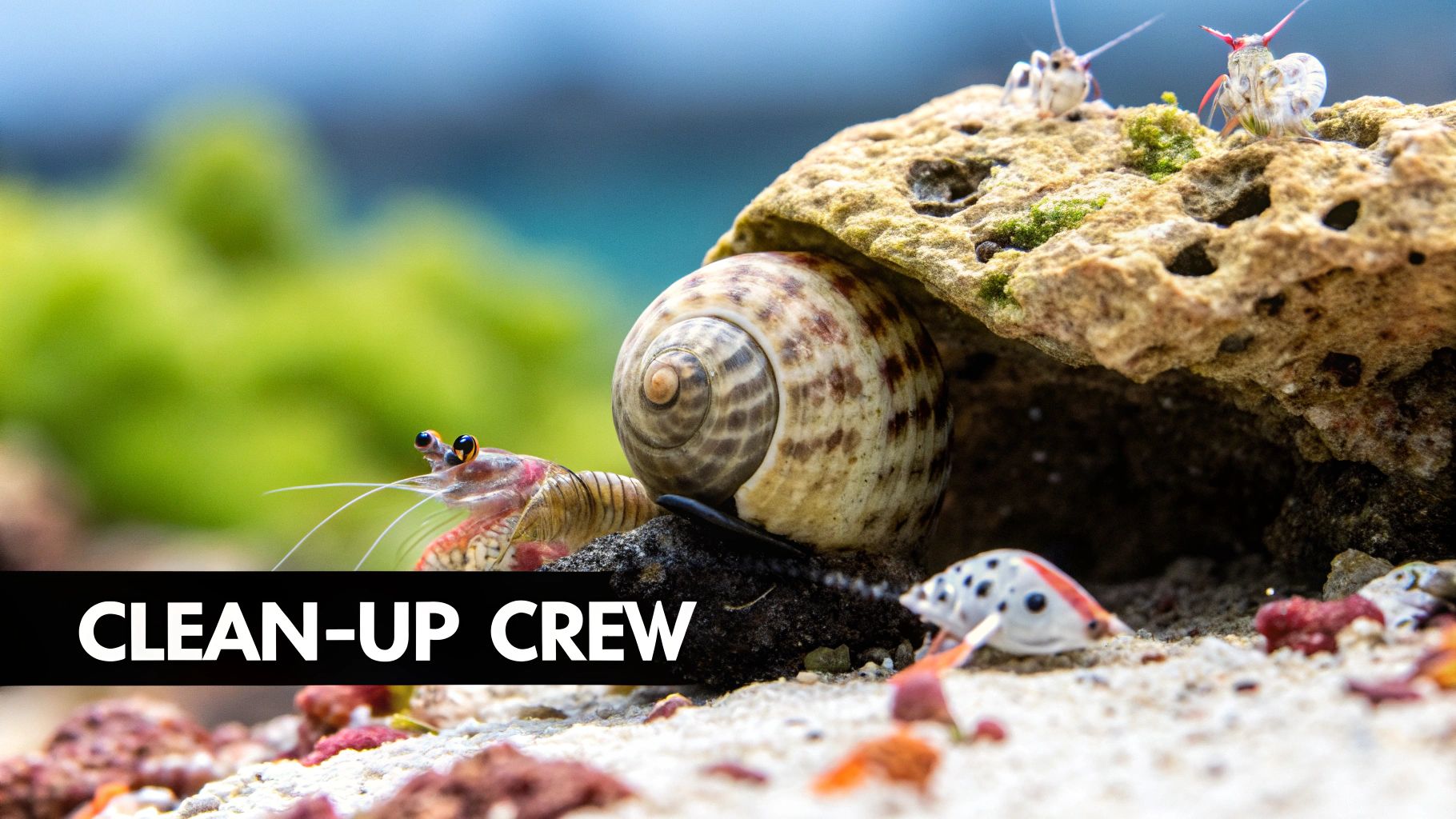
While manual removal and nutrient control are your heavy artillery, no algae battle plan is complete without the ground troops. That’s where a well-chosen clean-up crew comes in. Think of them as your biological task force, working around the clock to graze on algae before it ever becomes a real eyesore.
This isn’t about just tossing in a few snails and calling it a day. It’s about assembling a specialized team where each member has a specific job to do, mimicking the natural balance of a wild reef.
After all, on natural coral reefs, a huge chunk of the fish population—around 25%—spends its time grazing on algae, keeping it from smothering the corals. This is the exact dynamic we want to replicate in our own tanks.
Matching the Crew to the Algae
Not all algae eaters are created equal. Far from it. A Lawnmower Blenny, for example, is an absolute champion against that green film algae on your glass and rocks but will completely ignore bubble algae. Likewise, a Turbo snail can power through dense patches of green hair algae but won't touch red slime cyanobacteria.
A balanced crew works different zones of your aquarium, creating a multi-front defense:
- Rock Grazers: Species like Trochus snails and certain blennies are constantly scouring your rockwork, keeping those surfaces pristine.
- Sand Sifters: Nassarius snails and some goby species are the subsurface crew, burrowing through the substrate to prevent detritus from building up and fueling the next algae outbreak.
- Glass Cleaners: Astrea snails are fantastic for keeping your viewing panes clear of that pesky film algae.
- Specialists: Emerald crabs can target stubborn bubble algae, while certain sea urchins are voracious hair algae eaters.
Choosing the right team means identifying your specific algae problem first. A crew designed to combat diatoms will be useless against a Bryopsis outbreak. Assess the problem, then recruit the solution.
Avoiding Common Clean-Up Crew Mistakes
One of the biggest pitfalls I see is overstocking the clean-up crew. An army of snails might sound like a great idea at first, but if they run out of algae, they will starve. A starving crew creates more waste, which ironically can fuel the next algae bloom. Always start with a conservative number and only add more if you see they can't keep up.
Another critical point is ensuring every member is truly reef-safe. Some critters, like certain hermit crabs, can get opportunistic as they grow, deciding your prized zoanthids look tastier than the algae. Always do your homework on an animal's adult behavior before adding it to your tank.
For a deeper dive into picking the perfect team, check out our guide on selecting the best algae eaters for a reef aquarium.
A thoughtfully chosen, diverse crew isn't just a utility; they are an invaluable partner in maintaining a healthy, beautiful aquarium.
Clean-Up Crew Guide for Common Algae
To help you build the perfect team, here’s a quick-reference table matching some popular clean-up crew members to the algae they’re known to tackle.
| Organism | Primary Algae Target | Reef Safety | Notes |
|---|---|---|---|
| Trochus Snail | Film algae, diatoms, hair algae | Excellent | A true workhorse. Will right itself if it falls over. |
| Turbo Snail | Hair algae, film algae | Excellent | Voracious eater, but can be clumsy and knock over frags. |
| Astrea Snail | Film algae on glass/rocks | Excellent | Cannot right itself, so needs a helping hand if it falls. |
| Nassarius Snail | Detritus, leftover food | Excellent | Lives in the sandbed, keeping it stirred and clean. |
| Cerith Snail | Film algae, diatoms, cyanobacteria | Excellent | Great for cleaning sand, rocks, and glass. Burrows in substrate. |
| Lawnmower Blenny | Film algae, diatoms | Generally Safe | Fantastic personality. Must have an established tank with plenty of algae. |
| Emerald Crab | Bubble algae, some hair algae | Use Caution | Great specialist, but can become opportunistic with corals if not well-fed. |
| Tuxedo Urchin | Hair algae, coralline algae | Generally Safe | Excellent algae eater but may carry loose frags or shells around. |
Remember, this chart is a starting point. The key is to observe your tank, identify the specific type of algae causing issues, and then recruit the specialist best suited for the job. A well-planned crew makes all the difference.
Dealing With an Outbreak: Time for Manual Removal
Even with the most dialed-in nutrient control and a hungry clean-up crew, stubborn algae can sometimes get the upper hand. When an outbreak hits, your next line of defense is getting your hands wet. Direct, manual intervention is the fastest way to regain control in your saltwater aquarium.
This isn't just about endless scrubbing. It’s about being tactical.
Every clump of algae you physically pull out is a little packet of locked-up nutrients—nitrates and phosphates—that can no longer fuel more growth. It's a critical step that immediately reduces the overall algae biomass in your tank, giving your system a chance to recover. The key is to make it a smart part of your regular maintenance.
Strategic Scrubbing and Siphoning
For that fuzzy green hair algae clinging to your rockwork, a simple, clean toothbrush is your best tool. The real trick is when you do the scrubbing. Get in there and scrub the rocks right before you start a water change.
As you break the algae loose, the strands will float into the water column, making them easy to siphon out. This one-two punch ensures you're actually exporting the problem, not just moving it around the tank. For a deep dive on this common pest, our guide on how to remove hair algae in reef tanks covers it all.
Cyanobacteria, that lovely red slime algae, needs a totally different game plan. Scrubbing cyano is a rookie mistake; it just breaks the slimy mats apart and spreads it everywhere. Instead, grab your siphon hose during a water change and vacuum the mats directly off your sandbed and rocks. It's incredibly satisfying and removes huge patches without turning your tank into a cyano snow globe.
The single most effective thing you can do during a bad outbreak is to physically remove the algae. Siphon it out. Pull it out. If you have to do it every single day for a week, do it. This persistence doesn't just make the tank look better—it starves the remaining algae by removing the nutrients it needs to thrive, giving your beneficial microfauna a fighting chance.
A Word of Caution on Chemical Treatments
When you're at your wit's end, reaching for a chemical "quick fix" is tempting. Products like algaecides and specific treatments like fluconazole are out there, but they should always, always be your last resort. While they can be effective at killing algae, they come with some serious risks.
- They're a Band-Aid, Not a Cure: Chemicals might kill the algae you see, but they do absolutely nothing about the high nitrates and phosphates that are feeding it. If you don't fix the root cause, the algae will be back with a vengeance.
- They Can Nuke Your Inverts and Corals: Many algaecides are not reef-safe. They can be incredibly harmful, and even fatal, to your snails, shrimp, crabs, and delicate corals. On top of that, a massive algae die-off can cause a sudden oxygen crash in the water, stressing out every single inhabitant in your tank.
If you absolutely must go down this road, be meticulous. Choose a product that is explicitly labeled as reef-safe and follow the dosing instructions to the absolute letter. Think of it as hitting the reset button—it gives you a temporary clean slate while you aggressively fix the underlying nutrient problem. It is not a standalone solution.
True, long-term success in this hobby comes from building a balanced, stable ecosystem, not from a bottle.
Using Light and Flow as Algae Deterrents
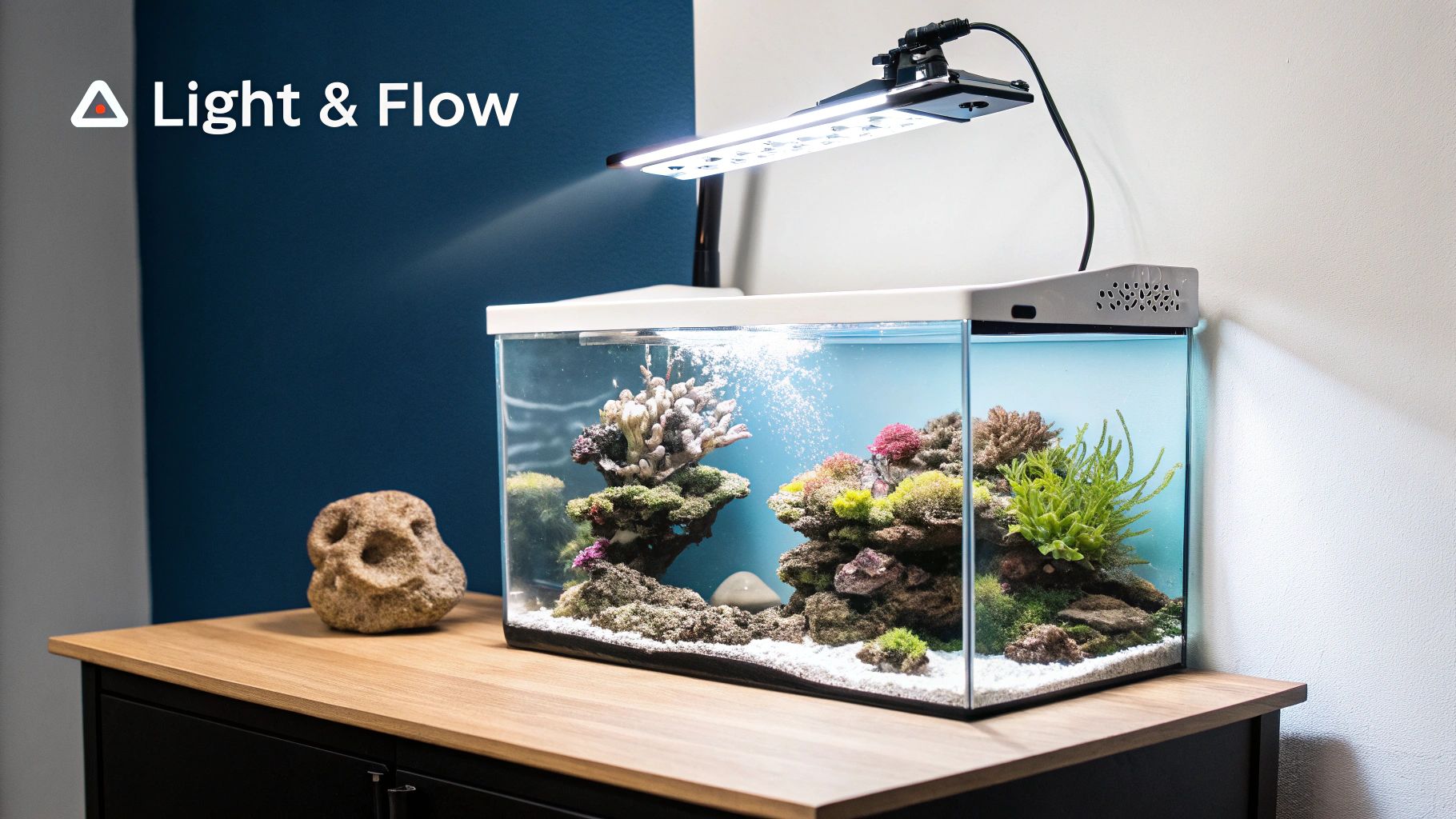
Beyond nutrients and clean-up crews, two of your most powerful—and often overlooked—tools in the fight against algae are lighting and water flow. When you learn to manipulate these environmental factors, you can dramatically shift the balance of power in your tank, making it a hostile place for nuisance algae and a paradise for your corals.
It's a common mistake, especially for newcomers, to blast their tanks with intense light for 10-12 hours a day. This is a perfect recipe for an algae farm. Nuisance algae are incredibly opportunistic; they can utilize a broader light spectrum and longer photoperiods much more efficiently than most corals.
Dialing in Your Lighting Schedule
Instead of a harsh on/off schedule, think about programming your lights to mimic a natural day. This is a far more effective strategy for long-term algae control. A gradual ramp-up in the morning and a slow ramp-down in the evening reduces stress on your corals and fish, all while limiting the "peak" light hours that algae absolutely love.
A total photoperiod of 8-9 hours is more than enough for the vast majority of reef tanks. You're giving your corals exactly the light they need to photosynthesize and grow, which gives them a competitive edge over fast-growing algae without handing over excess energy for an outbreak.
I once battled a persistent patch of green hair algae that only grew on one side of a rock. After trying everything else, I realized it was getting hit with a few hours of indirect sunlight from a nearby window each afternoon. Closing the blinds was all it took to finally win that fight.
The Critical Role of Water Flow
Strong water movement is every bit as important as your lighting. Algae, particularly slimy varieties like cyanobacteria and diatoms, love to settle in "dead spots" where detritus piles up. This buildup of organic waste becomes a concentrated food source, fueling localized outbreaks that can quickly get out of hand.
Proper flow keeps that detritus suspended in the water column, allowing your filtration system to physically pull it out before it has a chance to break down into nitrates and phosphates. The goal is to create strong, randomized, and turbulent flow that reaches every single corner of your aquarium.
- Eliminate Dead Spots: Take a few minutes to just watch your tank. Look for areas where debris settles. Adding a small, inexpensive powerhead or simply redirecting an existing one can make a world of difference.
- Keep Surfaces Clean: Good flow prevents algae spores from ever getting a chance to settle and take hold on your rocks and substrate in the first place.
- Deliver Nutrients to Corals: Robust flow is also the delivery service for your corals, bringing them the nutrients they need to become stronger and better able to outcompete algae for space and resources.
I had a nagging patch of hair algae in a back corner that my clean-up crew completely ignored. On a whim, I added a small wavemaker aimed directly at that spot. Within a week, the constant flow had not only blasted the existing algae away but also prevented anything new from growing back. It was a simple, mechanical fix for a biological problem, proving just how crucial flow is when you want to control algae in a saltwater aquarium.
Common Questions About Saltwater Algae
Even with the best game plan, algae problems can still leave you scratching your head. Let's tackle some of the most common questions that pop up for reef keepers, reinforcing the strategies that will get you back to a stable, beautiful tank.
Can I Just Use an Algaecide in My Reef Tank?
It's so tempting to reach for a bottle that promises a quick fix, isn't it? But trust me, you want to think of algaecides as an absolute last resort. Most of these chemical solutions are not friendly to the corals, inverts, and beneficial bacteria that form the very foundation of your reef ecosystem.
They're designed to nuke the symptom—the ugly algae you see—while completely ignoring the real problem, which is almost always an excess of nutrients.
If you're truly in a bind, make sure you choose a product explicitly labeled as "reef-safe" and follow the dosing instructions down to the last drop. But the smarter, more sustainable approach is always to figure out why the algae is growing in the first place and fix that nutrient imbalance.
The real goal isn't to wage a constant chemical war on algae. It's to create a balanced environment where nuisance algae simply can't get a foothold. Focus on exporting nutrients with water changes, good filtration, and a solid clean-up crew for long-term success.
Isn't Some Algae in a Saltwater Tank Normal?
Absolutely. A tank that's completely sterile and free of any algae is often a red flag for an unstable or unhealthy system. Seeing a light green film build up on the glass between cleanings is totally normal.
Even better, seeing those desirable purple and pink spots of coralline algae start to spread is a fantastic sign of a mature, healthy tank. That's the good stuff!
The trick is knowing the difference between this normal, healthy growth and a full-blown nuisance algae outbreak. Your goal is not to eliminate every last speck of algae. It's to keep the aggressive stuff—like Green Hair Algae (GHA), slimy Cyanobacteria, or invasive Bubble Algae—from taking over and smothering your corals.
Why Is My New Tank Covered in Ugly Algae?
Ah, the dreaded "ugly stage." Welcome to the club! This is a rite of passage that almost every single new reefer goes through. It feels wrong, but this phase is a completely normal part of your aquarium's journey to biological maturity.
When a tank is new, its chemistry is all over the place. You've got silicates leaching from new sand and rock, plus nitrate and phosphate levels that haven't stabilized yet. This creates a perfect storm—an all-you-can-eat buffet for fast-growing, opportunistic algae. Usually, you'll see a brown, dusty film of diatoms and the first fuzzy patches of green hair algae.
So, what do you do? Honestly, the best tool you have is patience.
- Stick to your routine. Don't get discouraged and slack on your weekly water changes. This is your primary way of exporting those excess nutrients.
- Pull back on the lights. Keep your photoperiod on the shorter side, maybe 6-8 hours a day, to avoid giving the algae extra fuel to grow.
- Bring in the first responders. Once your ammonia and nitrite have dropped to zero, it's safe to add a small, starter clean-up crew to start grazing.
I know it's frustrating, but this stage is temporary. As your tank's beneficial bacteria colonies get established and your nutrient levels find their balance, the algae bloom will naturally fade away. Resist the urge to do something drastic; time is your best friend here.
Your best natural defense against nuisance algae is a thriving population of microfauna. PodDrop Live Aquarium Nutrition provides the live copepods and phytoplankton you need to build a robust ecosystem that outcompetes algae for resources. Give your reef the biodiversity it needs to stay balanced and beautiful. Explore our live cultures today!