

Best phytoplankton for reef tank: Top picks & guide
When you're trying to figure out the best phytoplankton for your reef tank, the answer is almost always a diverse, multi-species blend. It's tempting to grab a bottle of a single strain like Nannochloropsis, and it's fantastic for sucking up nitrates and phosphates. But a good blend? That's where the real magic happens. It delivers a much wider menu of fatty acids and cell sizes, which means you're feeding a broader range of corals, copepods, and other filter feeders throughout your little ecosystem.
Decoding Phytoplankton for Your Reef Tank
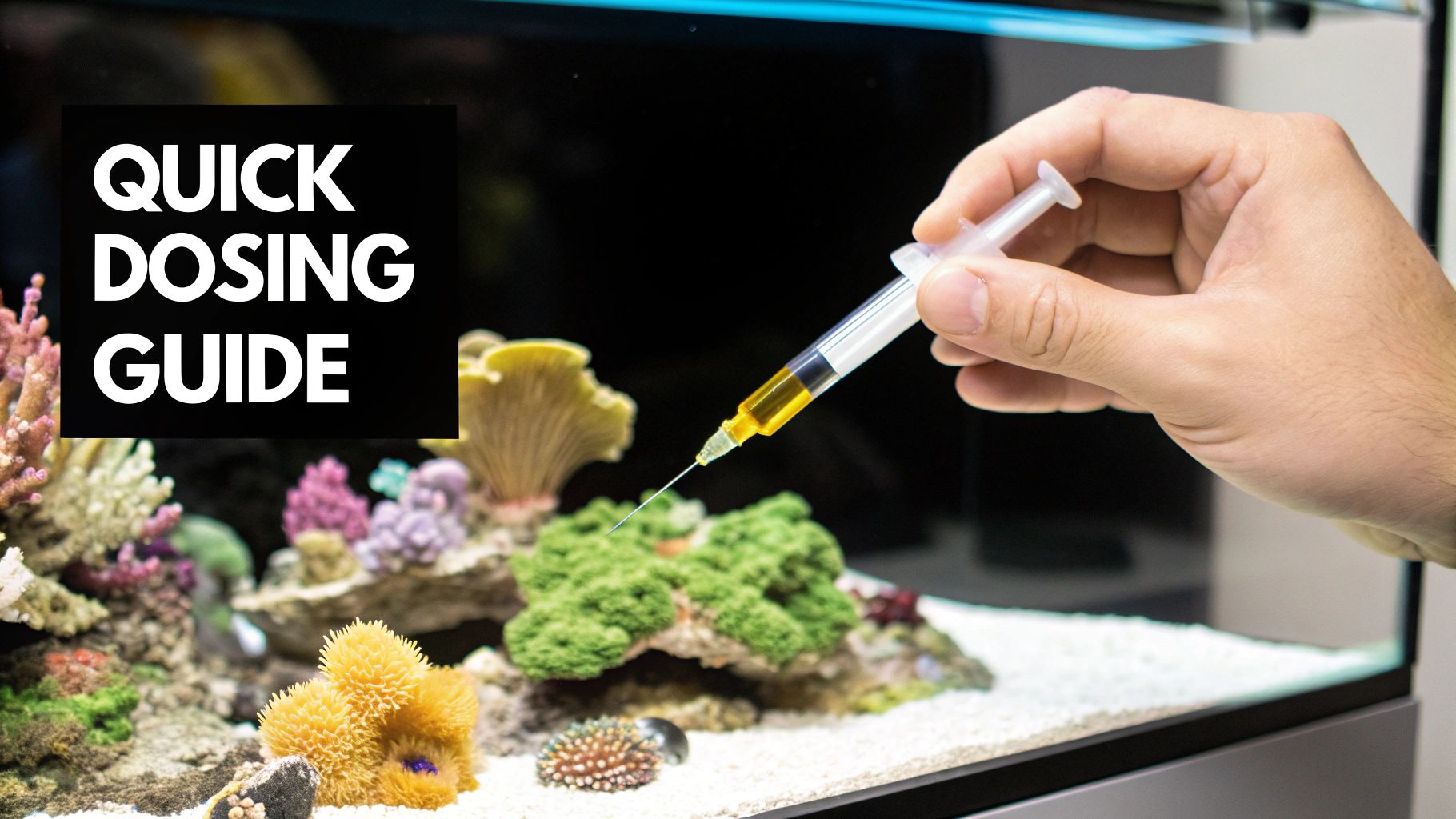
Forget thinking of phytoplankton as just "fish food." It's the foundational fuel for your entire reef. In the wild, this microscopic, sun-powered stuff forms the very bottom of the marine food web. When you add it to your tank, you’re basically planting a garden that feeds your animals and purifies the water at the same time.
This "liquid sunshine" has two critical jobs in a closed system like our tanks. First, it’s a direct source of food. So many of our prized inhabitants—corals, clams, feather dusters, you name it—are filter feeders. They actively pull these tiny organisms from the water to get key nutrients that light alone just can't provide.
Second, and just as important, it fuels the explosion of beneficial microfauna. Zooplankton, especially our beloved copepods, are the primary critters munching on phytoplankton. A healthy, booming copepod population means you have a constant, natural food source for picky eaters like mandarin fish and pipefish, not to mention your corals.
The Two Pillars of Phytoplankton Benefits
When you get your dosing strategy right, you're hitting your reef with a powerful one-two punch that improves its stability and looks. Getting a handle on these two core benefits is the first real step to picking the right phytoplankton for your tank.
- Nutrient Export and Control: Live phytoplankton is hungry for nitrates and phosphates. Conveniently, those are the exact same nutrients that fuel ugly nuisance algae. By outcompeting the bad stuff for these resources, phytoplankton acts like a natural, living filter, giving you clearer water and less glass scraping.
- Enhanced Inhabitant Health and Vibrancy: This stuff is packed with essential fatty acids like EPA and DHA. These are crucial for coral growth, color development, and even the reproductive health of your fish and inverts. Dosing regularly is one of the fastest ways to see better polyp extension and deeper, richer colors in your corals.
By adding phytoplankton, you’re not just feeding your tank; you are completing a natural cycle. You’re seeding a food web that supports everything from the smallest copepod to the most prized coral colony, creating a more resilient and self-sustaining ecosystem.
What Phytoplankton Actually Does for Your Reef Tank
Picture the vast ocean ecosystem as a giant pyramid. Down at the very bottom, forming the massive, essential base that supports everything else, you'll find phytoplankton. These microscopic, plant-like organisms are the sun-powered engines of the sea, and they play the exact same foundational role inside the glass walls of your reef tank.
Adding phytoplankton is about so much more than just feeding. It’s about completing a natural cycle that brings a whole new level of stability and vibrancy to your miniature reef. When you dose live phytoplankton, you're introducing a dynamic, living element that gets two critical jobs done at once, strengthening your ecosystem from the ground up.
The Ultimate Food Source
First and foremost, phytoplankton is a direct meal for a huge number of your tank’s inhabitants. Many of the most beautiful and delicate creatures we keep are filter feeders, including a wide range of corals, clams, feather duster worms, and sponges that actively pull these nutritious particles right out of the water.
But the benefits go even deeper. Phytoplankton is the primary food for zooplankton, like copepods and rotifers. By dosing it, you aren't just feeding your corals directly; you're also fueling a population explosion of these tiny critters. This creates a self-sustaining, live food source that is absolutely essential for picky eaters like mandarin dragonets and pipefish, which often starve in tanks without a robust pod population. You can dive deeper into the 10 benefits of live phytoplankton in marine aquariums to see just how much it impacts the entire food web.
A Natural Water Purifier
Beyond its role as food, live phytoplankton acts as a powerful, natural filter. It actively consumes the very same nutrients that fuel nuisance algae outbreaks: nitrates and phosphates. By introducing a healthy culture of phytoplankton, you create direct competition for these unwanted nutrients.
Think of it like this: You are planting a beneficial, microscopic garden that starves out the weeds. The phytoplankton essentially "steals" the food source from undesirable algae like hair algae or cyanobacteria, leading to cleaner glass, clearer water, and a healthier overall environment.
This dual-action benefit is what makes dosing the best phytoplankton for your reef tank such a powerful strategy. You are nourishing your prized inhabitants while actively purifying the water they live in. This natural approach to nutrient control is far more effective and sustainable than relying solely on chemical filtration media or aggressive protein skimming, creating a truly balanced and thriving ecosystem.
Comparing the Most Popular Phytoplankton Strains

Here’s the thing about phytoplankton: they aren’t all created equal. Far from it. Just like you wouldn’t use a hammer to turn a screw, different species of phyto serve very specific purposes in a reef tank.
Getting a handle on these differences is the key to picking the right tool for the job. Are you battling high nutrients and nuisance algae? Trying to boost your pod population? Or maybe you just want to make your corals pop with color? There's a phytoplankton strain for that.
Nannochloropsis: The Nutrient Sponge
If there's one undisputed champion of nutrient control, it's Nannochloropsis. This tiny, green, non-motile microalgae is an absolute powerhouse at stripping excess nutrients right out of the water column.
Its tiny cell size, just 2-4 microns, makes it a perfect meal for some of the smallest filter feeders in your tank, like many soft corals, sponges, and tunicates. But its real claim to fame is its incredible efficiency at gobbling up nitrates and phosphates.
Think of Nannochloropsis as a living, relentless sponge. It just soaks up the very compounds that fuel ugly algae growth. This aggressive appetite is precisely why it’s the go-to choice for hobbyists struggling with algae or aiming for that pristine, ultra-low nutrient system.
And this isn't just reefing folklore. Its effectiveness has been well-documented for years. Over the last two decades, its popularity has exploded, with surveys showing over 65% of reefers now rely on Nannochloropsis-based products. Why? Because studies show that tanks dosed with it can see nitrate levels drop by an average of 30-40% and phosphates by 25-35% in as little as six weeks. You can learn more about the impact of this strain on reef tanks in our detailed guide.
On top of cleaning your water, Nannochloropsis is also packed with Eicosapentaenoic Acid (EPA), a critical omega-3 fatty acid. This is jet fuel for your copepods and other zooplankton, which then become a super-nutritious meal for your fish and corals.
A Look at Other Key Species
While Nannochloropsis is a master of water purification, a truly thriving reef ecosystem needs a more varied menu. Other species bring different nutritional profiles and unique characteristics to the table, creating a more balanced and natural environment.
Here’s a quick rundown of the other major players:
-
Tetraselmis: This one is a big boy, with a cell size of 10-14 microns. Unlike Nanno, Tetraselmis is motile—it actively swims through the water with its little flagella. This movement makes it an irresistible, wiggling target for copepods, which helps kickstart your pod population into high gear. It’s also loaded with both EPA and another crucial fatty acid, DHA.
-
Isochrysis: Often called "golden-brown" algae, Isochrysis is famous for one thing: its sky-high DHA content. This specific fatty acid is scientifically linked to enhancing the yellow, orange, and red pigments in corals. For hobbyists looking to boost color vibrancy, this is your secret weapon. Its cell size is a nice middle-of-the-road 4-6 microns.
By combining these different species, you create a comprehensive nutritional and functional toolkit for your reef. Nannochloropsis cleans the water, Tetraselmis feeds the pods, and Isochrysis paints your corals.
Ultimately, the best strategy is almost always a blend. A multi-species phytoplankton culture delivers a wider range of cell sizes and nutritional benefits. This ensures every single inhabitant, from the tiniest sponge to the hungriest coral, gets exactly what it needs, all while keeping your water crystal clear.
This approach perfectly mimics the natural diversity found on wild coral reefs, helping you create a more stable, vibrant, and successful ecosystem in your home aquarium.
If Nannochloropsis is the foundation for clean water, think of other phytoplankton strains as the key to unlocking your reef's full potential. You wouldn't want to live on just one type of food, and neither does your tank. This is where a powerhouse like Tetraselmis comes into the picture, filling in the nutritional gaps to build a truly vibrant ecosystem.
Tetraselmis is a completely different beast compared to Nanno. For starters, its cells are much larger, typically around 10-14 microns, making it a substantial meal for a whole host of filter feeders. But the real magic is that it's motile—it actually swims around with tiny flagella. This constant, wiggling movement makes it an absolutely irresistible target for zooplankton.
For any reefer trying to build a booming copepod population, this is huge. That movement triggers a natural hunting response in pods, encouraging them to feed and breed like crazy. The results speak for themselves; studies have shown that tanks dosed with Tetraselmis can see their copepod numbers explode by an incredible 40% in just four weeks.
The Nutritional Edge of a Varied Menu
Beyond being a five-star meal for copepods, Tetraselmis brings some serious nutrition to the table. It's packed with a rich blend of fatty acids, including high amounts of both EPA and DHA. This specific nutritional profile is vital for the reproductive health of fish and inverts, not to mention promoting solid growth in your corals. For a top-notch culture, you can find high-quality live Tetraselmis chui phytoplankton grown specifically for its nutritional benefits.
Another major player you'll want on your team is Isochrysis. This golden-brown algae is famous for one thing in particular: its ridiculously high concentration of DHA. Why does that matter? This specific fatty acid is directly tied to bringing out the yellow, orange, and red coloration in corals. If you want to see those colors really pop, adding Isochrysis is one of the best natural methods out there.
Why Multi-Species Blends Win Every Time
This all leads to a core principle in advanced reef nutrition: multi-species blends simply deliver the most complete package of benefits. When you combine different phytoplankton strains, you’re essentially creating a full-service toolkit for your reef's health and vitality.
A great blend offers a spectrum of cell sizes, making sure everyone from the smallest filter feeder to the largest copepod gets a meal that's just the right size. It also delivers a diverse mix of fatty acids, vitamins, and amino acids that no single species could ever provide on its own.
Let's break it down with an analogy:
- Nannochloropsis is your reef's diligent janitor, constantly scrubbing the water of nitrates and phosphates.
- Tetraselmis is the engine of your food web, fueling a massive population of copepods and other microfauna.
- Isochrysis acts like a professional colorist, painting your corals with deep, vibrant hues.
When you put them all together, they create a powerful synergistic effect. The result is a cleaner, more resilient, and visually stunning ecosystem. This is exactly why a quality blend is almost always the superior choice for long-term success. It perfectly mirrors the natural diversity found on a wild coral reef, making it the best phytoplankton for a reef tank overall.
How to Dose Phytoplankton for Maximum Impact
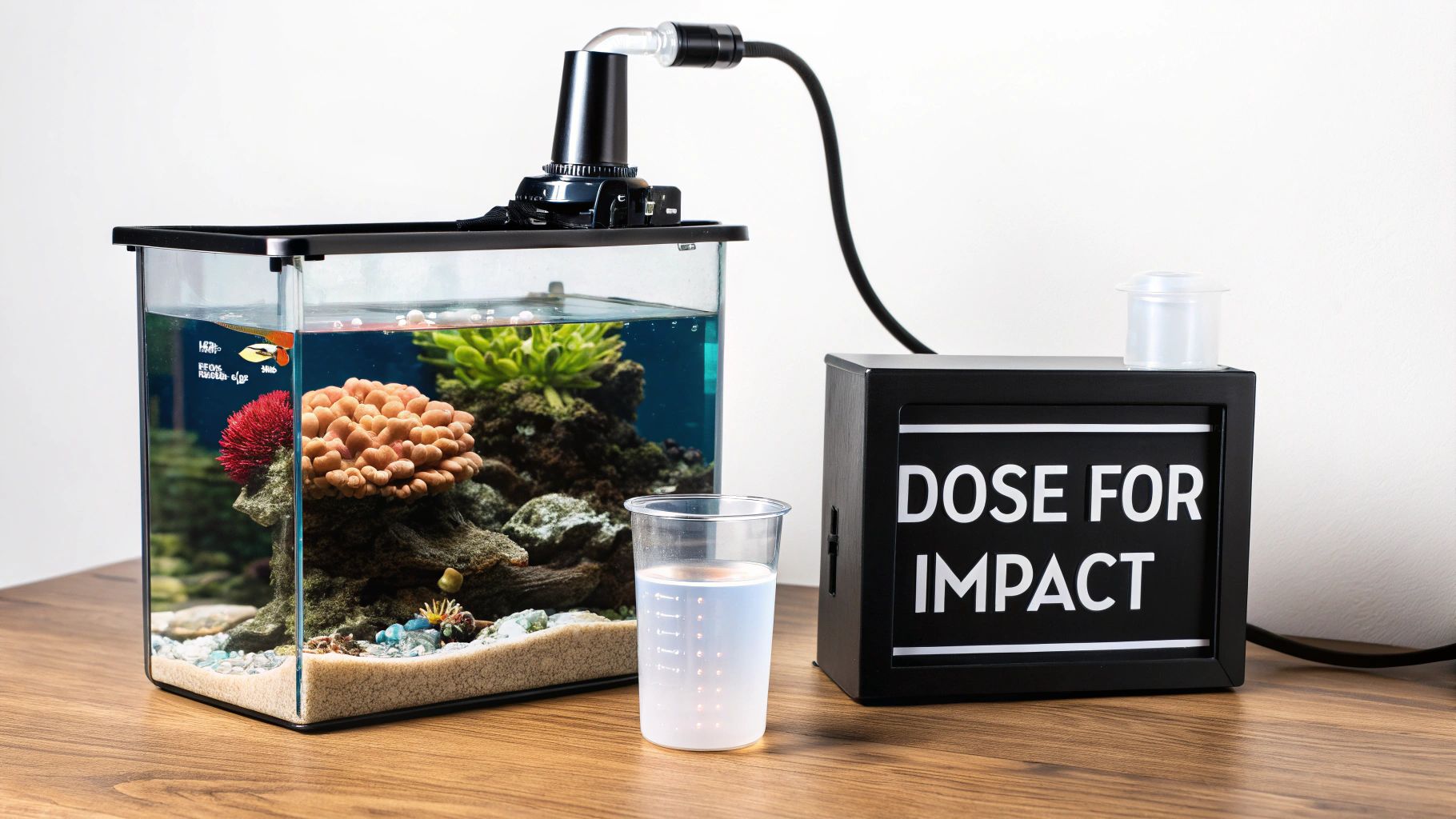
Knowing which phytoplankton to use is one thing; knowing how to use it is where the real magic happens. Dosing isn't just about dumping some green liquid into your tank and hoping for the best. It’s a bit of an art, a calculated process that, when you get it right, unlocks all the benefits without throwing your system out of whack.
The goal is to find a simple, repeatable routine that delivers those incredible results without any of the guesswork.
The single most important rule of dosing is to start slow and observe. I can't stress this enough. Every reef tank is its own little world with a unique bioload, filtration capacity, and collection of hungry mouths to feed. A dose that works wonders in a jam-packed SPS system could easily overwhelm a simple nano reef.
My advice is always the same: start with half the manufacturer's recommended dose. This conservative approach gives your tank's ecosystem—from the bacteria to the corals—time to adjust to the new influx of nutrients. Stick with this starting dose for at least a week and just watch. Your tank will tell you everything you need to know.
Reading Your Tank's Feedback
Your aquarium is great at giving you clear signals about whether your dosing strategy is on point. The two biggest tells are your water clarity and what your protein skimmer is doing.
Ideally, the water should get a little cloudy or green-tinged right after you dose, but it should clear up completely within a few hours. If you wake up the next day and the water is still hazy, you're adding too much. That excess phytoplankton isn't getting eaten, and it will start to break down and affect your water quality.
Pay close attention to your protein skimmer, too. With a good dosing routine, you might notice the skimmate it produces is a bit darker and wetter than usual—that's normal. But if your skimmer cup overflows with nasty, dark gunk shortly after you dose, that's a classic sign of an overdose.
A key best practice is to turn off your protein skimmer and any UV sterilizers for 1-2 hours after dosing. This simple step gives your corals, copepods, and other filter-feeders a head start, letting them consume the phytoplankton before your filtration gear strips it out of the water.
Manual Dosing vs. Automated Pumps
Once you've dialed in the perfect amount, you have to decide on your delivery method. There are two main ways to go, each with its own set of pros and cons.
- Manual Dosing: This is as simple as it gets—using a pipette or measuring cup to add your phyto dose each day. It requires no extra gear and gives you direct, hands-on control. The only real downside is that life gets busy, and it's easy to forget a dose, leading to inconsistency.
- Automated Dosing Pump: For consistency, nothing beats a dosing pump. You can set it to deliver a precise amount of phytoplankton every single day, often at night when corals are most actively feeding. This is the perfect solution for busy reefers or anyone who really wants to nail down stability.
For most people, starting with manual daily dosing is the best way to find that sweet spot for their tank. Once you've got a consistent routine that your corals are responding to, you can easily program an automated pump to replicate it perfectly. This methodical approach ensures you're feeding your reef effectively, leading to healthier corals and a more balanced, thriving ecosystem.
Choosing Between Live and Preserved Phytoplankton
When you start looking at phytoplankton for your reef tank, one of the first questions you'll hit is a big one: do you go with a live culture or a preserved, non-live product? They both serve as food, sure, but how they affect your tank's ecosystem couldn't be more different. Getting this distinction right is the key to matching your choice with your long-term goals for your reef.
Let’s use an analogy. Dosing live phytoplankton is like planting a thriving vegetable garden right inside your tank. This little garden does more than just provide fresh, incredibly nutritious food for your corals and copepods; it actively cleans the water. Just like plants on land, living phytoplankton consumes nitrates and phosphates, helping to starve out nuisance algae and keep your whole system in balance.
Preserved products, on the other hand, are more like adding canned vegetables. They’re convenient and have a long shelf life, serving as a food source, but that's where the benefits stop. Since the cells are no longer alive, they can't consume any nutrients. In fact, any uneaten product will break down and actually add to the nutrient load in your tank.
The Two-for-One Deal of Live Cultures
The biggest win for live phytoplankton is its dual-action benefit. You're getting a nutritionally superior food source packed with unaltered fatty acids and enzymes, and you're getting a powerful, natural water purifier all in one bottle. The living cells keep working for you long after you've dosed them.
By introducing a living culture, you are seeding a micro-ecosystem that works with your tank's biology, not just adding to its bioload. This proactive approach to nutrition and filtration is what separates a good reef tank from a great one.
This dual benefit makes live phytoplankton an incredibly efficient tool for keeping a reef healthy and stable. For those who want to take this a step further, you can even explore guides on how to culture phytoplankton for your reef tank, giving you a never-ending supply.
When Convenience Comes at a Cost
While preserved options might seem easier on the surface, their limitations are pretty significant. The process of preserving phytoplankton—whether it's through heat, chemicals, or fancy refrigeration techniques—inevitably degrades its nutritional quality. Key fatty acids can oxidize and lose their potency, which really diminishes the very benefits you’re trying to provide in the first place.
Ultimately, the choice boils down to your priorities as a reefer. If you're after the maximum nutritional punch and active nutrient control, live phytoplankton is the undisputed winner. It supports a more natural, stable, and vibrant ecosystem from the ground up, making it the superior choice for anyone dedicated to creating the best possible environment for their tank's inhabitants.
Your Top Phytoplankton Questions, Answered
Jumping into the world of phytoplankton always kicks up a few questions. Getting straight answers is the key to dosing with confidence and seeing the best results in your reef tank. Let's walk through some of the most common things hobbyists wonder about.
Can I Overdose Phytoplankton in My Tank?
Absolutely. It's definitely possible to add too much of a good thing. The telltale signs are pretty obvious: your water will get cloudy or green and stay that way for more than a few hours. You'll also see your protein skimmer go into hyperdrive, pulling out a ton of dark, wet gunk.
To get it right, the golden rule is to start with half the manufacturer's recommended dose. Just see how your tank handles it for a week. If everything looks good, you can slowly bump up the amount. A healthy, balanced system will chow down on the phytoplankton, leaving your water crystal clear by the next morning.
How Should I Store Live Phytoplankton?
Proper storage is completely non-negotiable if you want to keep your live culture effective. Live phytoplankton must be kept in the fridge. This slows down the cells' metabolism, locking in their nutritional value. Whatever you do, don't freeze it—that will burst the cells and turn your investment into useless mush.
To keep the culture happy and well-mixed, just follow two simple steps:
- Give the bottle a gentle shake or flip it upside down once a day.
- Always keep an eye on the expiration date. Live cultures don't last forever.
This quick daily routine makes sure every dose you pour is fresh, potent, and gives your reef inhabitants the full nutritional punch they need. The goal is to feed living, nutrient-packed cells, not decaying organic matter.
Will Phytoplankton Cause an Algae Bloom?
This is probably the biggest myth out there, and it actually gets the science completely backward. When you dose it correctly, live phytoplankton is one of your best tools for fighting nuisance algae blooms. Think of it as bringing in a bigger, better competitor for the same food source.
Those live phytoplankton cells are hungry for the exact same nutrients—nitrates and phosphates—that ugly algae need to grow. By adding a healthy population of phytoplankton, you're essentially out-competing the bad algae for lunch. The phytoplankton gobbles up the available nutrients, effectively starving out the stuff you don't want. This is a natural, simple way to help keep your tank cleaner and more stable, which means less scraping for you.
Ready to see what a balanced, multi-species blend can do for your tank? PodDrop Live Aquarium Nutrition delivers fresh, high-quality phytoplankton cultured to bring your reef to life. Check out our live nutrition solutions to get started.