


Pro Reef Aquarium Algae Control Tips at Home — Keep Your Tank Pristine
- fabianbehague
- Aug 12
- 2 min read
Updated: Aug 21
Algae outbreaks are one of the most common frustrations for reef keepers. Whether it’s a stubborn green film on your glass or invasive hair algae covering your rockwork, these blooms can disrupt the beauty and balance of your reef. The good news? With the right combination of lighting control, nutrient management, clean-up crews, and routine maintenance, you can prevent and remove nuisance algae without harming your corals or fish.
In this guide, I’ll share my best reef aquarium algae control tips at home—tested and proven to work in both nano tanks and large reef systems.
Why Algae Takes Over in Reef Aquariums
Algae thrives when light and nutrients are abundant. Common triggers include:
Excess nutrients like nitrates and phosphates from overfeeding or inadequate filtration.
Unstable water parameters—especially alkalinity and calcium swings.
Overly strong or extended lighting periods.
The key is finding a balance that supports corals but keeps algae growth in check.
Lighting Settings to Prevent Algae Growth in Reef Tanks
Reduce your photoperiod to 6–8 hours if algae growth is noticeable.
Use timers to maintain consistent lighting schedules.
Choose a spectrum tuned for coral growth—not algae feeding.
Avoid placing tanks in direct sunlight.
Keep Nutrients in Check: Nitrate & Phosphate Control
Perform weekly water changes to remove dissolved nutrients.
Run a protein skimmer to physically remove waste before it breaks down.
Use GFO (granular ferric oxide) or biopellets for phosphate control.
Feed sparingly and remove uneaten food promptly.
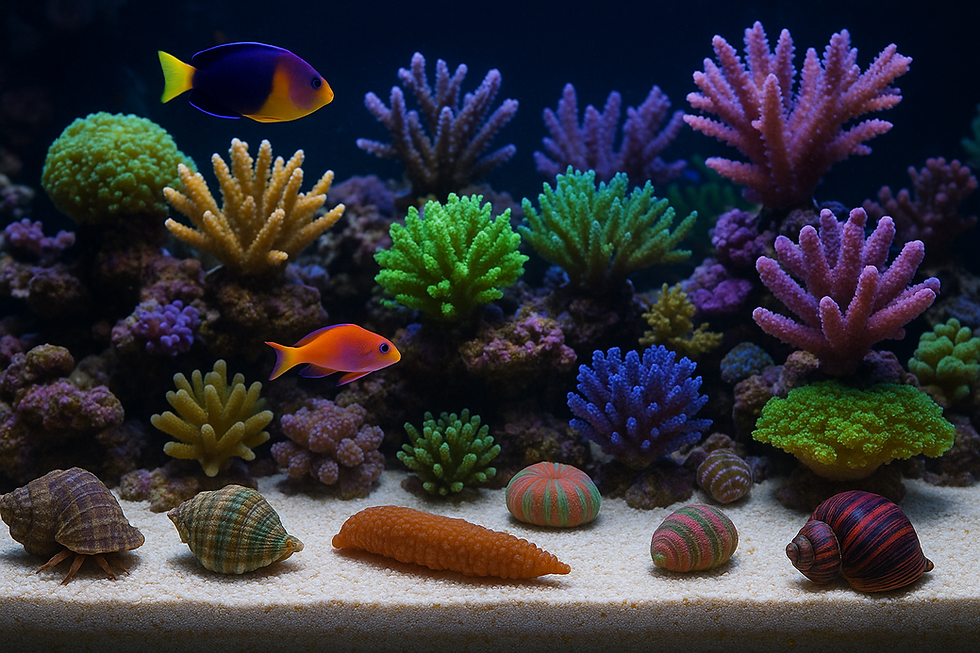
Best Algae Eaters for a Reef Aquarium Clean-Up Crew
A diverse clean-up crew can make a huge difference:
Snails: Turbo, Trochus, and Nerite snails for glass and rock surfaces.
Hermit Crabs: Blue-leg and scarlet reef hermits target leftover food and algae.
Blennies: Lawn-mower blennies are relentless grazers.
Tangs: Yellow and Kole tangs keep larger tanks spotless.
Sea Urchins: Excellent for stubborn coralline and hair algae.
Manual Removal & Algae Scrubber Setup
Scrub rocks with a soft brush during water changes.
Clean glass weekly to prevent film algae buildup.
Turkey baster: Blast algae off surfaces before siphoning it out.
Algae scrubbers: These filter systems grow algae in a controlled area, reducing nutrients before they can fuel unwanted blooms.
Weekly Reef Aquarium Algae Control Tips at Home for Preventing Blooms
Task | Frequency |
Top off water, check temperature & salinity | Daily |
Siphon detritus, clean glass, inspect equipment | Weekly |
Deep clean pumps, replace media, test full parameters | Monthly |
FAQ: Common Algae Questions Answered
Q1: How often should I clean my glass?
At least once a week to prevent buildup.
Q2: Can I get rid of hair algae without chemicals?
Yes—manual removal, nutrient control, and the right clean-up crew work wonders.
Q3: Do algae scrubbers really work?
Absolutely. They grow algae in a separate chamber, diverting nutrients from your display tank.
Conclusion
Algae control is about consistency, not quick fixes. By managing lighting, maintaining stable nutrients, adding the right grazers, and sticking to a cleaning routine, you can keep your reef healthy and vibrant.
Want more reef-keeping tips and exclusive discounts on PodDrop blends? Subscribe to our newsletter today and get the latest care guides delivered straight to your inbox.



Comments